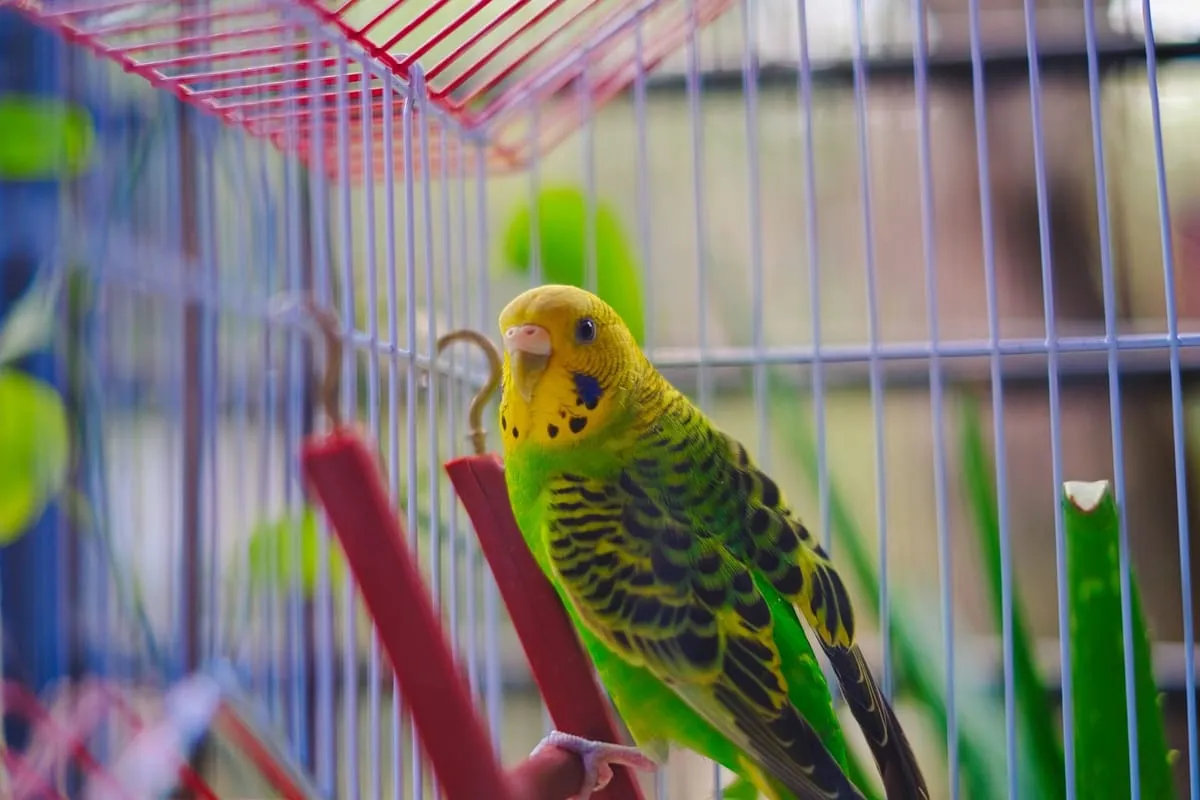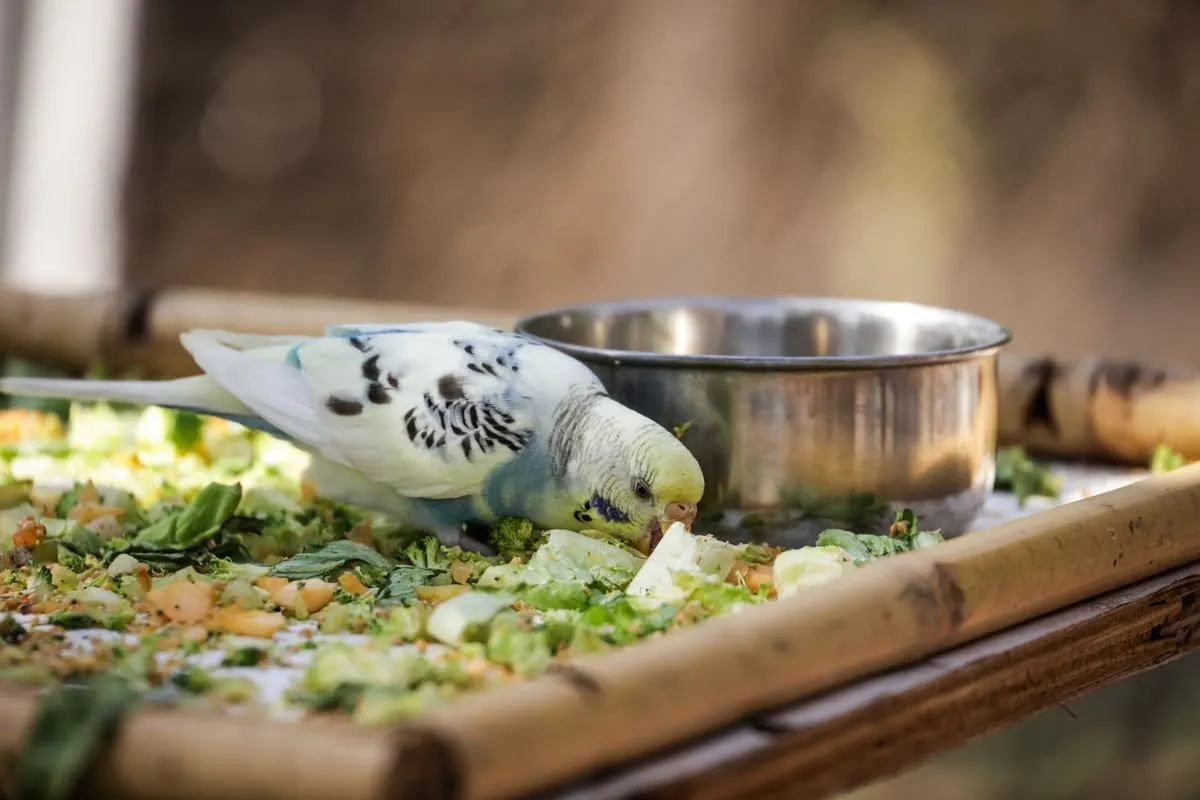
A dish of neatly chopped carrot, pepper, and leafy greens sitting completely untouched at the end of the day is one of the most common things new bird owners write in about, and it is easy to take personally, as if the bird is simply being difficult. It rarely is. Most birds that ignore vegetables are not rejecting the taste, they are not recognising the pile in the bowl as something worth investigating, and that is a presentation problem with real fixes, not a lost cause.
Why the bowl approach so often fails
A bird that has grown up mostly eating seed or pellets from a dish has learned that food is the stuff already in the dish, delivered without effort. Vegetables sitting still in that same dish do not move, rustle, or invite curiosity the way a wild bird’s foraged food would, so they simply do not register as food at all. This is especially true for a bird weaned mostly onto seed, which tends to produce the pickiest eaters generally, covered in more depth in why an all-seed diet is bad for your bird.
There is also a simple hunger-and-preference problem working against you. If the food bowl is topped up with a bird’s favourite seed mix at the same time as the veg, a bird will go straight for the familiar, calorie-dense option every time and never need to investigate anything else. Vegetables lose that contest before it starts.
Change how the food is offered, not just what
The single most effective shift is making vegetables something a bird has to approach and work at, rather than something presented passively.
Clip pieces to the cage bars at perch height instead of dropping them in the bowl. A bird that would walk past a bowl will often climb over to inspect something hanging at eye level, purely out of curiosity. A simple Universal Bird Cage Clips set makes this an easy five-minute change, and moving the clipped piece to a different spot every day or two keeps it from becoming part of the background.
Skewering chunks of harder vegetables like carrot or courgette works the same way and adds a chewing or shredding element some birds find more engaging than picking at loose pieces. Threading veg through an existing foraging toy, such as a Foraging Wheel or a Buffet Box, turns eating vegetables into the same kind of problem-solving game that already works for treats, which is worth leaning on if your bird already forages well for other food. Our guide to keeping a parrot from getting bored covers foraging set-ups in more depth if this is new to your routine.
Start with what is easy to eat and easy to see
Not all vegetables are equally approachable for a nervous first try. Bright colours, orange carrot, red pepper, dark leafy greens, tend to draw attention faster than pale or uniformly coloured options. Soft, easy textures are a gentler introduction than anything tough or fibrous, which can put off a bird that has never had to work at eating something before.
Finely chopping or grating vegetables and mixing them through a small portion of regular pellets is a reasonable extra tactic, since a bird encounters tiny pieces while eating something it already trusts. It should not be the only method you use though, because a determined bird will simply pick around the veg to get to the pellets underneath, learning to sort rather than eat. Use it alongside clipping and skewering, not instead of them.
Watching another bird eat vegetables, whether a cage mate or, in supervised moments, you eating a piece of the same vegetable yourself, can also break the ice. Social feeding is a genuine motivator for a lot of parrot species, who are naturally inclined to copy what a flock member is doing.
Give it real time before you worry
Expect this to take two to four weeks of regular, low-pressure offering rather than a dramatic breakthrough in a day or two. Remove untouched veg after a few hours so it does not sit stale and off-putting, and offer a fresh piece again the next day rather than leaving the same wilted bowl in the cage all week. Variety helps too, a bird that turns its beak up at pepper for a fortnight might go straight for broccoli the first time it is offered.
If your bird is eating a genuinely balanced pelleted diet and is otherwise bright, active, and holding a good weight, a vet is unlikely to treat slow progress on vegetables as urgent, so keep trying without turning every meal into a standoff. If appetite drops generally, not just for vegetables, or your bird is losing weight, that is a different and more pressing concern covered in why is my bird not eating, and worth a vet call rather than more patience.
Most birds do come around to fresh food once it stops looking like background scenery and starts looking like something worth the effort to reach. Change the presentation before you change your expectations of the bird, and give whichever approach you settle on a proper few weeks before judging whether it worked.
Common questions
- Why does my bird ignore fresh vegetables in its bowl?
- Most often it is presentation, not taste. A bird that has mostly eaten seed or pellets does not automatically recognise a pile of chopped veg sitting still in a bowl as food, especially if nothing else in its day moves, hangs, or has to be worked for. Changing how the food is offered, not just what is offered, is usually what breaks the standoff.
- How long does it take to get a bird eating vegetables?
- Plan on two to four weeks of regular, low-pressure offering rather than expecting results in a few days. Some birds come around within a week once you hit on the right presentation, others take closer to a month, and a few need you to keep trying different vegetables before one clicks. Consistency matters more than any single trick.
- Is it okay if my bird never eats vegetables?
- It is worth continuing to try, since fresh food adds nutrition, moisture, and mental stimulation that a seed or pellet diet alone does not. But if your bird is eating a genuinely balanced pelleted diet and is otherwise healthy, active, and at a good weight, a vet is unlikely to call it an emergency. Keep offering, but do not panic over every meal.
- Should I mix vegetables into my bird's regular food?
- It can help as one tactic among several, chopping veg finely and mixing it through pellets so a bird encounters small pieces while eating something familiar. It should not be your only approach though, since a bird that picks around the veg to get to the pellets just learns to sort rather than eat, so pair it with other presentation changes.