Every cat owner has a version of the same story. The house is quiet, the cat was dozing peacefully ten seconds ago, and then it is suddenly tearing full-speed down the hallway, up the back of the sofa, across the top of a bookshelf, and gone again before you have worked out what just happened. It looks alarming the first time. It is almost always completely normal, and it has a name.
What is actually happening
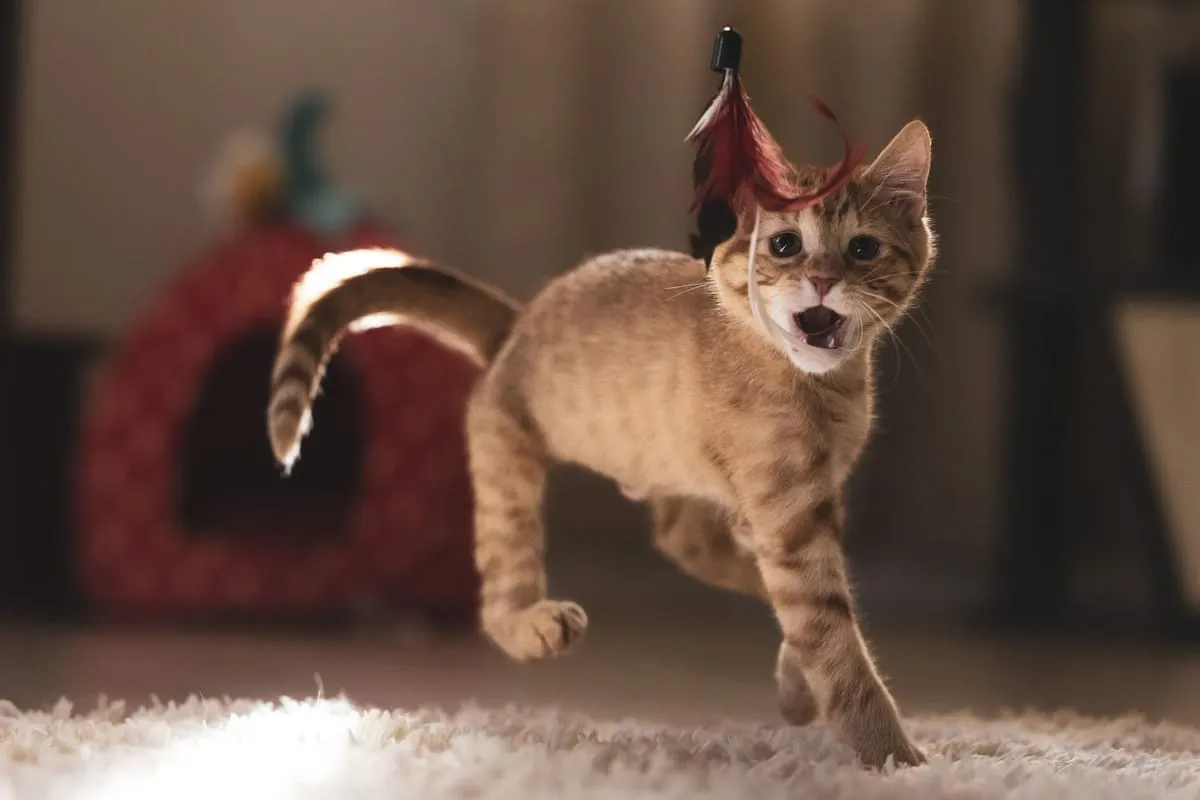
Cats get the same kind of sudden energy burst that dogs do, and vets and behaviourists use the same term for it, Frenetic Random Activity Periods, or FRAPs. A cat mid-FRAP runs flat out, often in loops, up and over furniture, sometimes with dilated pupils and a slightly wild look, and the burst usually lasts somewhere between a few seconds and a minute before stopping as abruptly as it started, the cat then carrying on as if nothing happened.
The root cause is built-up energy with nowhere planned to go. A cat’s natural hunting sequence is stalk, chase, pounce, kill, eat, groom, then sleep, and an indoor cat gets almost none of the first three steps in the course of an ordinary day. That unused predatory energy has to go somewhere, and a FRAP is what it looks like when it all comes out at once rather than in the small, steady doses a cat would get from real hunting. It shows up most in young, high-energy cats, but plenty of calm adults still get the occasional burst, usually clustered around specific moments rather than spread evenly through the day.
Why it clusters at dawn, dusk, and the litter tray
The timing of most zoomies is not random, even though the behaviour looks it.
Cats are crepuscular, meaning they are naturally wired to be most active at dawn and dusk, the hours their wild hunting would be most productive. That is part of why zoomies so often strike in the early morning or late evening rather than the middle of the afternoon, and it is the same underlying rhythm behind why your cat wakes you up at night, though the two are different problems. Night-waking is usually a learned habit built around getting your attention or food. A FRAP is not aimed at you at all, your cat is not trying to wake you or get anything from you, it is simply burning off energy, and it would do it whether you were there or not.
Letting it happen, safely
For an ordinary FRAP, the right response is close to nothing. Trying to physically intercept a cat mid-sprint rarely works and risks an accidental scratch, since the cat is not really tracking where you are standing. Clear a path if you can and let the burst run its course, which it normally does within a minute on its own.
The one practical thing worth managing is footing and obstacles rather than the behaviour itself. A cat at full speed can clip a shelf of ornaments, skid on a polished floor, or take a corner badly on a loose rug, so keeping breakables off the usual sprint route and giving some grippy surfaces along the way prevents most of the genuinely bad outcomes. Beyond that, a FRAP is simply a cat being a cat.
When it is something else
It is also worth telling a genuine FRAP apart from ongoing restlessness that never really settles, pacing, excessive vocalising, or a cat that seems unable to relax between bursts rather than returning to normal straight after. That pattern points more toward stress than surplus energy, and the signs of a stressed cat is worth reading alongside this one if the zooming comes with hiding, overgrooming, or appetite changes rather than standing alone as an occasional burst.
Giving the energy somewhere to go
If the 3am sprints are happening often enough to disturb your sleep, the fix is not stopping the zoomies, it is heading off the energy earlier in the day. A proper wand-toy session in the evening that lets your cat actually stalk, chase, and catch something, a feather wand or a ribbon chaser both work well for this, followed by a meal, walks a cat through the real hunt-eat-sleep sequence it is missing during the day. That is the same approach that helps with night-waking, and it tends to turn a nightly 3am sprint into an occasional one rather than a routine.
Zoomies are not a cat malfunctioning, overheating, or losing its mind for thirty seconds. They are a predator’s unused energy finding an outlet in the only way it has left indoors, and for the vast majority of cats that is exactly as harmless as it looks once the noise has stopped and they are calmly washing a paw as if nothing happened at all.
Common questions
- What are cat zoomies actually called?
- Vets and behaviourists use the same term for cats as for dogs, Frenetic Random Activity Periods, or FRAPs, short bursts of sudden, high-speed running that often takes a cat tearing around a room, up and down furniture, or in loops. It is a normal release of built-up energy, not a sign of illness or distress, in the vast majority of cats.
- Why does my cat zoom around right after using the litter tray?
- Nobody has proven the exact reason, but the leading explanations are that toileting leaves a cat briefly vulnerable in the wild, so a fast sprint afterward is an old instinct to put distance between itself and the spot, combined with simple relief or a release of tension. It is sometimes called litter-box FRAPing, and it is harmless as long as the tray and the sprint path are not in each other's way.
- Is it normal for an older cat to suddenly start getting the zoomies?
- A lifelong pattern of occasional sprints is normal at any age, but a sudden new onset of restlessness, hyperactivity, or frantic behaviour in a cat that was not like this before is worth a vet visit, especially in an older cat. An overactive thyroid is a common cause of new hyperactivity and weight loss in senior cats, and it needs treatment, not management.
- How do I stop my cat's 3am zoomies?
- You generally cannot stop an individual burst once it starts, and do not need to, but you can reduce how often they happen at night with a proper wand-toy play session in the evening that lets your cat chase, pounce, and catch, followed by a meal. That hunt-eat-sleep sequence uses up the energy that would otherwise come out as a 3am sprint across the bedroom.