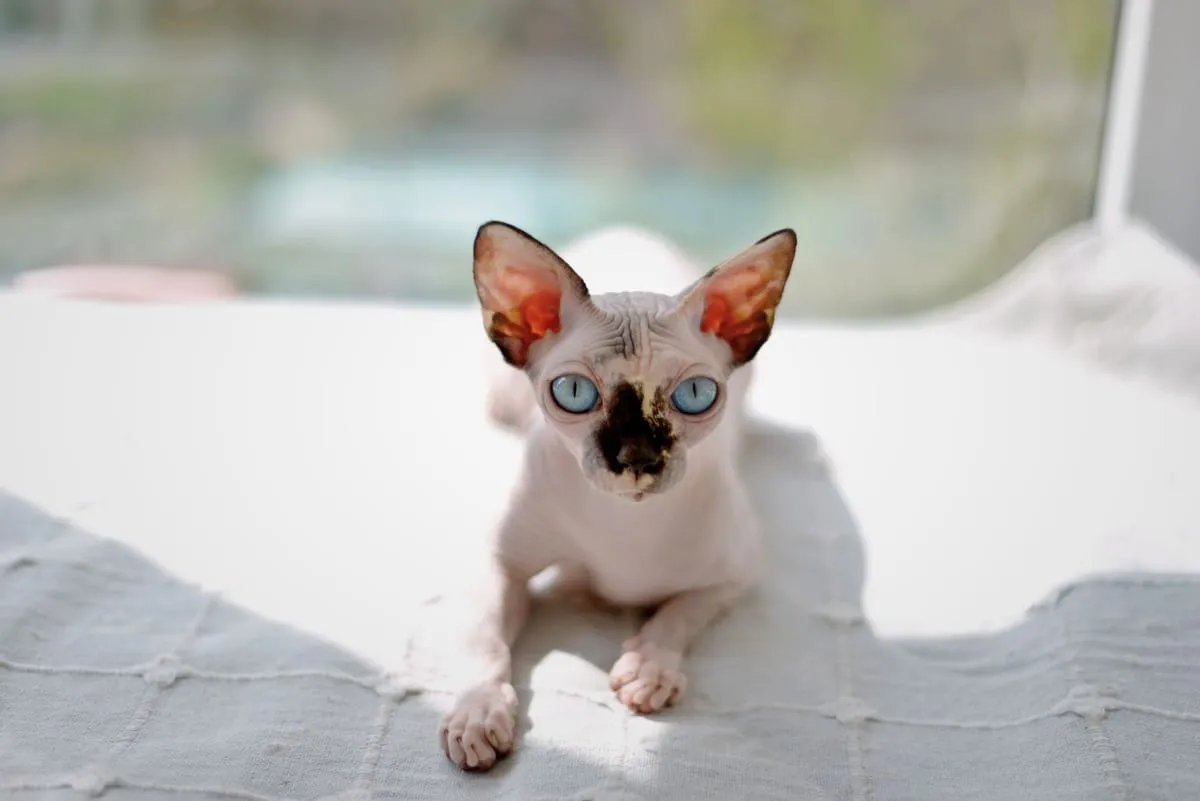
A Sphynx looks, at a glance, like the low-maintenance option: no fur means no brushing, no shedding, no hairballs. That is exactly backwards, and it is the single most common reason Sphynx owners end up surprised. The hairlessness that looks like less work is actually the whole story of the breed, skin that needs active care a coated cat’s fur would otherwise handle on its own. Underneath that, a Sphynx is a warm, people-focused, genuinely extroverted cat that many owners find worth every bit of the extra care. Here is the honest picture.
The skin is the whole job
Start with what the coat would normally do, because that is what a Sphynx owner has to do instead.
A cat’s fur absorbs the natural oils its skin produces, so a coated cat mostly grooms itself and rarely needs a bath at all. A Sphynx has no coat to do that job, so the oil stays on the skin, and left alone it builds up into a greasy film, then a grimy one, that also clogs pores and invites skin infections. The fix is a genuine routine rather than an occasional treat: most owners bathe a Sphynx weekly with a gentle, fragrance-free shampoo made for sensitive cat skin, sometimes more often for an individual that runs oilier than average, and wipe down the skin folds and the tail base between baths since oil collects there fastest. Skip it for a few weeks and the difference is obvious and unpleasant, both to the touch and to the nose.
Sun and cold in a way other cats do not experience
Bare skin means a Sphynx meets temperature and sunlight the way a person would, not the way a coated cat does.
Direct sun on bare skin can sunburn a Sphynx, including through a window on a sunny day, so prolonged sunbathing spots need watching or limiting the way you would for your own skin, and an outdoor Sphynx in strong sun is a genuine risk rather than a coat-related inconvenience. Cold works the same way in reverse: with no fur for insulation, a Sphynx chills faster than other cats in an ordinary cool room, let alone outdoors, and most owners keep a warm jumper on hand for cooler months and a heated cat bed as a genuine comfort rather than a novelty. Both of these are reasons, alongside the general risks any cat faces outdoors, that a Sphynx is kept as a strictly indoor cat.
A heart condition worth knowing about
Beyond the skin, there is one health issue serious enough that any prospective owner should understand it before buying.
Hypertrophic cardiomyopathy, a thickening of the heart muscle that can lead to heart failure or sudden clots, turns up at meaningfully higher rates in Sphynx cats than in the general cat population. It has no connection to the hairlessness itself, it is a separate genetic issue that happens to be more common in the breed, but it is serious enough that responsible breeders screen their breeding cats with a cardiac ultrasound and can show you the results. A kitten from an unscreened, unknown breeder carries a real unknown risk here in a way that is worth taking seriously rather than treating as one more box to tick.
Who a Sphynx actually suits
Weighed honestly, a Sphynx suits someone drawn to a genuinely warm, attention-seeking, people-oriented cat and prepared to treat the bathing routine as a non-negotiable weekly commitment rather than an occasional chore. They tend to be sociable, playful, and famously fond of curling up under blankets or against a warm body, traits that come from that same lack of insulation as much as personality. They do particularly well with owners who are home enough to bathe and check on them regularly, and who can keep the house comfortably warm.
They are a poor fit for anyone drawn to the breed purely on the hairless-means-hypoallergenic myth, since a genuinely allergic person is unlikely to find real relief, or for anyone hoping “no fur” really does mean low maintenance, since the opposite is closer to true. Get the bathing routine, the temperature management, and the cardiac screening right, alongside the basics covered in how to choose the right cat for your home, and a Sphynx gives back one of the most affectionate, dog-like personalities in the cat world, wrapped in skin that genuinely does need you more than a coated cat’s would.
Common questions
- Do Sphynx cats need baths?
- Yes, and this is the single biggest thing people underestimate. Normal cat fur absorbs the skin's natural oils, so a coated cat's grooming largely takes care of itself. A Sphynx has no coat to soak those oils up, so they build up on the skin instead and turn greasy, then grimy, without regular bathing. Most owners settle into a weekly bath with a gentle, fragrance-free cat shampoo, sometimes more often for an especially oily individual.
- Are Sphynx cats actually hypoallergenic?
- No, and this is a persistent myth worth correcting before you commit to one for that reason. Cat allergies are triggered mainly by a protein in saliva and skin, not by fur itself, and a Sphynx still produces both. Some allergy sufferers do find them more tolerable, partly because there is no shed fur carrying allergen around the house, but a Sphynx is not allergy-safe and a genuinely allergic person should spend real time around one before committing.
- Do Sphynx cats need to stay indoors?
- Yes, essentially always. Bare skin sunburns in direct sunlight much like human skin does, and a Sphynx has no coat to buffer against cold, so outdoor time in strong sun or cool weather carries real risk in ways a coated cat's outdoor time does not. Indoor living, kept warm and away from prolonged direct sun through windows, is the standard and safest way to keep one.
- What health problems are Sphynx cats prone to?
- The most serious is hypertrophic cardiomyopathy, a thickening of the heart muscle that shows up at meaningfully higher rates in the breed and is screened for by responsible breeders via cardiac ultrasound. Beyond that, the same bare skin that needs bathing is also prone to blocked pores and skin infections without it, and the large, exposed ears collect wax and debris faster than a furred cat's and need regular cleaning.