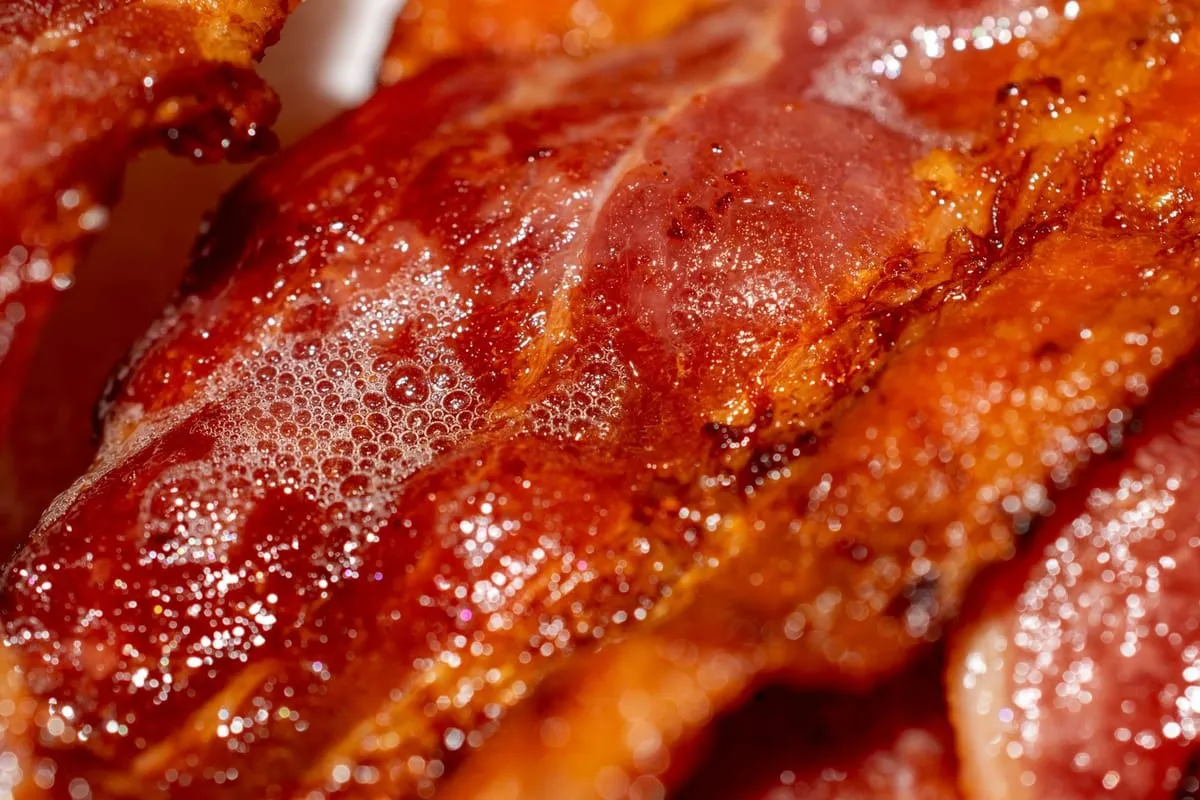
A cat that appears the second bacon hits the pan is not being dramatic, bacon smells like exactly what a carnivore is built to want. The honest answer is that a small piece will not poison your cat, but bacon is cured, salted, and fatty in ways plain meat is not, and none of that is doing your cat any favours. It is a treat worth skipping rather than sharing, and there is a better one sitting in the same fridge.
Why bacon is not the carnivore treat it looks like
Cats are obligate carnivores, so meat itself is exactly right for them, which is what makes bacon confusing. It looks like the chicken or salmon that genuinely suits a cat, but curing and cooking change it into something quite different.
Bacon is salted as part of how it is cured, and that salt load is large relative to a cat’s small body size. It is also high in fat, more so than a plain cut of meat, and fat is the part of bacon most likely to cause an upset stomach or, with repeated exposure, tip a cat toward pancreatitis, a painful inflammation of the pancreas that sometimes needs hospital care to settle. None of that means one dropped piece is a crisis. It means bacon has nothing to offer a cat that plain meat does not already provide, minus the salt and fat.
What one piece actually does
A single small piece of plain bacon, with no seasoning glaze, is not an emergency and does not need a vet call. Watch for an upset stomach over the following day, loose stool or a bit of vomiting, which is the most likely outcome of a one-off piece in an otherwise healthy cat.
Where it adds up is repetition. A cat getting a strip most mornings is taking in far more salt and fat than its diet is built for, week after week, and that is the pattern that genuinely raises the odds of pancreatitis or puts strain on a cat already managing a heart or kidney condition, covered in our guide to signs of kidney disease in cats. A cat with an existing health condition should avoid bacon altogether rather than getting an occasional piece.
A better breakfast treat
Since bacon’s whole appeal is that it is meat, the easy fix is to give your cat meat without the curing and salt attached. A little plain cooked chicken or turkey, unseasoned and cut small, satisfies exactly the same carnivore interest with none of the salt load, and our guide to can cats eat chicken covers how to serve it safely. A spoon of a simple, high-meat food like Applaws Chicken Breast works the same way as a topper, real meat your cat can actually taste, without the bacon pan attached to it.
So, can cats eat bacon? Not as anything more than a very occasional, plain, small piece. It will not poison a cat outright, but the salt and fat buy nothing a plain cut of chicken does not already give more safely, so there is little reason to make it a habit. For the wider picture of feeding cats safely, see our guide to safe and toxic foods for cats.
Common questions
- Is bacon toxic to cats?
- No, bacon is not toxic the way chocolate or onion are, and a small stolen piece is not an emergency. The concern is what regular bacon does to a cat over time, mainly the salt and fat load, not a single poisoning risk from one bite.
- Can bacon give a cat pancreatitis?
- Repeated high-fat food is a real risk factor for pancreatitis in cats, an inflamed, painful pancreas that sometimes needs hospital treatment. One small piece now and then is unlikely to trigger it in a healthy cat, but bacon as a regular habit, or a cat getting into a whole plateful, raises that risk genuinely.
- How much salt is actually in bacon for a cat's size?
- A lot, relative to how little a cat weighs. A single rasher can carry a meaningful share of a cat's entire recommended daily sodium in one go, and cats with any existing heart or kidney issue are especially sensitive to that load. It is not that one piece will cause salt poisoning, it is that bacon is a poor way to spend a cat's daily salt budget for no nutritional benefit.
- What about the grease left in the pan?
- Skip it. Bacon grease is almost pure fat with none of the protein, and licking it or having it poured over food is a much more concentrated dose of fat than the meat itself, which makes an upset stomach or a pancreatitis flare more likely, not less.