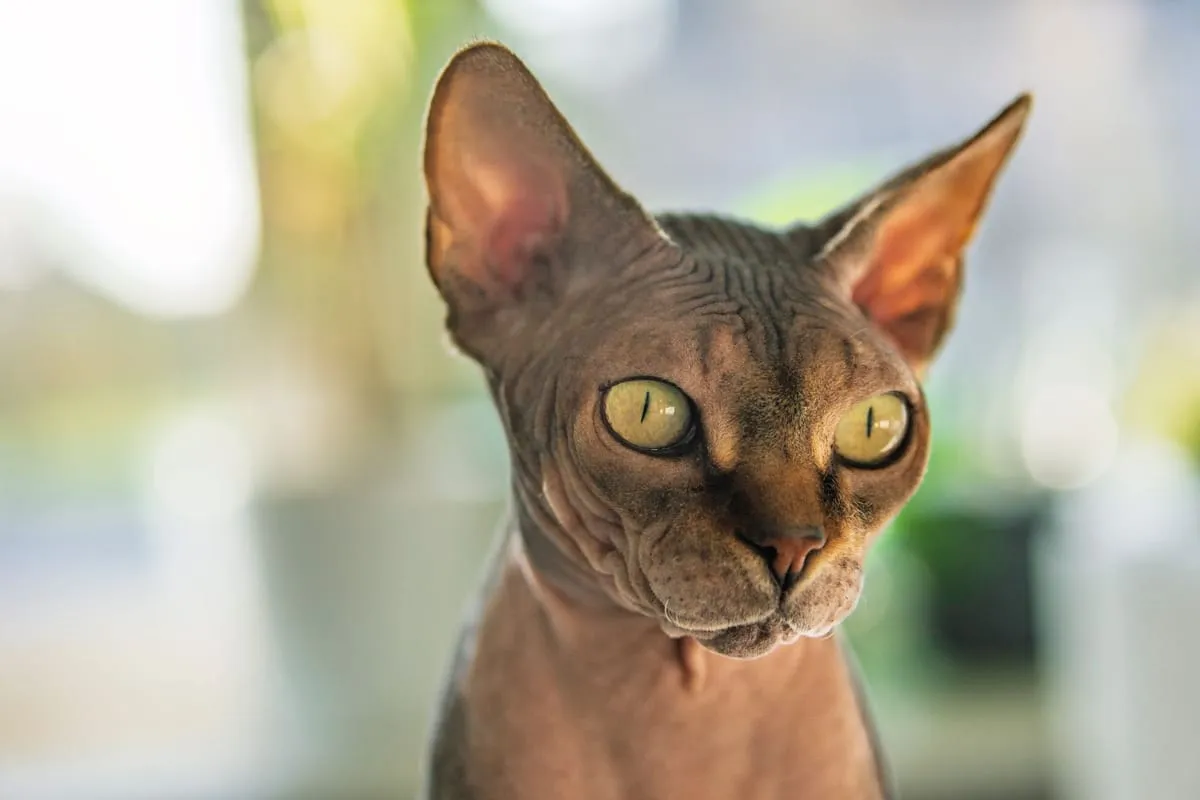
Oily, dark brown wax in a Sphynx cat’s ears is normal, caused by skin oil that would usually be absorbed by fur having nowhere to go in a hairless breed. A weekly wipe with a proper cat ear cleaner keeps it under control, and the wax only becomes a concern if it turns darker, starts to smell, or your cat begins scratching at the ear or shaking its head.
It catches a lot of new Sphynx owners off guard, usually a few weeks in once the novelty of the bathing routine has settled and they notice the ears need attention too. The short version is that it is simply what a hairless cat’s skin does. The slightly longer version, including how to tell ordinary buildup from a real problem, is worth knowing properly.
Why hairless ears fill with wax in the first place
Every cat’s skin produces a steady layer of natural oil, called sebum, that keeps the skin and coat conditioned. On a coated cat, that oil gets absorbed into the fur as it is produced, including the fine fur lining the ear canal, so it never really accumulates anywhere visible. A Sphynx has none of that fur, inside the ears or anywhere else, which means the oil has nowhere to go except to sit on the skin and pool in the ear’s natural folds and canal.
The result is exactly what it looks like: a build-up of brownish, waxy residue that would otherwise be invisible on a furred breed. The same thing happens across a Sphynx’s whole body, which is the reason the breed needs regular baths that most cats never do, and the ears are simply the part of that picture that collects the most in the least time. If your Sphynx’s ears are full of brown gunk within days of a clean, that is the hairlessness doing exactly what it does, not a sign something has gone wrong.
A cleaning routine that keeps it under control
The simplest fix is to make ear cleaning part of the same routine as the weekly Sphynx bath, so it is one habit instead of something you have to remember separately. Use a cat-specific ear cleaner applied to a cotton pad or soft wipe, and gently clean the visible folds of the ear and the part of the canal you can see, working from the outside in. A dedicated ear wipe is a quick option for a mid-week top-up between full cleans if your cat runs oily.
The one hard rule is never to push a cotton swab down into the ear canal itself. It is more likely to pack wax deeper against the eardrum than remove it, and it carries a real risk of injury if your cat moves. Stick to what you can see and reach gently from the outside, and let a vet handle anything further in if the ear needs more than that.
How often should you clean a Sphynx cat’s ears beyond the weekly baseline depends on the individual cat. Some run oilier than others and need a light wipe between full cleans, while others do fine with the once-a-week routine alone. Watch your own cat for a few weeks and you will find the rhythm that keeps the buildup from ever getting heavy.
When normal wax becomes a problem
Plain brown or amber wax that wipes away cleanly and does not seem to bother your cat is the normal, expected version of this. What is worth watching for is a change in that pattern: wax that has gone darker or almost black, a noticeable bad smell, redness or swelling you can see inside the ear, or a cat that suddenly does not want the ear touched, scratches at it, or shakes its head more than usual.
Mites, yeast and bacterial infections can all look similar to simple buildup at a glance, which is exactly why the behaviour and smell matter more than the colour alone. A cat that tolerates its normal weekly clean without complaint and suddenly starts fighting you off is telling you something has changed, even before you can see it clearly.
Related questions
Common questions
- Why does my Sphynx cat have so much brown ear wax?
- A Sphynx has no fur anywhere on its body, including inside the ear, so the oil its skin produces to protect itself has nowhere to be absorbed and builds up visibly instead. A coated cat's fur quietly soaks up that same oil, which is why owners of other breeds rarely see it. Brown, waxy buildup in a Sphynx's ears is normal and expected, not automatically a sign of illness.
- My Sphynx's ears are full of brown gunk. Is that an infection?
- Usually not. Plain brown or amber wax that wipes away cleanly, with no smell and no sign your cat is bothered by it, is ordinary Sphynx oil buildup. An infection tends to look and act differently. The wax turns darker or almost black, it smells unpleasant, the skin inside the ear looks red or inflamed, and your cat scratches at the ear, shakes its head, or resists you touching it. If you see those signs, book a vet visit rather than cleaning through it.
- How often should I clean a Sphynx cat's ears?
- Most owners find once a week keeps buildup manageable, timed to land on the same day as the regular Sphynx bath so it becomes one habit rather than two. An especially oily cat may need a quick wipe mid-week as well. Cleaning too often can irritate the ear canal, so stick to a routine rather than cleaning every time you notice wax.
- What should I use to clean my Sphynx cat's ears?
- A cat-specific ear cleaner or ear wipe, used gently on the visible folds and the outer part of the canal, is the standard approach. Never push a cotton swab down into the ear canal itself, since that risks packing wax deeper or injuring the eardrum. If your cat's ears are sore, inflamed, or your cleaning routine is not keeping up with the buildup, see your vet rather than reaching for a stronger product on your own.