Before a kitten comes home you need: a low-sided open litter tray, litter and a scoop, food and water bowls kept away from the tray, the food they are already eating, a tall sturdy scratching post, a carrier, one wand toy, a few small toys, and an enzyme cleaner. Set it all up the day before, not while a frightened kitten watches from under the sofa.
Everything else on the kitten aisle can wait. What follows is why each of those items is on the list, which two are worth getting right the first time, and what most people buy that a kitten never touches.
The list that has to be there on day one
A kitten arriving in a new house is a small animal that has just lost its mother, its litter and every familiar smell it knows. The kit exists to make the first days predictable.
The litter tray, litter and scoop come first, because a kitten needs to find the toilet within minutes of arriving, not after a search. Food and water bowls go somewhere else entirely, since cats will not happily eat next to where they toilet. Keep feeding the same food the breeder or rescue was using, because a change of diet on top of a change of home is a common cause of an upset stomach. A scratching post needs to be up before the kitten arrives rather than after they have chosen a chair. The carrier matters on the very first journey and again at the first vaccination appointment. A couple of toys cover the play. And an enzyme cleaner, rather than an ordinary household cleaner, is what stops a small accident becoming a habit in the same corner.
The two purchases worth getting right first time
Most kitten kit can be basic. Two items decide how the next fifteen years go, and both are cheaper to get right now than to fix later.
The first is the litter tray. Buy an open tray with low sides so a small kitten can climb in without effort. Hooded and high-sided trays suit some adult cats, but for a kitten they are a physical barrier and a reason to go somewhere easier. Pair it with a plain, unscented clumping litter such as a low-dust clumping litter, and a proper metal scoop that will outlive the cat. Scented litters are for humans and are one of the more common reasons a cat quietly stops using a tray. Have more trays than cats, keep them away from food, and scoop every day.
The second is the scratching post. Buy a tall, solid sisal post that a full-grown cat can stretch up to its full length against, with a base heavy enough that it does not rock. A wobbly post teaches a cat that the sofa arm is the more reliable surface, and once that habit forms it is far harder to shift than it would have been to prevent. A flat cardboard scratcher alongside it covers the cats who prefer to scratch horizontally, and between the two you have both preferences covered before you know which one you have.
Toys: two or three, not twenty
The toy aisle is where the money goes and the least of it is needed. A kitten needs one good interactive toy and a few small things it can move on its own.
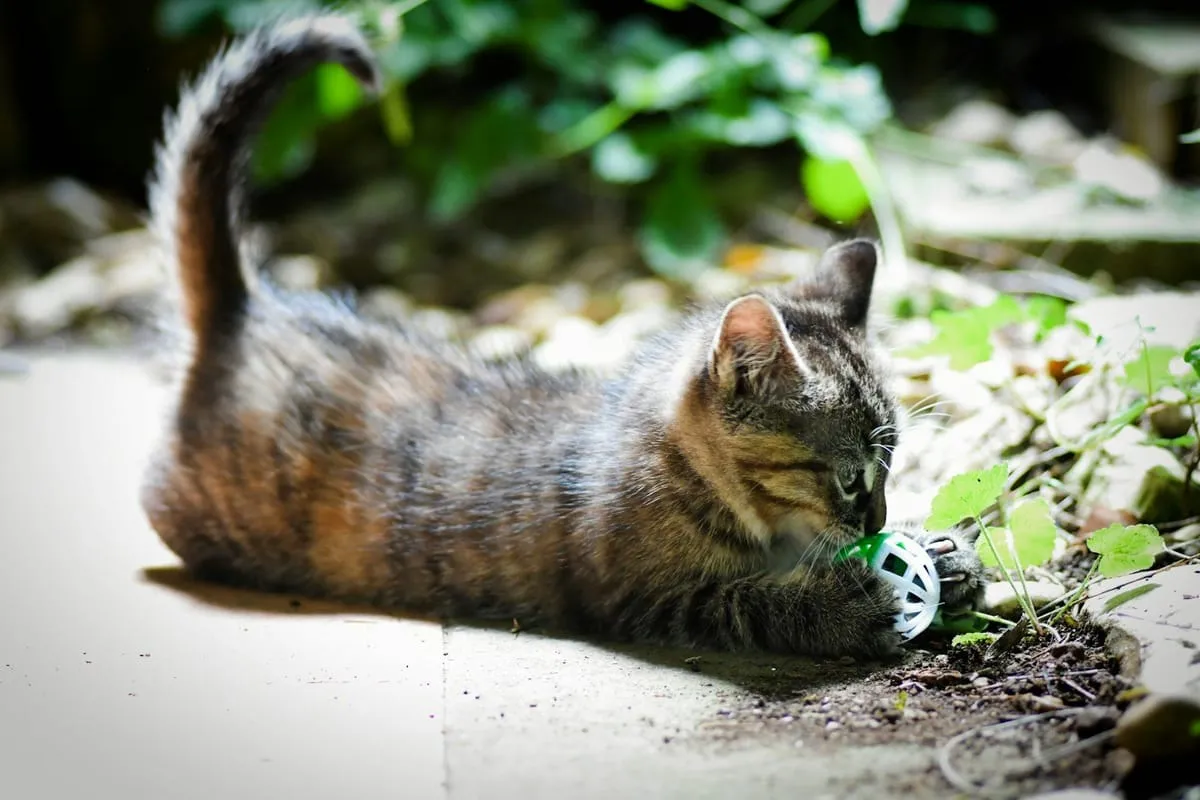
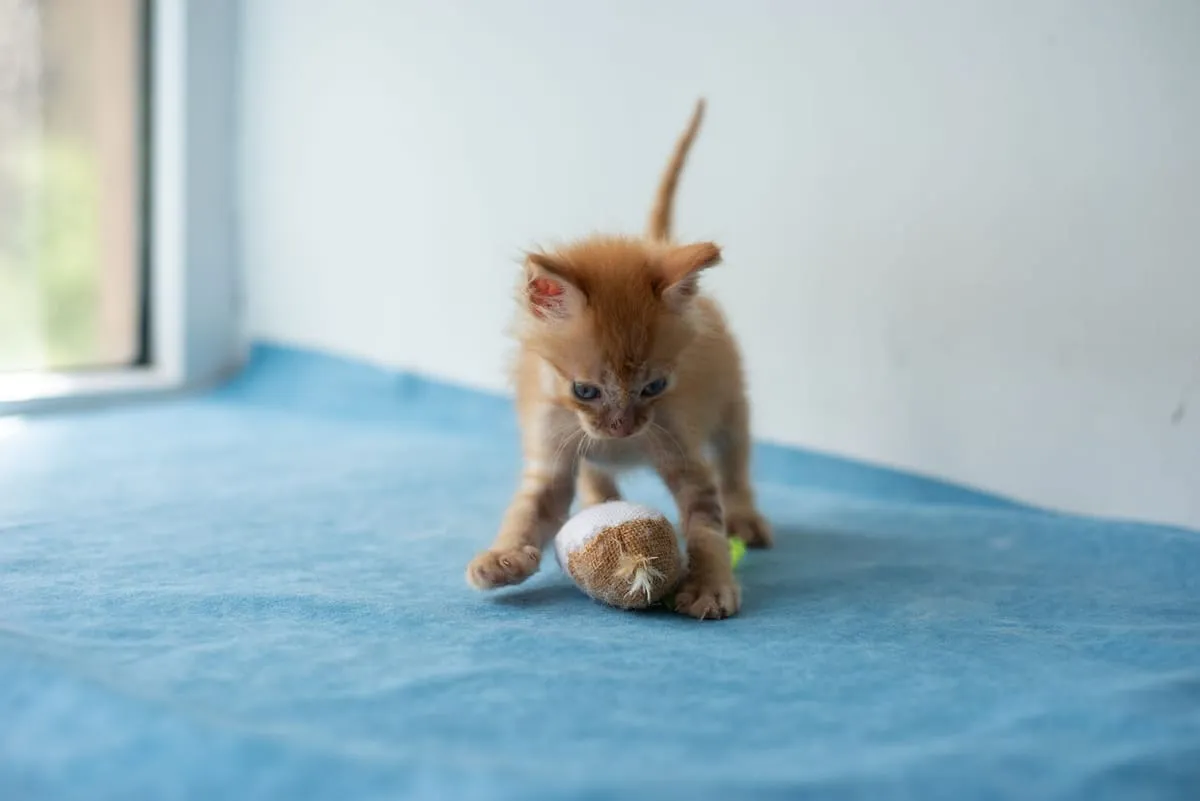
The one that does the most work is a wand toy. A feather wand flown properly, in short bursts, with a catch at the end, gives a kitten the whole hunting sequence of stalk, chase, pounce and kill, and that sequence is what actually satisfies a cat. A simple wire-and-card teaser does the same job in a different way and costs very little. For solo play, a handful of small catnip mice a kitten can bat, carry and lose under the fridge is more useful than anything elaborate, and a kicker toy suits the back-legged bunny kick kittens do when they really commit to something.
Two or three toys out at a time is plenty, with the rest put away and swapped every few days. A small rotated set stays interesting far longer than a full basket that never changes, and this is the same principle that keeps an indoor cat from getting bored years later.
Food, water and bowls
Buy the food they are already on, in the same brand and texture, and change it later if you want to, slowly.
A kitten formula is worth moving to at some point, because a growing kitten has genuinely different needs from an adult cat, but the transition should be gradual, mixed in over about a week, once the kitten has settled. Bowls should be shallow and wide rather than deep, since a deep bowl presses on the whiskers and a surprising number of cats dislike it. A raised shallow bowl suits that preference and is easier on the neck. Water goes somewhere separate from the food, and more than one water spot around the house is better than one, because cats drink more when water is easy to reach.
What you can safely buy later
Plenty of kitten kit is genuinely optional in week one, and some of it is better bought once you know the cat.
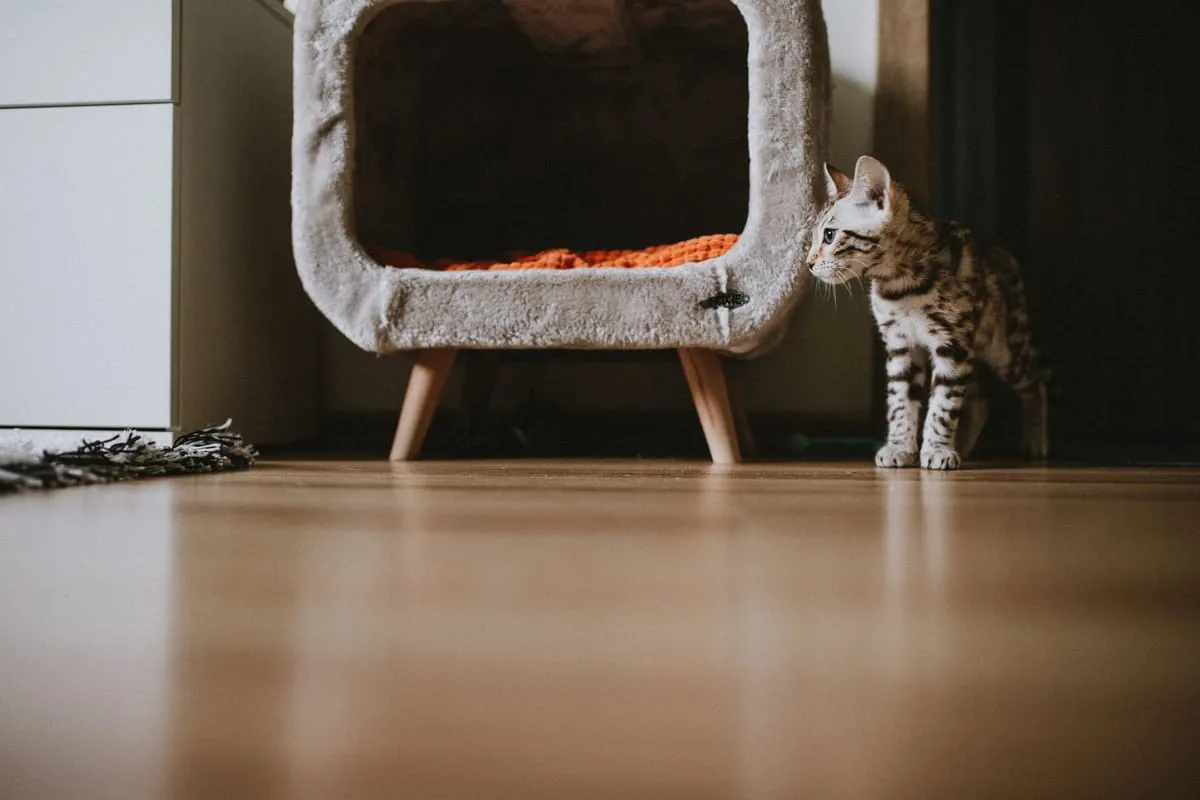
A cat tree can wait until you have seen where your kitten likes to sit, and then you can put a multi-level tree in the right room rather than the wrong one. A water fountain is a good buy for a cat that turns out to be a reluctant drinker, and unnecessary for one that drinks happily from a bowl. A harness and lead can wait until the kitten is confident indoors. A bed can wait more or less indefinitely, because kittens sleep where they choose and a folded blanket in a quiet corner usually wins. Grooming tools can wait until the adult coat comes in, since a short-coated kitten and a long-coated adult need different things.
Before the kitten arrives: the half-hour that matters
Kitten-proofing is free and it is the part people skip.
Walk each room at kitten height. Tie up blind and curtain cords, because a looped cord is a strangulation risk. Move houseplants you are not certain about, since several common ones, lilies above all, are seriously toxic to cats. Put elastic bands, hair ties, sewing thread, needles and small toy parts away, as those are the everyday swallowed objects that end in an emergency appointment. Check that washing machines and tumble dryers are kept shut and checked before use. Close off gaps behind kitchen units and under floorboards where a small kitten can get stuck. And find out where your nearest out-of-hours vet is before you need one.
Then book the vaccination appointment, ask your vet when the kitten can safely meet other pets and when neutering should be discussed, and let the kitten come out in its own time. Our new kitten checklist sets the whole first year out as a timeline, how to litter train a kitten covers the tray in detail, and how much a cat costs in its first year sets out what the twelve months ahead are likely to ask of the budget.
Common questions
- What do I need to buy before a kitten comes home?
- A litter tray with low sides, litter, a scoop, food and water bowls placed away from the tray, the food the breeder or rescue is already feeding, a tall sturdy scratching post, a carrier, a wand toy, a few small toys a kitten can carry, and an enzyme cleaner. That covers the first week. A bed is optional, because kittens choose their own sleeping spots regardless of what you buy.
- What kind of litter tray does a kitten need?
- An open tray with low sides, so a small kitten can actually climb in without a struggle. Covered and high-sided trays suit adult cats who want privacy but are a barrier to a kitten and can put them off using it at all. Have more trays than cats, keep them away from food and water, and scoop daily.
- Do kittens need a scratching post straight away?
- Yes, and it should be there before the kitten is. Scratching is normal, necessary behaviour and a kitten will start on whatever is available, so the post needs to be in place and in a room the kitten actually uses. Buy one tall enough for a full adult stretch and heavy enough not to wobble, because a post that tips over teaches a cat that the sofa is the safer option.
- What toys should I buy for a new kitten?
- One good wand toy for play with you, and a few small light things a kitten can bat, chase and carry on its own. Skip anything with loose string, ribbon, elastic or small glued-on parts, and put wand toys away between sessions so the string is never left out. Two or three toys is plenty at the start, because rotating a small set keeps them interesting.
- Should I buy a cat bed for a kitten?
- You can, but do not count on it being used. Kittens sleep where they feel safe and warm, which is usually a sunny patch, a cardboard box, a laundry pile or your bed rather than the thing you bought. A soft blanket in a quiet, enclosed spot is a cheaper and often more successful version of the same idea.