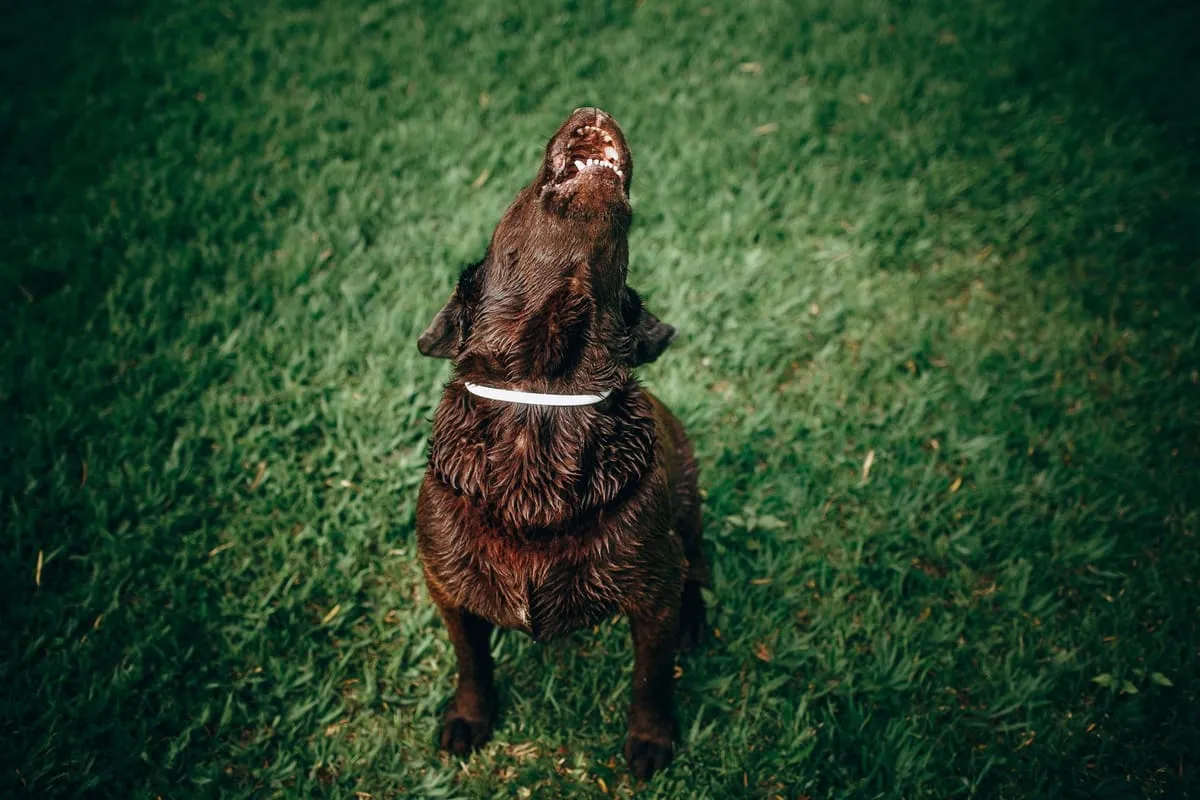
One minute a dog is lying calmly on the floor. The next it is tearing round the garden in tight circles, ears back, tail a blur, taking the sofa corner like a racing line before vanishing into the kitchen and doing it all again. New owners often assume something is wrong, a reaction to a sting, a sudden fright, the start of a seizure. Almost always, nothing is wrong at all. This is the zoomies, and it is one of the most normal things a dog does.
What is actually happening
The proper name is Frenetic Random Activity Periods, FRAPs for short, and the description fits. A dog mid-FRAP runs fast, often in loops or figure-eights, frequently low to the ground, and is genuinely hard to call out of until it has run its course. That course is usually short, a burst of twenty to sixty seconds, occasionally longer, and then the dog stops just as abruptly as it started and goes back to normal as if nothing happened.
Zoomies are built-up energy or emotion finding a physical outlet all at once. They show up most in puppies and young dogs with more energy than outlet, but plenty of calm adult dogs still get them in specific moments: first thing in the morning, last thing before bed, straight after a bath, after being let out of a crate, or after finally going to the toilet on a walk. None of those triggers are a coincidence. They are all moments where tension, excitement, or restraint has just been released, and the zoomies are what that release looks like in dog.
When to just let it happen
For the vast majority of zoomies, the right response is to do nothing except get out of the way. Trying to physically stop a dog mid-FRAP rarely works and can occasionally end with a nipped hand or a trodden-on foot, purely by accident, since the dog is not fully tracking where you are. Clear a path if you can, or redirect outdoors if the living room is too tight a space, and let the burst run its course. It ends on its own, almost always within a minute.
The one time to actually manage it
There is a genuine safety line worth knowing, rather than treating every zoomie identically.
Footing matters too. A dog at full speed on a polished floor, wet patio, or thick rug with nothing to grip can slide into furniture or twist a leg awkwardly, which is a common, preventable way dogs end up with a sprain. If zoomies regularly happen indoors on slippery flooring, a cheap non-slip runner in the usual path, or simply redirecting to carpet or outside, removes most of that risk. A dog that comes up limping after a burst of zoomies is worth watching the way covered in why is my dog limping, since most of it settles on its own but a limp that lingers past a day or two deserves a vet check.
When it is not quite the same thing
Ordinary zoomies look like play even at full speed, loose body, a bit of a doggy grin, no distress in between bursts. A dog that runs frantically with flattened ears, a tucked tail, wide eyes, or no pause at all, especially if it is also panting heavily, drooling, or trying to escape something, is more likely showing fear or pain than joy. That is worth treating as a different problem rather than a FRAP: look for what might have startled or hurt the dog rather than waiting for it to pass on its own. Genuine zoomies are also a burst, not a daily marathon. A dog that is constantly frantic, never settles, and seems unable to switch off is usually under-exercised or under-stimulated rather than simply a zoomie-prone dog, and benefits far more from more structured daily outlet than from being left to burn it off indoors.
The short version
Zoomies are a normal, healthy release of energy, not a malfunction, and the right response for almost all of them is to clear some space and let the dog finish. The only real management points are keeping a full stomach out of a hard sprint and keeping the surface underfoot safe. Everything else is just a dog being a dog, and most owners end up finding it one of the more entertaining things their dog does.
Common questions
- What are zoomies, technically?
- Vets and behaviourists call them Frenetic Random Activity Periods, or FRAPs, short bursts of sudden, high-speed, often circular or figure-eight running that a dog cannot easily be called out of mid-burst. They are a normal release of built-up energy or excitement, not a behaviour problem, and almost every dog does them at some point in its life.
- Why does my dog get the zoomies after a bath?
- Nobody knows the exact reason, but the leading theories are relief at the ordeal being over, a dog rubbing a disliked scent or sensation off against the floor and furniture mid-sprint, or simple pent-up tension finally letting go. It is harmless as long as the floor underfoot is not slippery and nothing breakable is in the path.
- Are zoomies ever a problem?
- The zoomies themselves are not, but the timing and the surface can be. Avoid encouraging a full sprint straight after a large meal, especially in a deep-chested breed, and keep an eye on footing, since a dog at full speed on hard or slippery flooring can take a bad fall. Sudden frantic running that looks more like panic than play, especially with flattened ears, tucked tail, or no let-up, is worth looking at differently.
- How do I stop my dog zooming around indoors?
- You usually cannot, and should not try to, in the moment, since a dog mid-FRAP is not really listening. Clear a safe path, remove anything breakable, and let it run itself out, which normally takes well under a minute. For dogs that zoom indoors often, the better fix is heading it off earlier in the day with proper exercise and some mental work, so the energy has already gone somewhere before it builds to that point.