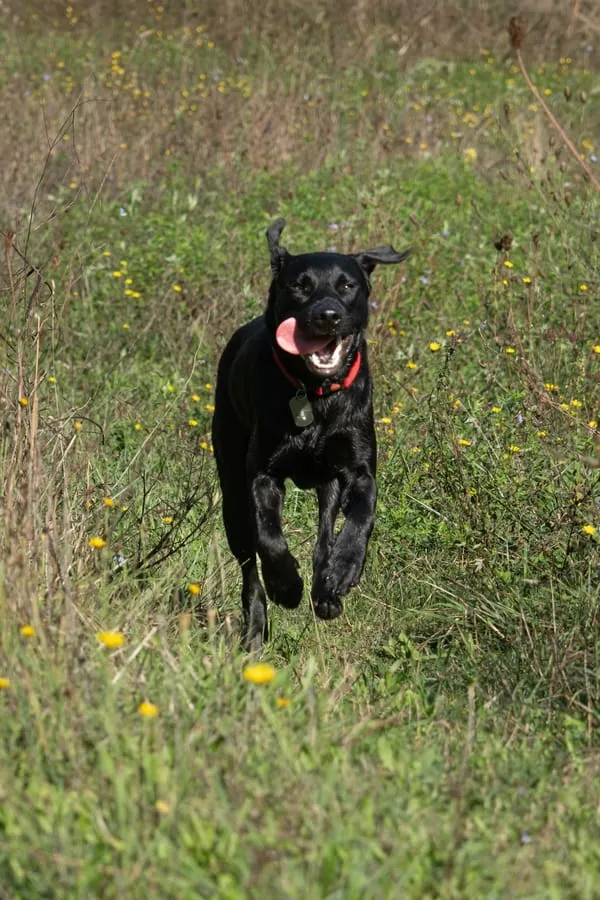
The door is open, a visitor is halfway through it, and your dog is already a stride past your legs and into the street. Or dinner slips off the counter and lands on the kitchen floor before you can grab it, and your dog gets there first. A dog that has been properly taught to stay, and hold that stay until released, stops both of those moments before they become something worse. It is one of the most useful things you can teach, and one of the most commonly half-taught, because most owners stop practising the moment the dog can do it in the living room with no distractions at all.
What a real stay actually means
A proper stay is a dog holding one position, sitting or lying down, in one exact spot, until you give a clear release word, not until it gets bored or decides the exercise is over.
That last part is the piece most home-taught stays are missing. A dog that holds for ten seconds and then wanders off because nothing happened is not stuck, it has learned that stay quietly expires on its own schedule. A dog with a real stay waits because position and release are the only two things that end the exercise, and nothing else does, not time passing, not you walking away, not something interesting happening nearby.
Start close, start short, start easy
Build the behaviour before you test it, in the easiest possible version first.
Ask your dog to sit or lie down, say your stay word, and reward after a single second while your dog is still in position, before anything can go wrong. Release with your chosen word immediately after, so the dog learns the pattern: stay word, brief hold, reward, release word. Repeat this many times across short sessions, gradually stretching the hold from one second to several, always rewarding while your dog is still in position rather than after it has already moved.
Add distance and distractions one at a time
Once a short stay is solid right next to your dog, add difficulty in only one direction at a time, never several at once.
Increase the time your dog holds for before you add any distance at all. Once duration is reliable, take a single step back, then return and reward before release, building up to a full pace, then several, then eventually out of the room and back. Each time you raise one variable, drop the others back to an easy level, a longer stay at a greater distance should start with a shorter hold, not both pushed to the limit together. The same logic applies to distractions: practise with the television on before you practise with the doorbell, and with a family member walking past before a visitor actually knocking.
The mistakes that quietly undo a stay
A handful of habits are responsible for most stays that fall apart the moment they meet real life.
Moving too fast between stages is the biggest one, adding distance before duration is solid, or distractions before either is reliable, which is why stay training so often feels like it “worked at home and fell apart outside”. Letting your dog decide when the exercise is over is another, if you sometimes release with a word and sometimes just let your dog wander off when it looks bored, you have taught two different endings and your dog will pick whichever one it prefers. And calling your dog to you from a stay using the same cue you use for other things muddies the picture further, a clean release word that means nothing except “the stay is over” keeps the whole exercise unambiguous.
Why it is worth building properly
A reliable stay earns its keep in exactly the ordinary moments that cause the most trouble: a door opened for a delivery, food within reach on a counter or table, a vet’s waiting room, a toddler walking past with a plate. It works alongside a reliable recall rather than replacing it, recall brings a dog back to you, stay keeps one in place until you decide otherwise, and most households end up needing both. Combined with a solid “leave it” for anything tempting on the ground, these three cues cover most of the situations where an untrained dog gets itself into trouble, and a well-trained one simply does not.
Common questions
- What is the difference between "stay" and "wait"?
- Many trainers use "wait" for a brief, informal pause, at a door or before getting out of the car, and save "stay" for a longer, more formal hold where the dog commits to staying in one exact spot until released. You do not have to use both words, but if you do, keep them consistent in your own house so the dog is not guessing which one means what.
- How long should it take to train a solid stay?
- A dog can usually hold a few seconds reliably within the first couple of short sessions. Getting to a stay that holds for minutes, or through real distractions like the doorbell or a dropped plate, takes weeks of regular, short practice, built up gradually. Treat an early one-second stay as the start of the skill, not a finished product.
- My dog breaks the stay the moment I move away. What am I doing wrong?
- Almost always this means distance was added before duration was solid, or both were added at once. Go back to a stay your dog can hold rock solid right next to you, build the time up there first, then add distance in small steps, a single pace at a time if needed, releasing and rewarding before the dog has a chance to break on its own.
- Is it true that only using a release word matters more than the stay itself?
- It matters just as much. A stay without a clear, consistent release word teaches your dog to guess when it is over, which means it will start guessing early and breaking position before you ask. Pick one word, use it every single time you end a stay, and never let your dog decide for itself that the exercise has finished.