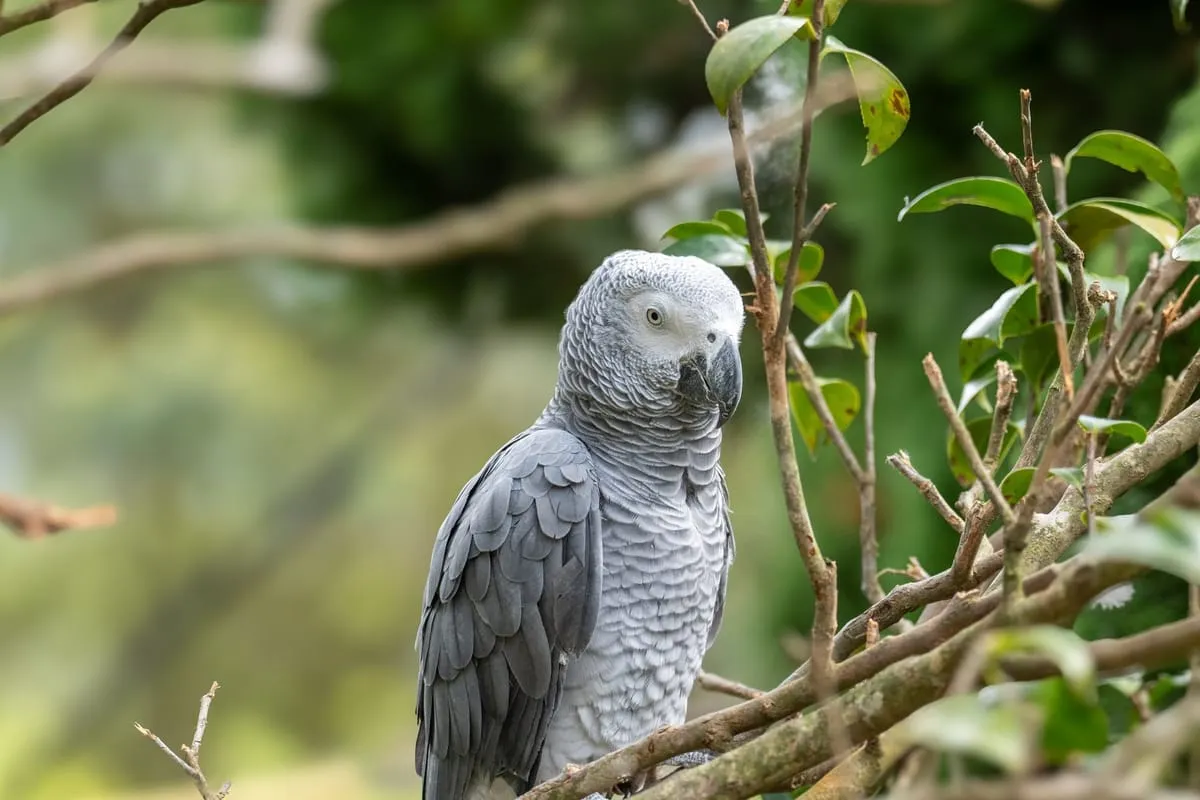
The African grey has a reputation as the smartest parrot commonly kept as a pet, and living with one tends to confirm it fast. That intelligence is the whole draw, and it is also exactly what makes a grey one of the most demanding birds anyone can bring into their home. This is not a starter bird, and it is not a bird that thrives on being left in a cage with a bowl of seed. This is a care guide to what an African grey actually needs, and an honest look at who should, and should not, take one on.
An intelligence that has to be worked
African greys are widely regarded as among the most cognitively capable birds kept as pets, with problem-solving and vocal abilities that have made them the subject of serious scientific study, most famously the decades of research with a grey named Alex that reshaped how scientists think about avian cognition.
That intelligence is not a party trick, it is a need that has to be met daily. A grey left without enough mental work, in a small cage with little to do, is one of the pet birds most likely to develop serious stress behaviour, particularly feather plucking, and once an established plucking habit sets in it can be very difficult to fully resolve. Preventing it matters far more than treating it after the fact, and prevention here means genuinely varied daily enrichment, not an occasional new toy.
Size, housing, and the toys that actually hold up
A grey is a medium-to-large parrot, and its housing needs to reflect that rather than the smaller cages sized for a budgie or cockatiel. It needs the largest cage you can reasonably fit, wide enough for full wing extension and a proper hop between perches, with bar spacing sturdy enough to withstand a genuinely strong beak.
That same beak destroys anything built for a small bird in minutes, so toys need to be sized for it. A chunky wooden block chew built for large-parrot beaks and a substantial foraging challenge that makes the bird work for food both hold up to daily use in a way small-bird toys simply do not, and rotating a few different large-parrot toys through the cage keeps novelty up. Perches of varying width and texture around the cage help keep feet healthy too, the same principle covered in how to keep a parrot from getting bored, just scaled up.
Diet, and a species-specific health note
An all-seed diet is a mistake with any parrot, but it compounds harder in a bird that may live 50 years, since decades of poor nutrition has far more time to do damage. A large-pellet diet formulated for big parrots, specifically sized so a grey is not struggling with feed meant for a much smaller bird, alongside a daily variety of fresh vegetables, is the right base, exactly as explained in why an all-seed diet is bad for your bird.
Who an African grey actually suits
An African grey suits someone with real prior bird-keeping experience, the time to provide hours of daily interaction and enrichment, and a genuine long-term plan that accounts for a lifespan that can stretch beyond the owner’s own. It rewards that investment with one of the most intelligent, engaging companion animals available, capable of forming a deep bond and startling problem-solving.
It is a poor choice for a first-time bird owner, anyone hoping for a low-maintenance pet, or anyone unable to commit to decades of care rather than years. If that describes your situation, a budgie or cockatiel will give a far kinder introduction to keeping parrots, with the door left open to a bigger species later once you know what that commitment really involves. Get the enrichment, diet, and time commitment right, and a grey gives back a genuinely remarkable companion for a genuinely long time.
Common questions
- Are African grey parrots good pets for beginners?
- Generally no. Their intelligence, long lifespan, and capacity for problem behaviour when under-stimulated make them one of the more demanding pet birds to get right, and they are better suited to someone who has kept a smaller parrot species first and understands what daily enrichment and interaction actually take.
- How long do African grey parrots live?
- Often 40 to 60 years with good care, and some live longer still, which makes a grey a lifelong commitment that can outlast the person who bought it. Anyone considering one should have an honest plan for the bird's care decades into the future, including who would take it on if they no longer could.
- Why is my African grey plucking its feathers?
- Feather plucking in this species is usually a sign of an unmet need, most commonly boredom, an insufficient diet, or stress, though it can also be medical, so a sudden change is always worth an avian vet check. Our guide to why is my bird plucking its feathers covers the general causes in more depth, and greys are one of the species most prone to this problem when kept under-stimulated.
- Do African grey parrots really understand what they say?
- Some research suggests greys can associate words with meaning and context far more than simple mimicry, most famously documented in the studies around Alex the grey, though the full extent of their understanding is still debated among researchers. What is not in doubt is that they are exceptional mimics, and a bored or attention-seeking grey will often repeat sounds, including ones you would rather it did not.