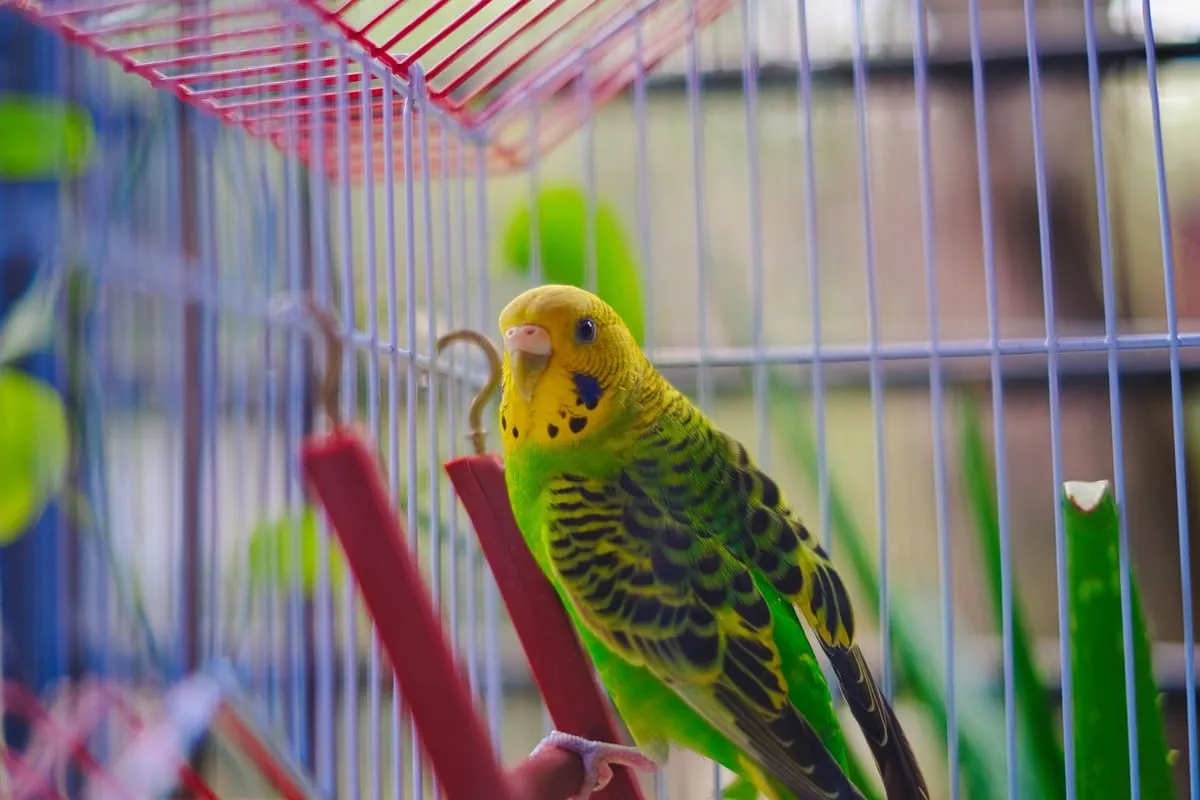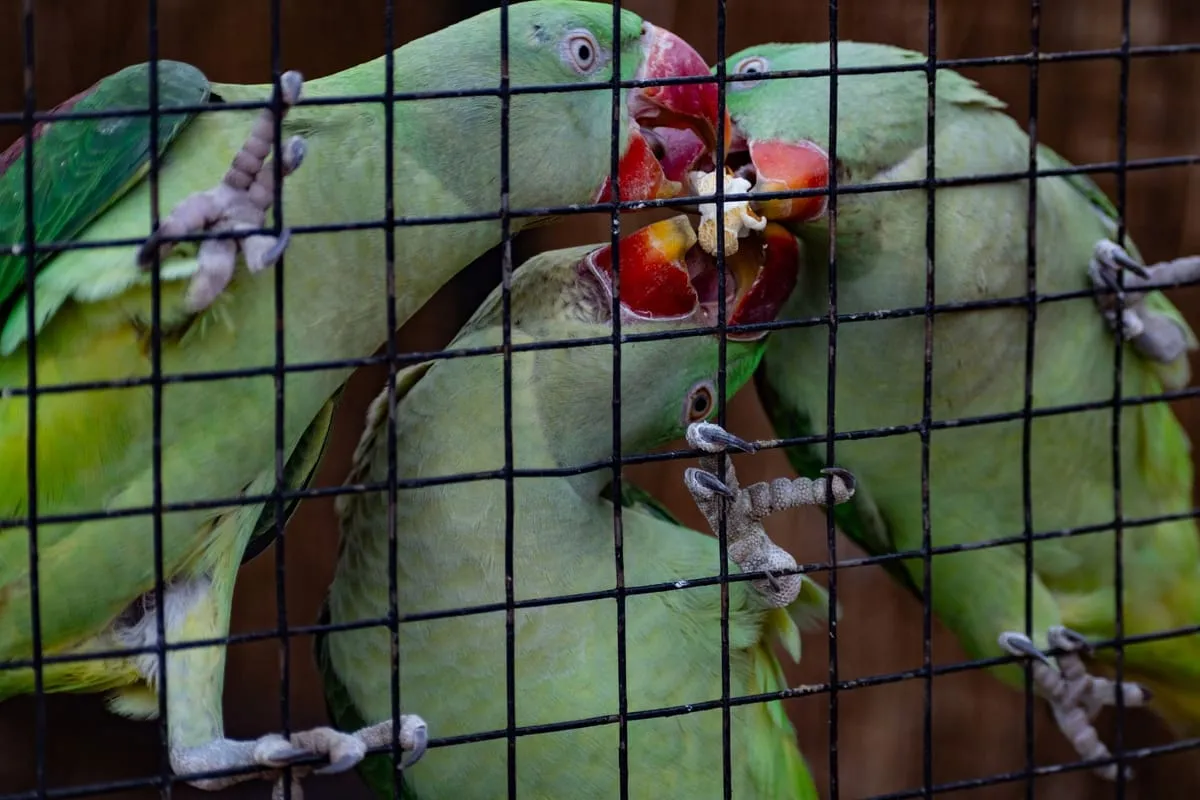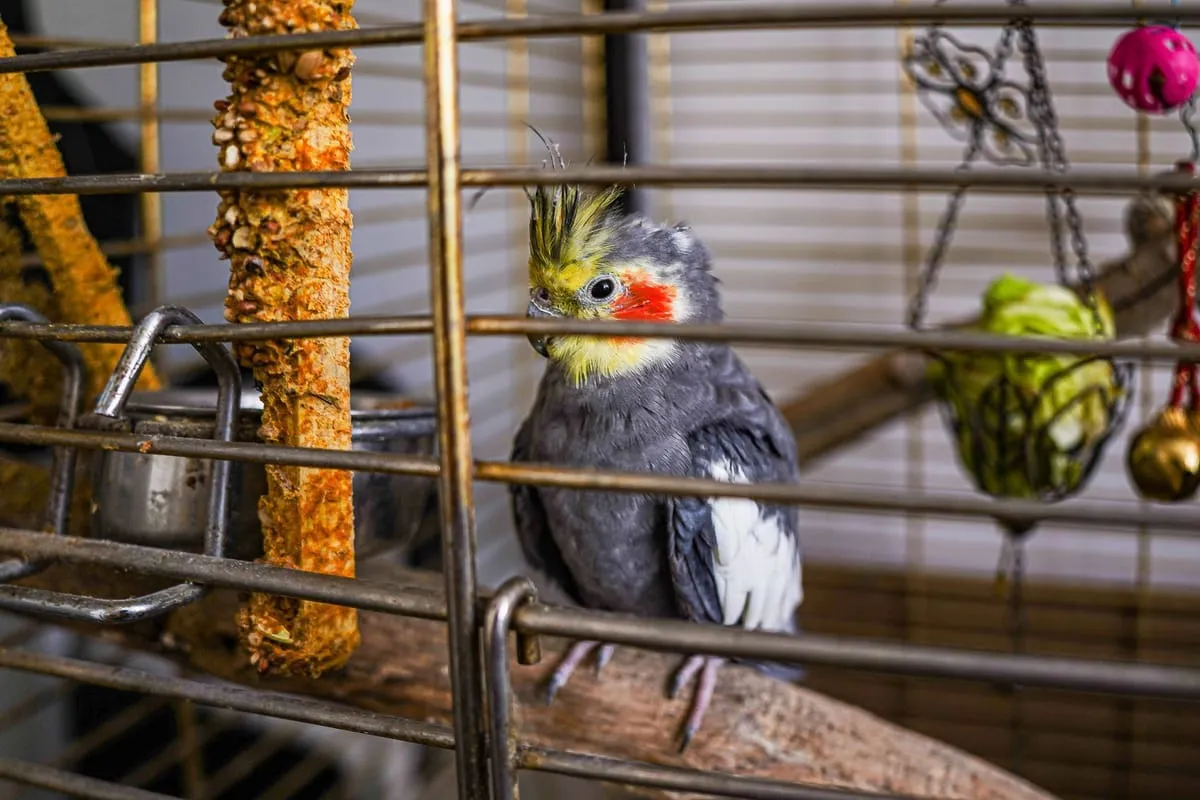
A cage strung with toys that a bird studiously avoids, or screams at, is one of the more confusing things a new owner runs into. You did the research, bought toys built for the species, and your bird treats the whole arrangement like a trap. It is tempting to read this as a bird with no interest in play, but that is rarely what is actually happening. Almost always it is fear of something unfamiliar, a toy that does not suit what that bird actually likes doing, or a toy hung somewhere that makes it feel cornered rather than curious.
Fear of the new is the most common reason
Before anything else, it helps to understand that a bird ignoring or screeching at a toy is very often showing fear, not indifference, because that changes what fixes it.
Birds are prey animals, and most species are naturally neophobic: wired to treat anything new appearing in their space with suspicion rather than curiosity, since in the wild a strange object overnight was often a genuine danger. A toy that looks harmless to you, a bright plastic shape, a dangling rope, can read to your bird as an unknown threat parked right next to its perch. This is instinct working exactly as designed, not your bird being difficult, and it explains a huge share of what owners describe as toy refusal.
Introduce new toys slowly, not all at once
Once you know fear is likely the cause, the fix is a gradual introduction rather than hoping your bird gets used to it on its own timeline.
Start the toy well away from the cage, somewhere your bird can see it without feeling cornered by it, and let your bird simply notice it exists for a day or two. Move it a little closer gradually, watching how your bird reacts at each step, and pair its presence with something good, a favourite treat or attention, so the toy starts to predict good things rather than nothing at all. Only hang it inside the cage once your bird is calm around it up close. This takes patience, often a couple of weeks for a properly nervous bird, but it works far more reliably than leaving a toy in place and waiting for tolerance to arrive by itself.
Match the toy to what your bird actually likes doing
Fear explains a lot of toy refusal, but not all of it. Sometimes a bird that is genuinely relaxed around a toy still leaves it alone because it is simply the wrong kind of toy for that individual.
Birds vary in what they find rewarding the same way dogs and cats do. Some are driven to shred and destroy, and want soft, destructible material they can rip into pieces. Some are foragers at heart and only light up for a toy that hides food they have to work for. Some like to manipulate small objects with their beak and feet, and want puzzle-style toys with moving parts. A quiet, static toy offered to a bird that is motivated by shredding or foraging can sit there forever looking untouched, not because your bird cannot play, but because that particular toy was never going to interest it. Watching what your bird already does naturally, chewing the cage bars, investigating food, pulling at things, tells you which category is worth trying next. Our bird toys and enrichment picks cover the destructible, foraging, and puzzle categories, which is a useful place to start if you are not sure which your bird favours. The bird kabob in particular is built for committed shredders and is often the easiest win for a bird that has ignored everything else.
Where you hang it matters more than people expect
Even the right toy, introduced patiently, can still get ignored if its position in the cage works against it.
A toy hung directly over food or water bowls can put a nervous bird off eating or drinking near it entirely, which teaches avoidance rather than play. A toy crammed into a corner a bird has to squeeze past, or hung somewhere that blocks its usual escape route to a favourite perch, will get avoided on principle regardless of how appealing it is. Give a new toy some breathing room, somewhere your bird can approach and retreat from freely, and somewhere that does not interfere with the resources it relies on. A parrot playstand outside the cage is also worth having, since some birds that are guarded about toys near their core territory will happily investigate the same object on neutral ground.
Keep it fresh once it is working
Once your bird is genuinely engaging with a toy, the last piece is not letting that interest fade through overfamiliarity.
A toy that has hung in the same spot for a month becomes part of the furniture, invisible rather than interesting. Rotate two or three toys in and out of the cage every week or so rather than leaving everything up permanently, and a bird that seemed to have lost interest in something will often re-engage with it happily once it reappears after time away. For a bird that has mastered the basics and is ready for something harder, a step-up puzzle like a foraging wheel keeps a clever bird working for longer before it gets bored again. Our fuller guide on keeping a parrot from getting bored covers the whole enrichment picture, foraging, chewing, and out-of-cage time, if toy refusal turns out to be one symptom of a bird that needs more going on generally.
Put together, rule out fear first with a slow introduction, match the toy to what your particular bird enjoys, give it a fair position in the cage, and rotate once it is working, and most toy refusal resolves. A bird that seems to want nothing to do with any toy at all is unusual. Far more often it is a bird telling you, as clearly as it can, that something about this particular toy or this particular moment is not right yet.
Common questions
- Why is my bird scared of a new toy?
- Most birds are naturally neophobic, wired to treat anything unfamiliar in their space as a possible threat, since in the wild something new appearing overnight often was one. A brand new toy hung straight into the cage can trigger real fear rather than curiosity. This is instinct, not a personality flaw, and it fades with a slow, deliberate introduction rather than repeated exposure to the whole toy at once.
- Should I just leave a new toy in the cage until my bird gets used to it?
- Leaving it there helps eventually, but it goes faster if you help. Start the toy outside the cage or a good distance from the perch, move it a little closer every day or two, and reward calm behaviour near it with a favourite treat. A bird that is allowed to approach in its own time, with something good happening as it does, usually comes around far faster than one just waiting the toy out.
- My bird used to play with toys and suddenly stopped, what happened?
- A sudden drop-off is different from a bird that was never that interested, and it is worth taking seriously. Pain, illness, a stressful change nearby such as a new pet or rearranged room, or even one bad startle involving that toy can all switch off play in a bird that used to enjoy it. If it comes with any change in eating, droppings, or energy, that is a reason to get an avian vet check rather than assume it is a mood.
- Is it normal for some birds to just not be interested in toys?
- Some individual birds do have a lower play drive than others, the same way some dogs or cats do, and a bird that is otherwise bright, eating well, and socially engaged is not necessarily a problem. It is worth ruling out fear, the wrong toy type, and poor placement first, since those explain most toy refusal, before concluding your particular bird is simply not that bothered.