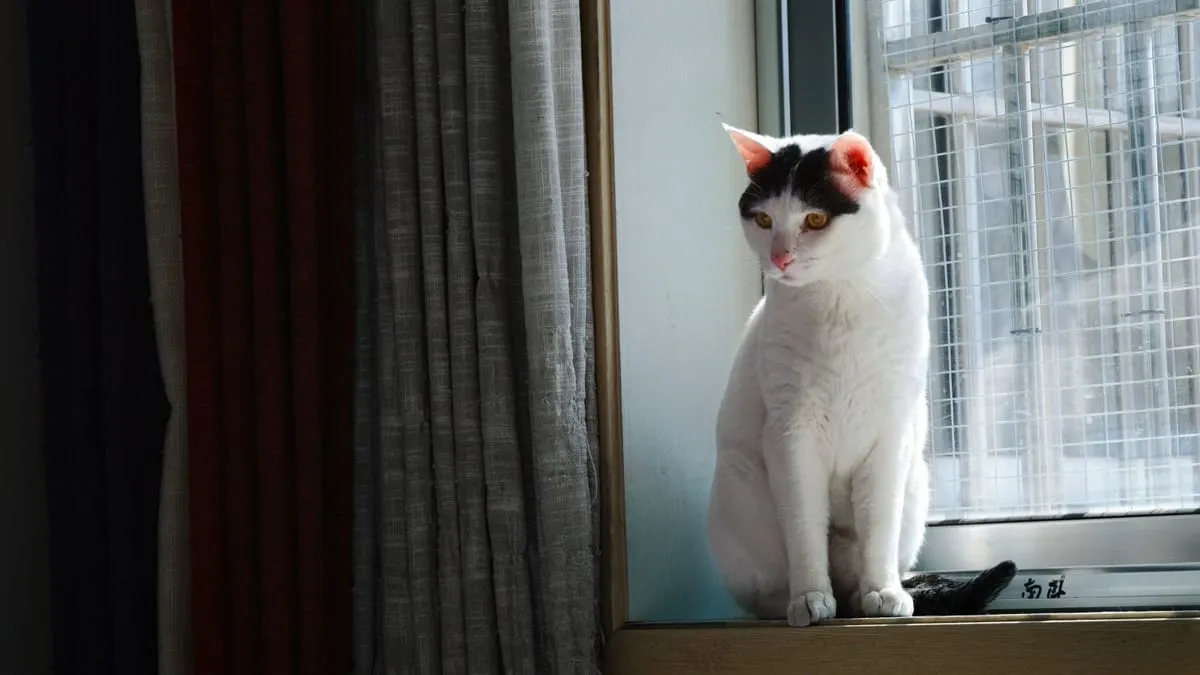
A cat parked at the window, eyes fixed on a bird in the garden, jaw trembling in a fast clicking stutter that sounds a bit like tiny teeth tapping together. The first time an owner hears it, it is easy to assume the cat is delighted, maybe even laughing at the bird it is watching. It is actually closer to the opposite. Chattering is widely read by behaviourists as a sign of frustration, the sound of a hunting instinct that has fully switched on with nowhere to go.
What is actually happening
A cat watching a bird through glass is running its full predatory sequence mentally, stare, stalk, the low crouch, the slight sway of the hips before a pounce, right up to the point where its body is ready to launch. The window stops that sequence cold. The prey is close enough to track in perfect detail and completely impossible to reach, and that specific mismatch, readiness with no outlet, is what the chattering jaw movement is thought to release.
It is not aggression directed at you, and it is not pain. It is a cat’s nervous system discharging built-up hunting arousal the only way it currently can, through a rapid, involuntary jaw movement rather than through the pounce the rest of its body is primed for.
Why glass specifically sets it off
Outdoors, a cat stalking a real bird in a garden moves through a hunting sequence that can actually end in a catch, and that sequence stays quiet and focused rather than vocal. Chattering shows up almost exclusively with a barrier in the way, a window, a screen door, or sometimes a glass-fronted cage of a pet bird in the same house, because the barrier is what creates the frustration in the first place.
That is also why chattering tends to cluster around bird feeders, nesting boxes, or any spot outside a favourite window where birds reliably show up. The cat is not reacting to birds in general so much as to a specific, repeated tease, the same visible target showing up day after day with the same glass always in between.
Does it mean my cat is stressed
For the overwhelming majority of cats, no, not in any way that needs managing. A bit of frustration at a blocked chase is a completely normal part of being a hunting animal confined indoors, and window watching overall does far more good than harm, giving an indoor cat visual stimulation it would otherwise go without entirely. Our guide to why your cat stares at you covers the calmer end of the same watching behaviour, and chattering is best read as one louder note within that same normal range rather than a separate problem.
Giving the instinct somewhere to go
Since chattering comes from a chase with no outlet, the most effective response is not stopping the watching but giving the same drive a version it can actually finish. A feather wand toy that lets a cat stalk, pounce, and genuinely catch something most days closes the loop that the window leaves open, and a few short sessions a week measurably take the edge off a cat’s general prey frustration.
A comfortable window perch placed at the spot a cat already favours keeps the enrichment side of window watching intact without needing to do anything about the occasional chatter, since the behaviour itself is not something that needs correcting. If a particular window reliably produces an agitated, hard-to-settle cat rather than a mildly chattering one, moving a favourite resting spot away from that exact sightline is a simpler fix than trying to train the reaction away.
The short version
A chattering cat at the window is not laughing, scheming, or in any kind of trouble. It is a hunting animal whose body got ready for a chase that the glass will never let it finish, and the jaw movement is simply where that readiness has to go. Enjoy the show for what it is, a cat being completely, harmlessly itself, and if you want to see the same drive land somewhere real, a few minutes with a wand toy most evenings is the closest thing to letting it finish the hunt.
Common questions
- Is cat chattering a sign of excitement or distress?
- Closer to distress, though a very mild version. The leading theory is that chattering happens when a cat's hunting instinct fires fully but it has no way to act on it, since the glass is in the way. That gap between the urge to catch something and the physical inability to do it is what produces the sound, not simple excitement at seeing prey.
- Why does my cat only chatter at birds through a window, never when it actually catches one outdoors?
- Because the frustration that triggers chattering comes specifically from a blocked chase. A cat stalking prey it can actually reach moves into a silent, focused hunting sequence instead, with no chattering at all. The sound is reserved for the situation where the prey is visible and close but completely out of reach, which a window delivers constantly and an open garden rarely does.
- Should I let my cat keep watching birds from the window if it gets worked up?
- For most cats, yes, since window watching is enrichment even with the occasional chatter attached, and taking it away removes one of the few forms of outdoor stimulation an indoor cat gets. Only scale it back if a specific cat seems to work itself into real agitation, pacing, growling, or redirecting frustration onto a nearby cat or person once the birds fly off, which is uncommon but worth managing if it happens.
- Is chattering linked to a specific type of cat or age?
- It shows up across ages and breeds and is not linked to any particular temperament problem. Kittens and younger cats tend to chatter more often simply because their prey drive runs hotter and their patience for being blocked is lower, but an adult cat with a clear view of a bird feeder will do it too. It has nothing to do with how well socialised or well behaved a cat otherwise is.