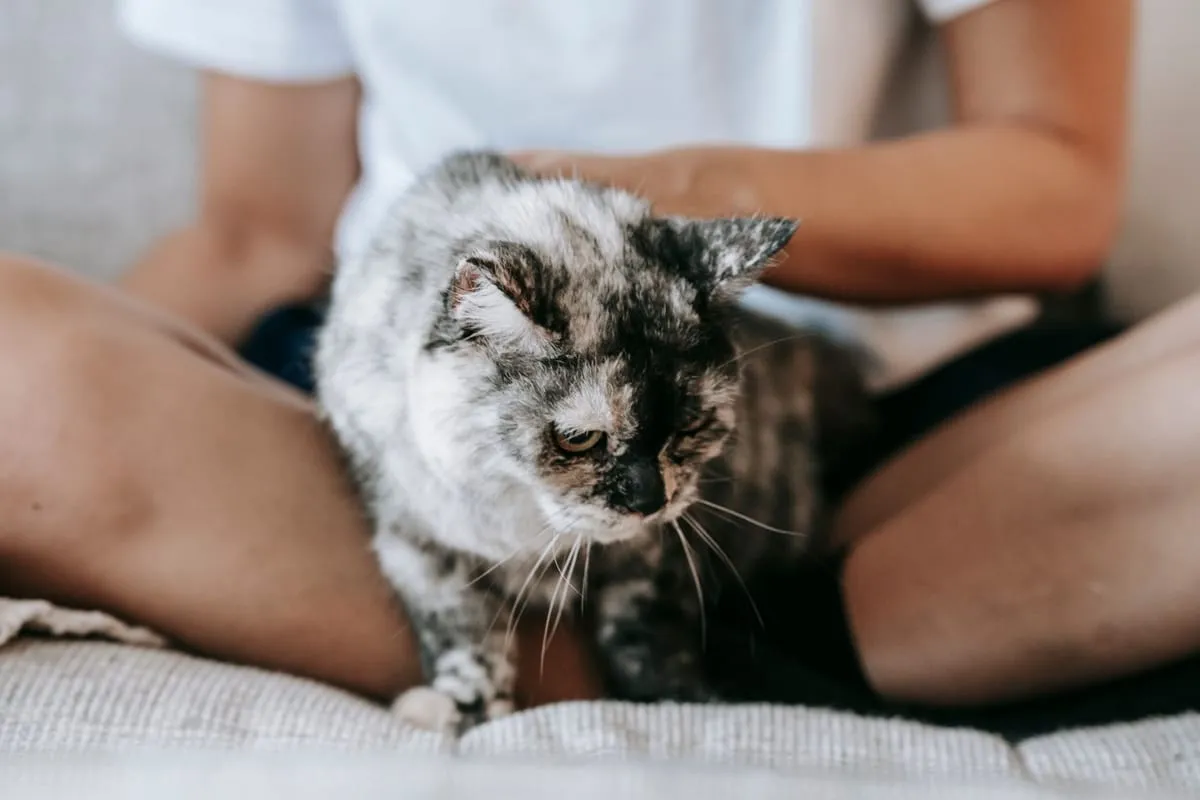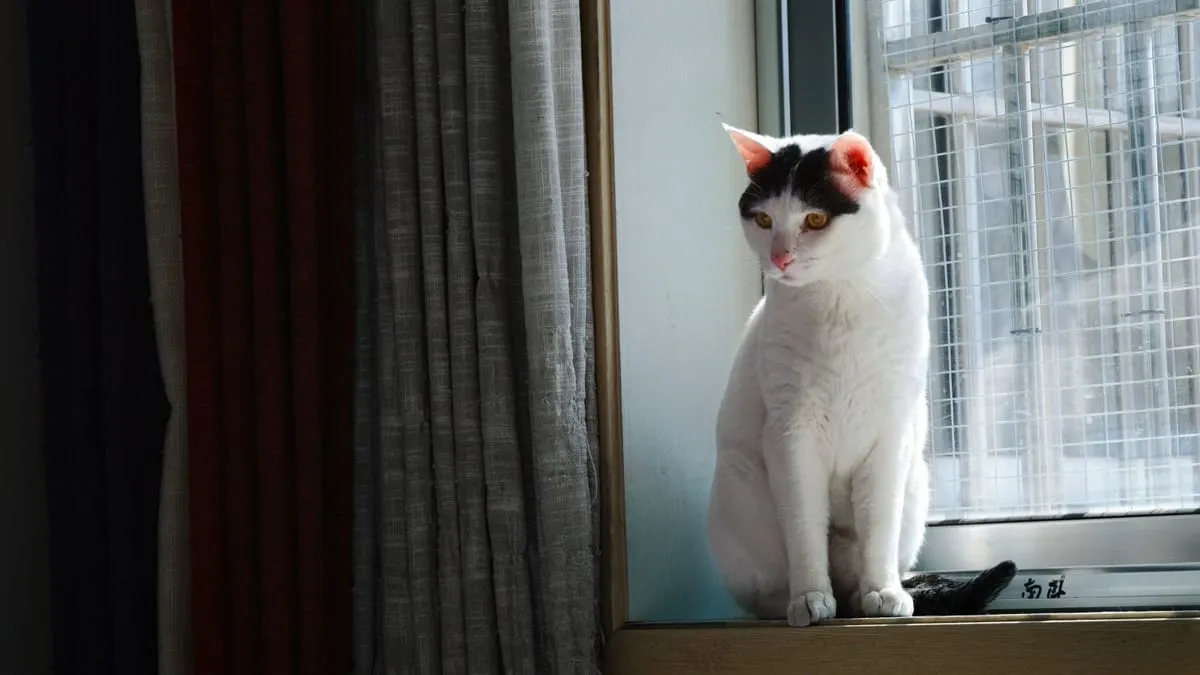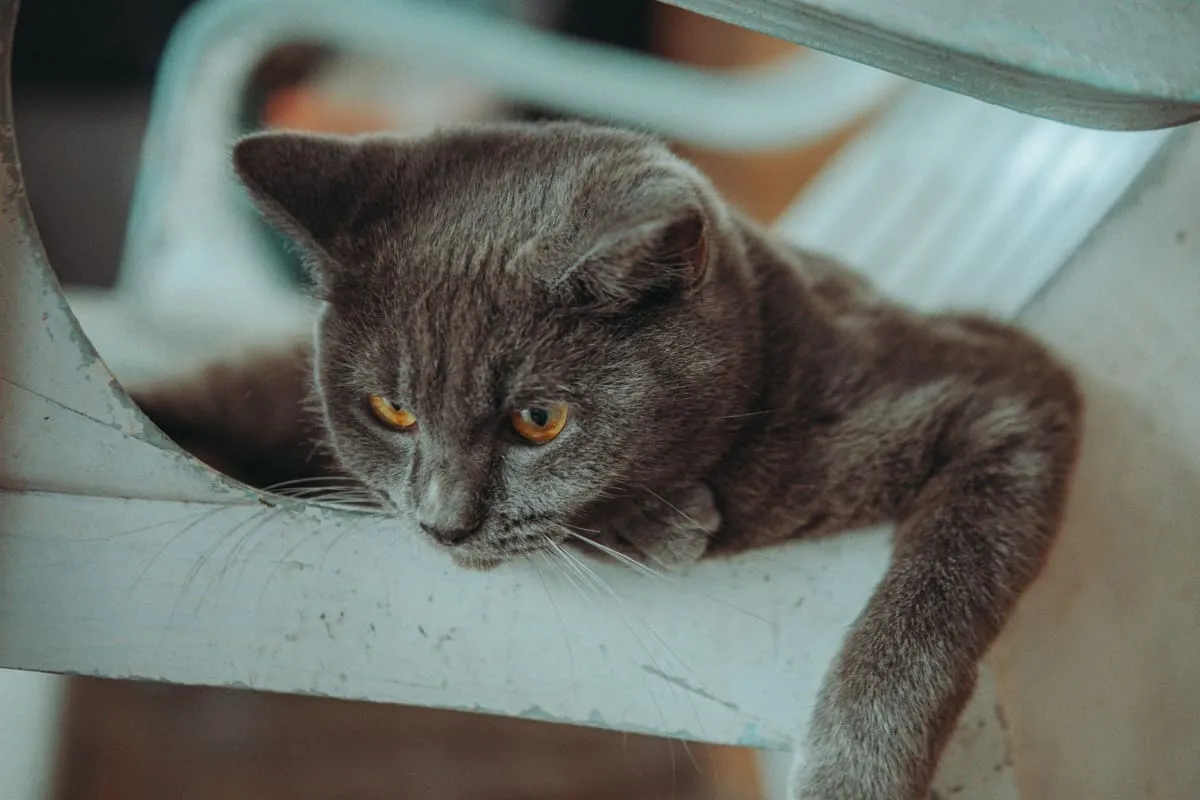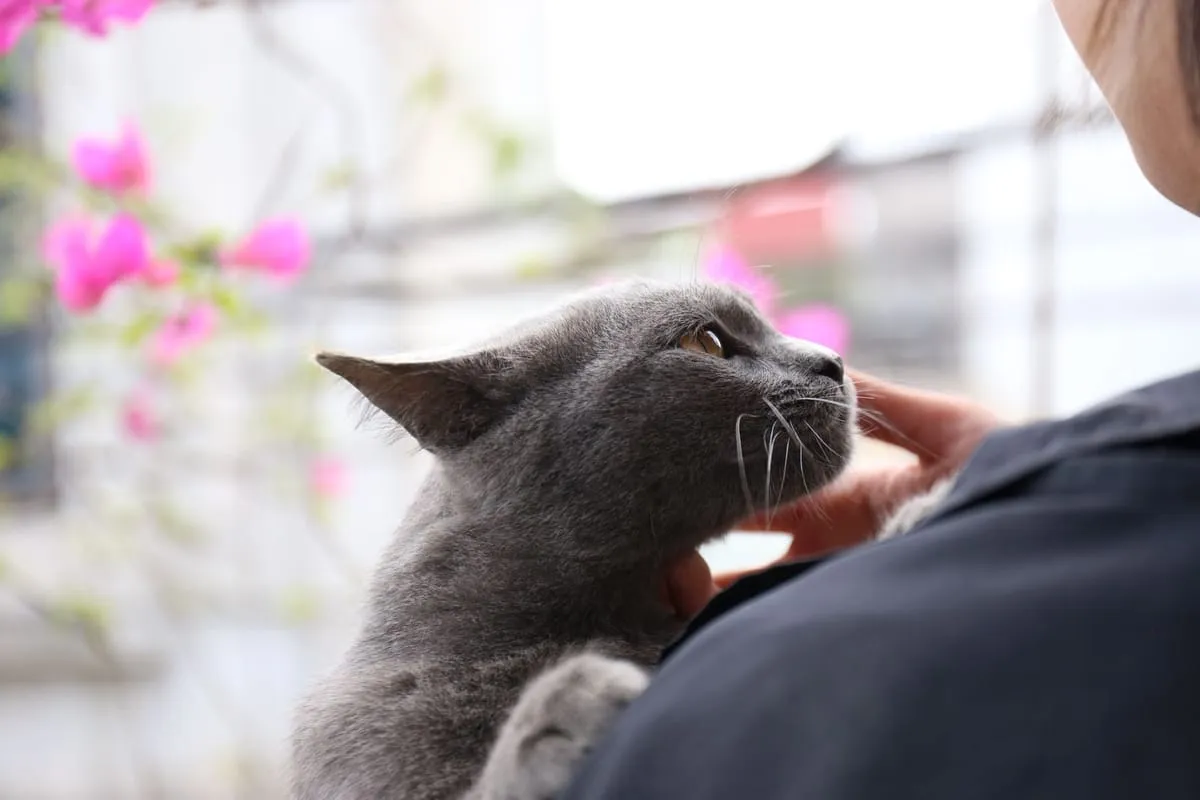
There is a particular kind of small, deliberate thump that most cat owners know instantly, the forehead-first bump against a hand, a cheek, or a shin, sometimes followed by a slow blink or a full-body lean. It looks a bit like a headbutt and it is often described as one, but it is not remotely aggressive. It is called bunting, and it is one of the clearest, most genuine signs of affection a cat has to offer.
What bunting actually is
Cats carry scent glands around their cheeks, chin, and the top of the forehead, and pressing those areas against something deposits a scent trail that is far too faint for a person to notice but is a full sentence to another cat. When your cat headbutts you, it is quite literally marking you with its own scent, the same behaviour it uses on trusted furniture, doorways, and other cats it lives well with.
That is why bunting is worth reading as high praise rather than a demand for attention. A cat does not bunt strangers or things it feels uneasy around. It reserves that particular gesture for people, animals, and objects that are already part of its accepted world, which is part of why it so often shows up alongside other relaxed, affectionate behaviour like kneading or a slow, half-closed blink aimed directly at you.
It is also about building a shared scent
Bunting on you is not a one-off, it is part of an ongoing project. Cats in the same household regularly bunt each other, and a cat living with people does the same thing to its humans, gradually building up a communal scent that mixes everyone and everything it considers “mine” into one familiar smell.
Multi-cat households often see more of this behaviour, not less, since blending everyone’s scent into a shared household smell is part of how a group of cats that get along signal that to each other. A sudden drop in bunting, especially alongside hiding or a change in appetite, is worth reading the same way as any other drop in normal affectionate behaviour, and our guide to the signs of a stressed cat covers the wider picture of what that can look like.
The pose that looks similar but is not affection
There is one look-alike behaviour worth knowing clearly, because mistaking it for ordinary headbutting delays getting help for something serious.
The distinction genuinely is that clear once you know what to look for. Bunting is brief, purposeful, and clearly directed at a specific person, animal, or object your cat is comfortable with. Head pressing is sustained, aimless-looking, and usually pointed at a flat surface rather than a person, often with a cat that seems distant or unlike itself while it is happening. If you are ever unsure which one you are seeing, that uncertainty alone is worth a call to your vet, since the signs your cat is in pain are easy to miss underneath what looks like ordinary behaviour.
Enjoying it for what it is
For the vast majority of cats, headbutting is exactly what it looks like, an affectionate, deliberate gesture from an animal that has decided you are worth marking as its own. A gentle nudge back, with your forehead or a knuckle, is something a lot of cats actively enjoy and will lean into for more, though it is worth letting your cat set the pace rather than pushing for contact it has not asked for.
A cat that headbutts you regularly is telling you something simple and genuine: you smell like home. That is a small thing to be handed several times a day, and it is worth recognising for the compliment it actually is.
Common questions
- Why does my cat headbutt me on the face specifically?
- Your cat's face carries scent glands around the cheeks, chin and forehead, and pressing them against you deposits a scent only another cat could detect. Your face and hands are the parts of you a cat can reach easily and trusts enough to get close to, so that is usually where the headbutting lands.
- Is headbutting the same as head pressing?
- No, and the difference matters. Headbutting, properly called bunting, is a quick, deliberate nudge with the forehead into a person, another cat, or furniture, and it happens in a relaxed, social moment. Head pressing is a cat pushing its head persistently against a wall or hard surface, often for long stretches and with no clear reason, and it is a genuine neurological warning sign, not an affectionate gesture.
- Why does my cat headbutt furniture and doorframes as well as me?
- Bunting is not only about you, cats do it to mark the edges of their territory with the same facial scent, building up a familiar communal smell across the places and people that matter to them. A cat rubbing its head along a doorframe or the corner of the sofa is doing the same thing it does to your hand, just to an object instead of a person.
- Should I headbutt my cat back?
- A gentle return nudge with your forehead or knuckle is something plenty of cats genuinely enjoy and will lean into for more. Watch your cat's response rather than assuming, since a cat that leans in wants more and one that pulls back has had enough, and forcing more contact than a cat is asking for turns a nice moment into an unwelcome one.