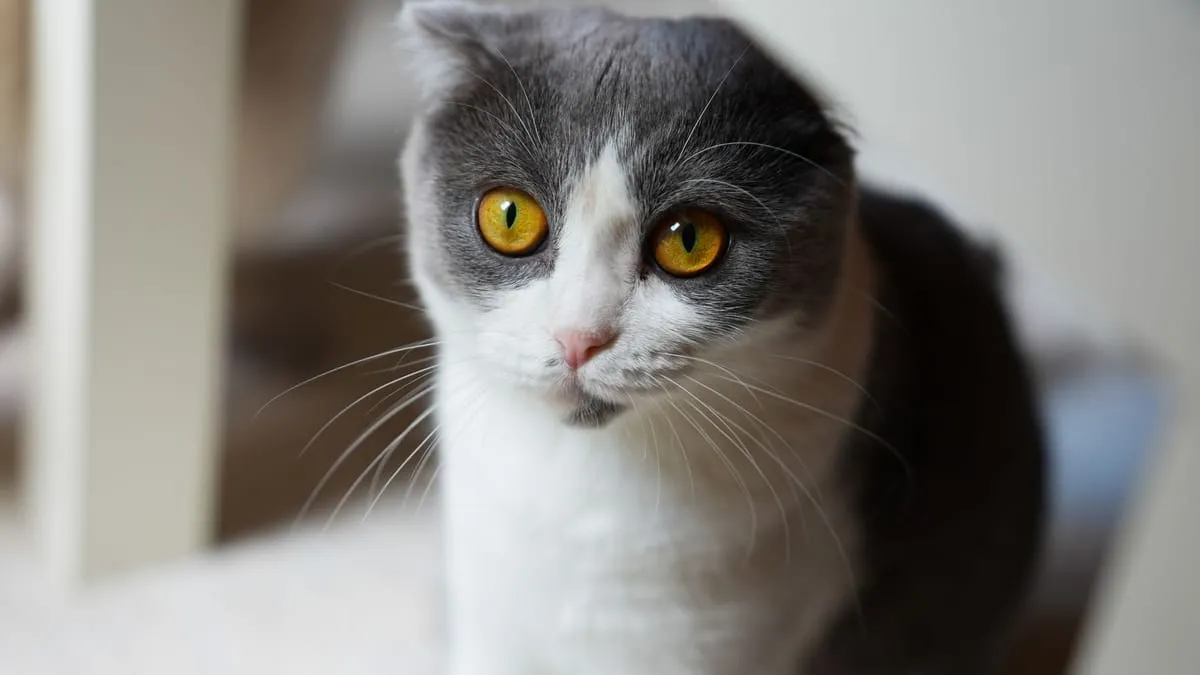
A Scottish Fold’s small, folded ears and round, owlish face are one of the most instantly recognisable looks in the cat world, and it is easy to see why photos of them go everywhere. What is far less visible in those photos is that the fold comes from a genuine mutation affecting how cartilage develops, and that mutation does not stop politely at the ears. It is the same change in the same gene that can leave the skeleton underneath in real, sometimes serious, pain. None of that makes a Scottish Fold impossible to love well. It makes it a breed that deserves a clear-eyed look before the ears do the deciding for you.
The ears and the skeleton are the same mutation
Start with the biology, because it explains everything else about this breed.
The folded ear is caused by a dominant mutation in a gene that builds cartilage throughout the body, not just in the ear flap. That is the part that gets lost in how cute the ears look: the same mutation also shapes the cartilage in the spine, tail, and limb joints, so a cat born with the fold carries some degree of osteochondrodysplasia, abnormal bone and joint development, as part of the same package. Severity varies a great deal between individual cats. Kittens bred from two folded-ear parents tend to be hit hardest and can show crippling changes within months, which is why responsible breeding, where it is still legal at all, only ever pairs a folded-ear cat with a straight-eared one. Even then, the straight-eared kittens from that litter can carry the gene without the visible fold, and the folded-ear kittens still carry some degree of the underlying joint risk. There is no version of this breed that fully separates the ear from the skeleton.
What the joint disease actually looks like
The condition shows up earlier and more visibly than most owners expect.
Changes can be seen on x-ray in kittens as young as seven or eight weeks old, well before any symptom is obvious to an owner. By four to six months, a more affected kitten may start showing a short, stiff-legged gait, swollen or thickened wrists and ankles, a tail that feels stiff or less flexible along its length (often the earliest sign anyone notices), and a growing reluctance to jump up onto furniture it used to manage easily. The famous “Buddha position”, sitting bolt upright with the back legs flat out in front, is widely sold as an adorable quirk, and plenty of healthy Folds do sit that way with no issue at all. But some vets now think it can also be the cat’s own way of taking weight off sore hips or hocks, which is worth knowing so you watch it rather than only photograph it.
Living with the joints you have
If you already have a Fold, or are going ahead with eyes open, the daily management is mostly about reducing load and catching changes early.
Keep your cat lean, in the way covered generally in is my cat overweight, because extra weight on joints with less cartilage margin than normal costs a Fold more than it costs most cats. Set up low steps or a ramp to favourite high spots instead of leaving a big jump as the only route up, and favour soft, supportive bedding over anything hard or thin. A joint supplement such as Cosequin for Cats is a reasonable everyday addition for an older or already-affected Fold, and your vet can also advise on proper feline pain relief if your cat needs more than supplements alone provide. Never give human pain medication, since several common ones are seriously toxic to cats. The same general approach covered in how to help a cat with arthritis applies directly here, just starting earlier in life than it would for an ordinary cat’s age-related arthritis.
Coat, temperament, and who this breed suits
Away from the joints, a Scottish Fold is a genuinely easy cat to live with day to day. The coat comes in both short and longhaired versions, both a dense, plush double coat that sheds at a steady moderate rate and is kept tidy with a weekly brush rather than anything more demanding. Temperament tends toward calm, quiet-voiced, and adaptable, a cat that settles into a household routine without much fuss and is generally good with children and other pets when introduced sensibly.
A Scottish Fold suits someone who has genuinely weighed the ethics and the ongoing joint-management commitment, not just fallen for the ears, and who will keep the weight down, build in soft landings, and take gait changes seriously rather than writing them off as cute. It is a poor match for anyone unwilling to budget for lifelong joint care, anyone buying from a breeder who cannot or will not show health information on the parents, and arguably for anyone who has not at least considered adopting an adult Fold already in rescue over buying a kitten bred into the condition on purpose. Go in informed, alongside the basics in how to choose the right cat for your home, and a Scottish Fold gives back a genuinely sweet, easy-natured companion. Go in only for the look, and the skeleton underneath it will eventually ask for more than most people expect.
Common questions
- Do all Scottish Folds have this bone disease?
- Every cat with the folded-ear look carries the mutation, because the same gene that folds the ear cartilage also affects how bone and joint cartilage forms elsewhere in the body. Severity genuinely varies from one cat to the next, and a straight-eared kitten from a fold parent can carry the gene without showing it as strongly, but vets do not consider a folded-eared Scottish Fold free of risk. It is one mutation with two effects, not two separate issues you can have one without the other.
- Why are Scottish Folds banned or restricted in some countries?
- On animal welfare grounds. Breeding the fold deliberately selects for a mutation that causes a painful skeletal condition, which is why Scotland itself, the Netherlands, parts of Australia, and Austria restrict or ban breeding them, the UK's main pedigree registry delisted the breed decades ago, and the British Veterinary Association has called for an outright breeding ban. It is a genuinely contested breed among vets, not a settled one.
- What is the "Buddha position" Scottish Folds are known for?
- It is the upright, bolt-straight sitting pose some Folds adopt, often with the back legs splayed flat and the paws resting in the lap. It has long been sold as an adorable breed quirk, but some vets now think it may partly reflect joint stiffness, a position that takes weight off sore hips or hocks rather than pure personality. It is worth watching rather than only photographing.
- How do you care for a Scottish Fold's joints long term?
- Keep the cat lean, since every extra pound adds load to joints that already have less margin for error, provide soft bedding and low steps rather than demanding big jumps, and talk to your vet early about joint support and pain relief rather than waiting for an obvious limp. Regular vet checks that specifically look at gait and the tail, which is often the earliest place stiffness shows, catch problems sooner than waiting for your cat to show you.