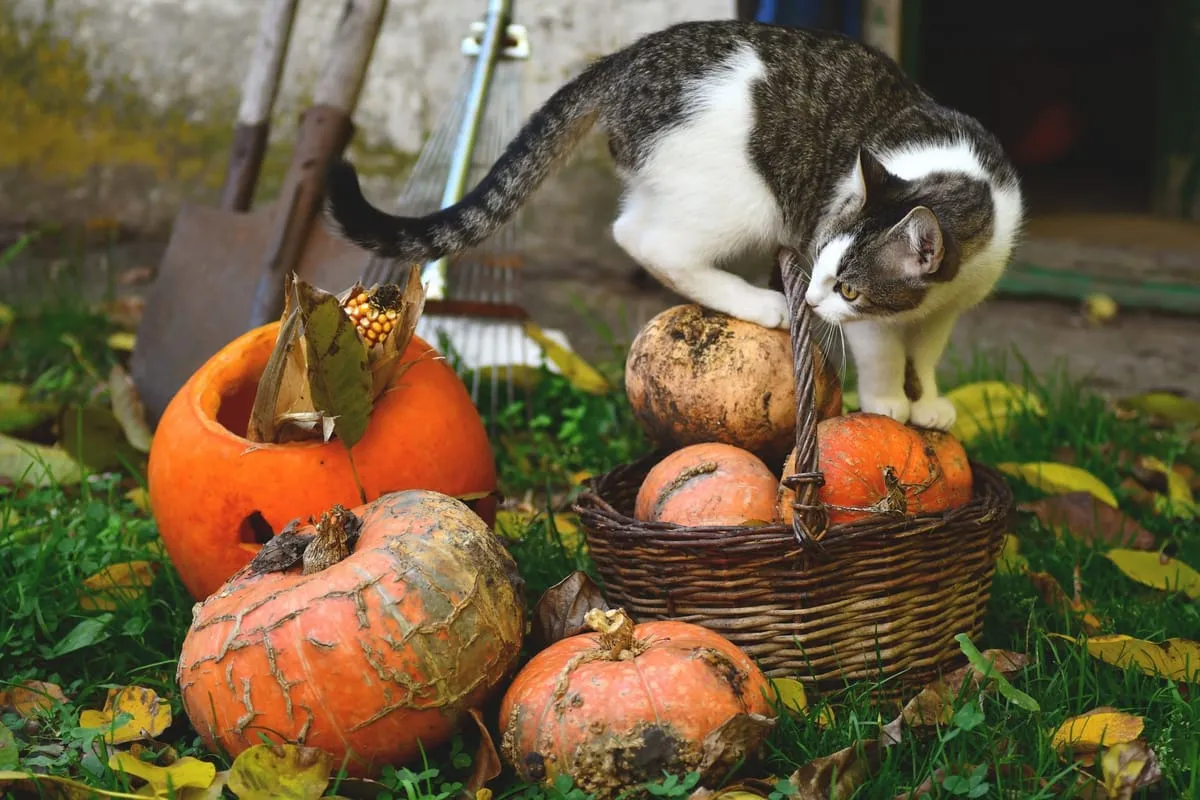
Pumpkin has a reputation as a kind of cure-all for a cat’s upset stomach, and unlike most food trends, this one has real substance behind it. A small amount of the right kind of pumpkin, at the right time, can genuinely help. But “pumpkin” covers a lot of ground, from plain puree to spiced pie filling, and the biggest risk with this one is not the food itself, it is what an owner assumes it is fixing.
The short answer
Yes, cats can eat small amounts of plain, cooked or canned pumpkin. It is not a food a cat needs, cats are obligate carnivores and get everything they require from meat, but as an occasional addition it is genuinely safe and, in small doses, can support digestion. The word doing all the work in that sentence is plain.
How much is safe
A cat needs only a small amount to get any benefit, roughly half a teaspoon to a teaspoon of plain pumpkin puree mixed into a regular meal is a reasonable starting point for an average adult cat, not a bowl of it on its own. More is not better here. Pumpkin is mostly fiber and water, and a cat fed too much of it, especially suddenly, can end up with the opposite of the intended effect, loose stool, or diarrhea, rather than the settled digestion you were going for.
How to serve it
Plain canned pumpkin puree, the kind sold with nothing but pumpkin on the ingredient label, is the easiest option and widely available year-round. Plain cooked pumpkin, steamed or roasted with no butter, salt, or seasoning, works just as well if you would rather use the real thing. Mix it into your cat’s regular wet or dry food rather than offering it alone, since most cats have no particular interest in eating pumpkin by itself, and introduce it in a small amount the first time to see how it sits before making it a regular habit.
When it becomes a problem
Two situations turn this ordinary, mostly harmless food into something to be more careful about. The first is straightforward: too much, too suddenly, causing diarrhea rather than solving anything. If that happens, stop giving pumpkin and let your cat’s digestion settle back to normal on its regular food.
The second is more important, and it is a mix-up rather than a food reaction. Straining in the litter tray gets assumed to mean constipation, and owners reach for pumpkin as the fix. But straining to urinate can look almost identical to straining to defecate at a glance, and in cats, especially male cats, difficulty urinating can mean a blocked urethra, a genuine emergency that a spoonful of pumpkin does nothing for and that gets more dangerous with every hour it is mistaken for something milder. If you are not certain which one you are seeing, or your cat is going to the tray repeatedly and producing little or nothing, vocalising, or seems unwell in any other way, treat it as a possible urinary blockage rather than constipation. Read the signs of a urinary blockage in cats and get to a vet the same day if any of them fit.
What to do if they had too much
A cat that has eaten more pumpkin than it should, or got into a spiced or sweetened version, usually just needs watching. Loose stool from plain pumpkin alone typically settles on its own within a day once you stop offering it, and plenty of water should stay available. If your cat ate pie filling, watch for vomiting, unusual lethargy, or signs of stomach upset, and call your vet if anything beyond mild, short-lived digestive symptoms shows up, or straight away if you know nutmeg or dairy was involved and your cat seems unwell.
Used the right way, in small plain amounts and for the right reason, pumpkin is one of the more genuinely useful human foods to keep in the cupboard for an occasional off day. For the fuller picture of what else is safe to share, see which human foods are safe for cats.
Common questions
- Can pumpkin help a constipated cat?
- A small amount of plain canned or cooked pumpkin can help with mild, occasional constipation because of its fiber and water content, and it is a remedy many vets mention as a first, gentle step. It is not a fix for anything more than mild, short-lived constipation, and a cat that has not passed stool in over a day, or is straining repeatedly with nothing coming out, needs a vet rather than another spoonful of pumpkin.
- Is pumpkin pie filling safe for cats?
- No. Pie filling is sweetened, often spiced with nutmeg, which is genuinely toxic to cats in enough quantity, and sometimes contains dairy or evaporated milk that most adult cats digest badly. Only plain canned pumpkin puree, or plain cooked pumpkin with nothing added, is safe. Check the can label carefully, since plain puree and pie filling often sit side by side on the same shelf in near-identical tins.
- Can cats eat pumpkin seeds?
- Plain, unsalted, finely ground pumpkin seeds in a tiny amount are not toxic, but whole seeds are a poor choice for a cat, they are a choking hazard for an animal this size and the tough hull is hard to digest. There is no real benefit to giving a cat pumpkin seeds specifically, so it is simplest to just leave them out and stick to the plain flesh.
- My cat is straining in the litter tray, is pumpkin the answer?
- Only if you are confident it is straining to defecate. Straining to urinate looks similar at a glance but is a completely different, and potentially life-threatening, problem, especially in male cats, where it can mean a blocked urethra. If there is any doubt which one you are seeing, or your cat is vocalising, visiting the tray repeatedly with little or nothing produced, or seems unwell, treat it as a possible urinary emergency and see a vet the same day rather than trying pumpkin first. See the signs of a urinary blockage in cats for what to watch for.