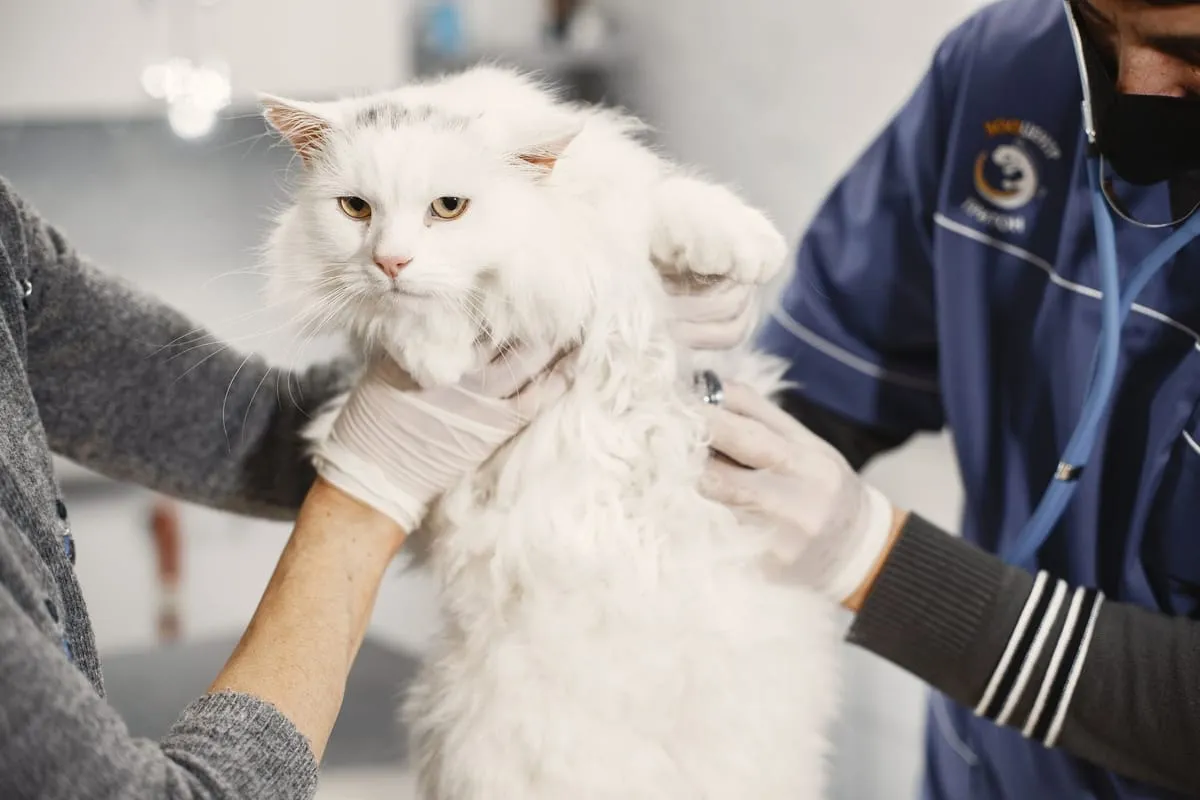
A cat that suddenly cannot stop scratching, or keeps attacking one specific spot with its teeth, is usually telling you something specific: fleas. They are common, even in cats that never go outside, and the earlier you catch them the easier the whole thing is to sort out. The tricky part is that cats groom so thoroughly that they often remove the evidence before you ever see a flea itself, so knowing what else to look for matters.
The signs worth checking for
Scratching is the obvious one, but watch for the pattern too. Fleas tend to concentrate around the base of the tail, the lower back, the neck, and the belly, so repeated scratching or biting focused on those areas, rather than all over, is a strong hint. A cat that suddenly starts overgrooming one patch, sometimes to the point of a thinning or bald spot, can be dealing with flea irritation rather than stress, which our guide to why is my cat losing fur covers in more depth if hair loss is the main thing you are noticing.
Small, rice-grain-like segments near the tail are not fleas themselves but a consequence of them. Fleas carry tapeworm larvae, and a cat grooming away a swallowed flea can pick up tapeworms as a result, so spotting tapeworm segments is itself a reason to check for fleas even if you have not seen one. Our guide to signs of worms in cats covers what those segments look like and how the two problems connect.
Why some cats react more than others
Not every cat reacts to fleas the same way. Some carry a light burden and barely seem bothered, while others develop flea allergy dermatitis, a genuine allergic reaction to flea saliva where a handful of bites triggers widespread, intensely itchy, scabby skin that looks far worse than the actual flea numbers would suggest. A cat with flea allergy dermatitis can scratch and overgroom itself raw from a small number of bites, which is why “I only found one or two fleas” does not rule out a flea-driven skin problem.
Kittens and cats with a heavy, unaddressed infestation are at a different kind of risk. Fleas feed on blood, and in a small kitten a serious infestation can cause anaemia, visible as pale gums and lethargy, which is a genuine veterinary emergency rather than an itching problem.
Treating fleas properly
A vet-recommended spot-on treatment, used monthly and year-round, is the standard fix, and it matters that it targets eggs and larvae as well as adult fleas, since adult fleas are only part of the population at any given time. Advantage II for Cats is a straightforward over-the-counter option that covers all three life stages without needing a prescription. Whatever product you choose, treat every pet in the household at once, not just the one scratching, since fleas move freely between animals sharing a home, and never use a dog flea product on a cat, as some are genuinely toxic to them.
The home is the part people underestimate. Flea eggs and pupae living in carpets, soft furnishings, and bedding can keep hatching for weeks after the fleas on your cat are gone, so wash bedding on a hot cycle, vacuum thoroughly and often, and expect the full clearance to take six to eight weeks rather than a few days, even once your cat itself feels better.
When to see a vet
Book a vet visit if scratching is severe, skin looks raw, scabbed, or infected, fur loss is spreading, or an over-the-counter treatment has not visibly helped within a week or two, since that can mean a secondary skin infection or a flea allergy needing something stronger than a standard spot-on. Treat any kitten with pale gums or unusual lethargy as urgent rather than routine. For most cats, though, fleas are an unpleasant but very manageable problem, caught early with a good comb-through and sorted properly with consistent, year-round prevention rather than only treating when you notice a problem.
Common questions
- What do flea bites look like on a cat?
- Small, raised red bumps, often clustered around the neck, base of the tail, or belly, sometimes with a tiny scab where the cat has scratched or bitten at the spot. On a cat with a flea allergy, the reaction is bigger than the bite itself, with wider patches of inflamed, scabby skin from a relatively small number of bites.
- How do I check my cat for fleas?
- Part the fur at the base of the tail and along the lower back, the areas fleas favour most, and look for fast-moving dark specks or the specks themselves caught in the coat. Comb through with a fine-toothed flea comb over a damp paper towel, then tap out what you catch. Specks that dissolve into a reddish-brown smear are flea dirt, which is digested blood, confirming fleas even if you never spot one alive.
- Can indoor-only cats get fleas?
- Yes. Fleas travel in easily on another pet, on your shoes or clothing, or on a visitor, so an entirely indoor cat is lower risk than one that goes outside, not risk-free. It is one of the more common surprises for owners who assume indoor status rules fleas out.
- How long does it take to get rid of fleas on a cat?
- A vet-recommended spot-on usually kills the fleas living on your cat within a day or two, but a full infestation in the home can take six to eight weeks to fully clear, since flea eggs and pupae in carpets and bedding keep hatching for weeks after the adults are gone. Treating every pet in the house and washing bedding helps shorten that tail.