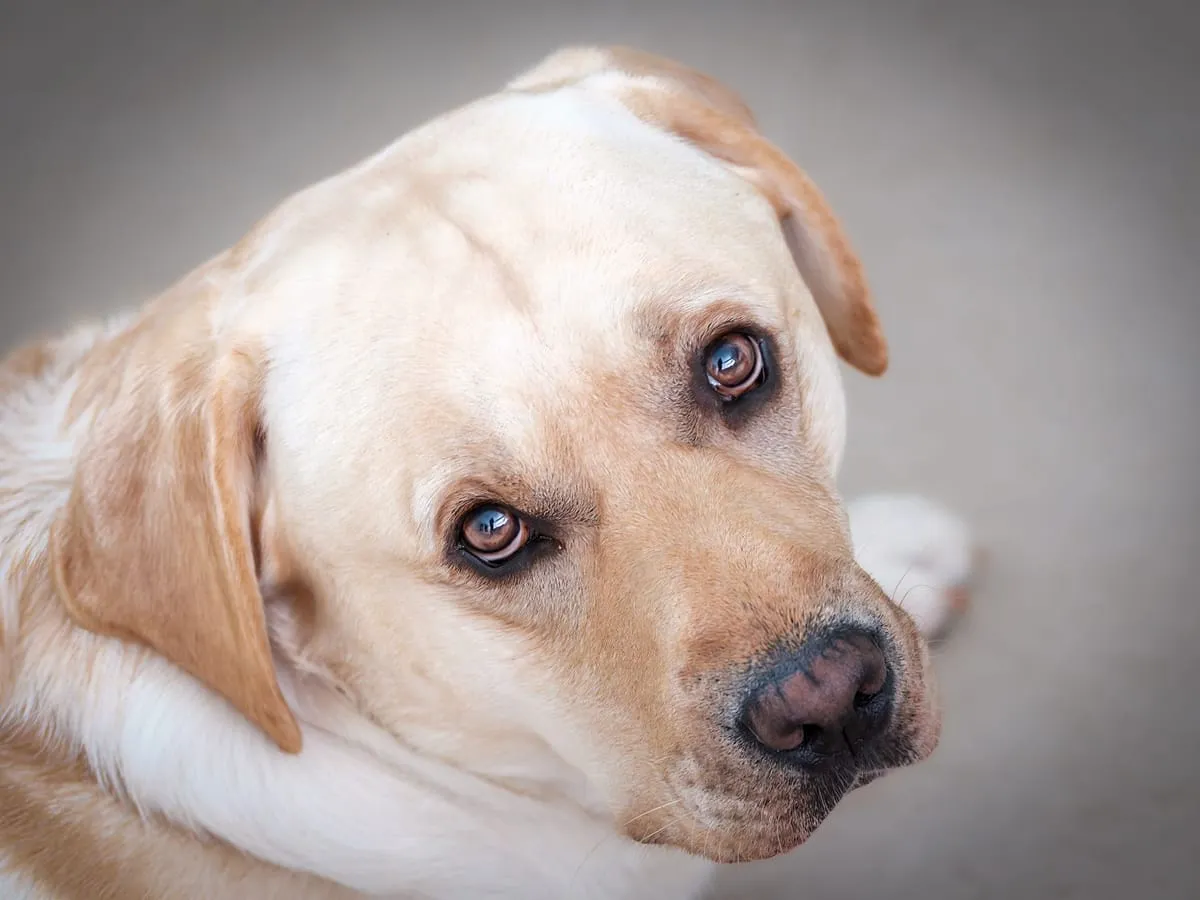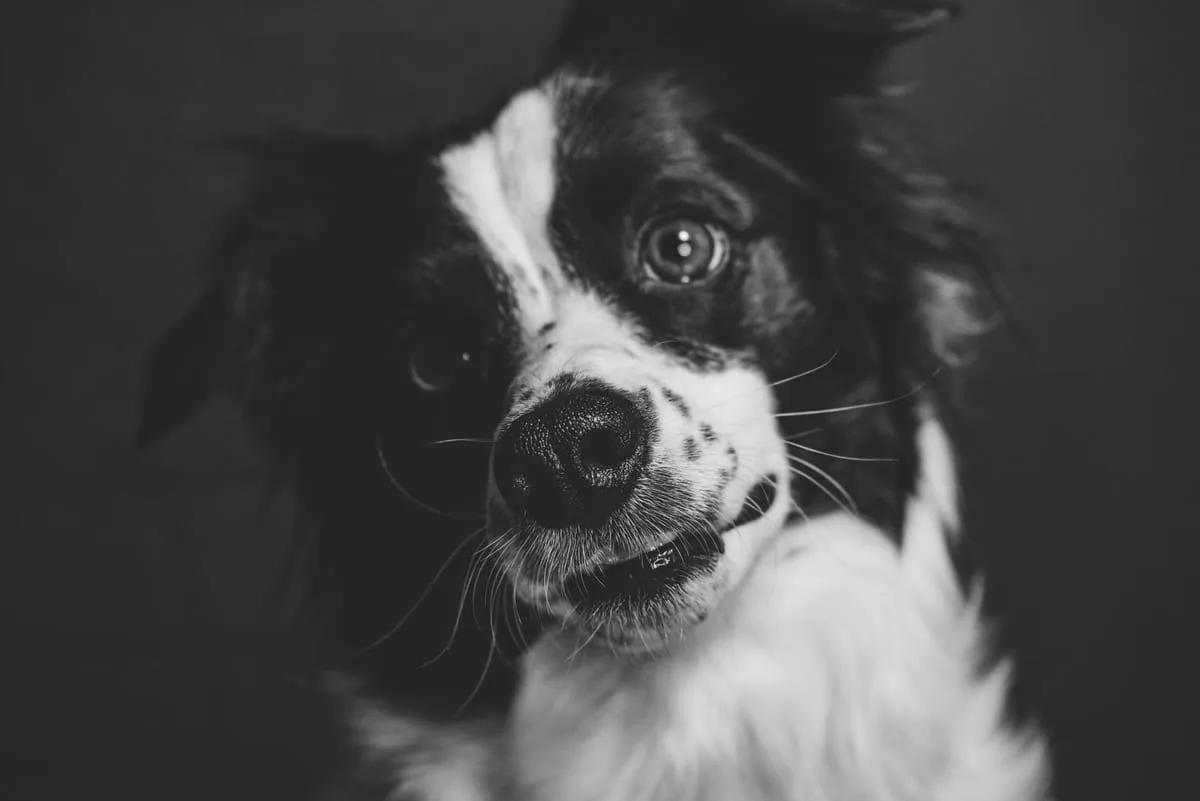
Say your dog’s name in a slightly odd voice and there is a decent chance their head tips sideways, ears pricked, eyes fixed on you like you have just said something fascinating. It is one of the more reliably charming things a dog does, and it is not performed for your benefit the way a trained trick is. There is a real, practical reason behind it, and there is also a second, much less cute kind of head tilt worth being able to tell apart from the first.
What the tilt is actually doing
The most-supported explanation combines two things. First, hearing: a dog’s ears are far better than ours at locating exactly where a sound is coming from, and small head movements, including a tilt, help fine-tune that location, particularly for an unfamiliar or interesting sound like a new word or a strange pitch in your voice. Second, sight: a tilt shifts a dog’s muzzle out of their own direct line of view, giving them a clearer look at your mouth and eyes, which is where dogs read a lot of the detail they cannot get from tone of voice alone.
Dogs with a longer muzzle tend to tilt more noticeably than flat-faced breeds, simply because they have more muzzle blocking the view to begin with and more to gain from moving it. Floppy-eared dogs may also do it to help funnel sound in a way a dog with upright ears does not need to.
Why it happens more with certain sounds
A high-pitched, unfamiliar, or oddly-toned word gets a tilt more reliably than a flat, familiar one, which fits the hearing explanation: an unusual sound is exactly the kind worth pinpointing more precisely. Some dogs also pick the behaviour up as a habit because it gets a reliable, happy reaction from their owner, a laugh, a photo, a “aww”, which is reward enough to repeat it even outside the original reason for doing it.
Either way, the ordinary version of this tilt is brief. It happens in direct response to something, your voice, a squeaky noise, a sound from another room, and your dog’s head comes back to a normal position within a few seconds once the moment has passed.
The tilt that is not about being cute
A head that stays tilted, that your dog is holding even when nothing is happening to react to, is a different situation and worth paying real attention to, especially alongside any of the following: stumbling or loss of balance, circling in one direction, falling to one side, or eyes that flick rapidly side to side (nystagmus). That combination points to a problem with the balance system in the ear or brainstem rather than a normal reaction to sound.
In older dogs specifically, a sudden constant tilt with balance problems is often what is called idiopathic vestibular disease, where the balance system in the inner ear misfires for no cause a vet can pin down. It looks alarming, a dog that cannot walk straight and seems disoriented appears far sicker than many of these cases actually are, and a lot of dogs improve substantially within one to two weeks of supportive care. The reason it still needs a same-day vet visit despite that generally good outlook is that the same symptoms can also come from an ear infection or, less commonly, something more serious, and only an exam can tell those apart. For the more common infection route and the full list of smell, scratching, and discharge signs to check, see signs of a dog ear infection.
What to actually do
For the everyday tilt, the one that lasts a few seconds while your dog puzzles out a sound or a word, there is genuinely nothing to do beyond enjoying it. It is a normal, harmless part of how dogs listen and look at the same time, not a problem to solve.
For a constant tilt, especially a new one, check the ear itself for redness, odour or discharge, and watch for any stumbling or odd eye movement while you get your dog to a vet the same day. Routine ear cleaning after swimming or baths is a reasonable preventive habit for dogs prone to ear trouble, but it is not a fix once symptoms like these are already present, a proper look inside the ear is what actually tells you what is going on.
Common questions
- Why does my dog tilt their head when I talk to them?
- The leading theory is that it helps them hear better and see past their own muzzle to read your face at the same time. A dog's ear shape makes it easier to pinpoint exactly where a sound is coming from with small movements of the head, and tilting also shifts a long muzzle out of the direct line of sight to your mouth and eyes, which is where a lot of the useful information actually is.
- Is head tilting a sign my dog is especially smart?
- Not in any way that has been shown to measure intelligence. Some dogs tilt their heads often and some barely do it at all, and that mostly comes down to muzzle shape, ear shape, and individual habit rather than how clever a particular dog is. A flat-faced breed has less reason to tilt for a clearer view than a dog with a long muzzle blocking more of its own sightline.
- When does a head tilt stop being the cute kind?
- The cute tilt is brief, happens in response to your voice or a sound, and your dog's head returns to normal straight after. A tilt that is constant, that your dog holds even when nothing is happening, or that comes with stumbling, circling, or unusual eye movements is a different thing entirely and is worth a same-day vet visit rather than something to film for later.
- What is vestibular disease in dogs?
- It is a problem with the balance system in the inner ear or brainstem, and it causes a sudden, often dramatic head tilt along with loss of balance, stumbling or falling to one side, and eyes that flick rapidly side to side. In older dogs it is frequently "idiopathic", meaning no clear cause is found, and many dogs improve substantially within one to two weeks with supportive vet care. It looks frightening in the moment and still needs a vet visit to rule out the more serious causes it can be confused with.