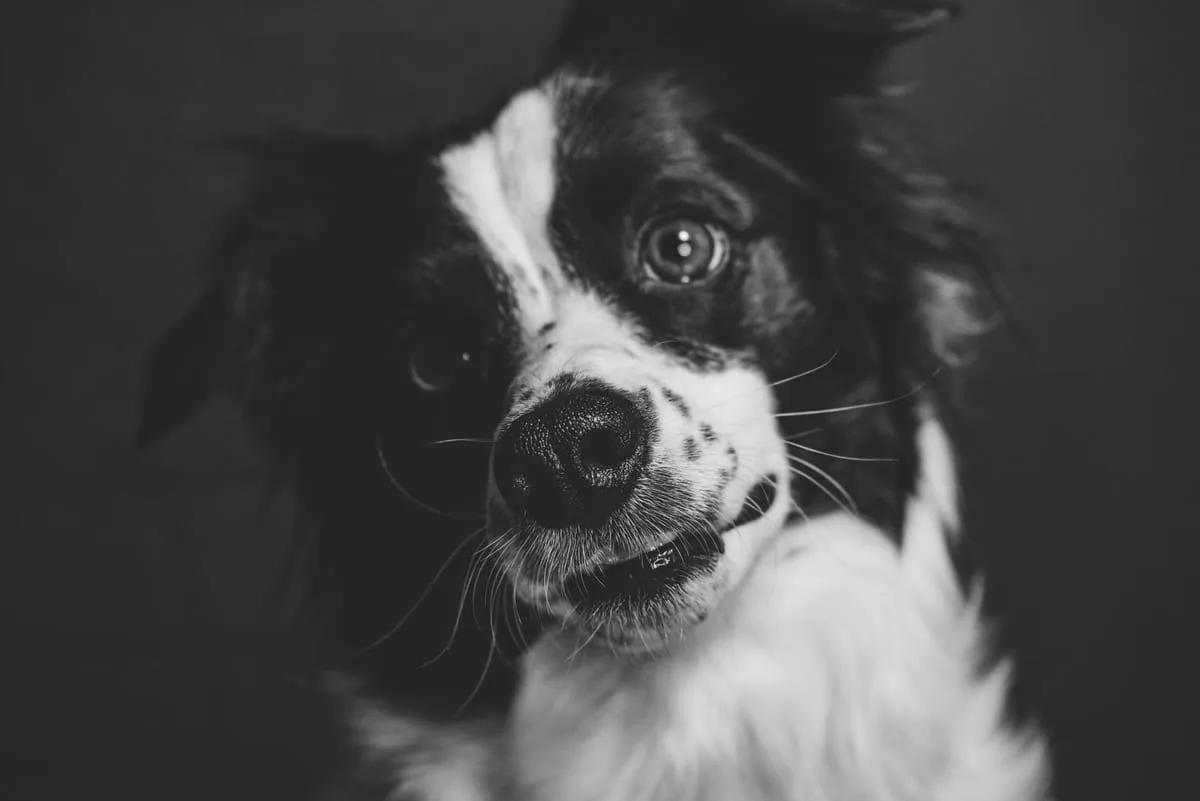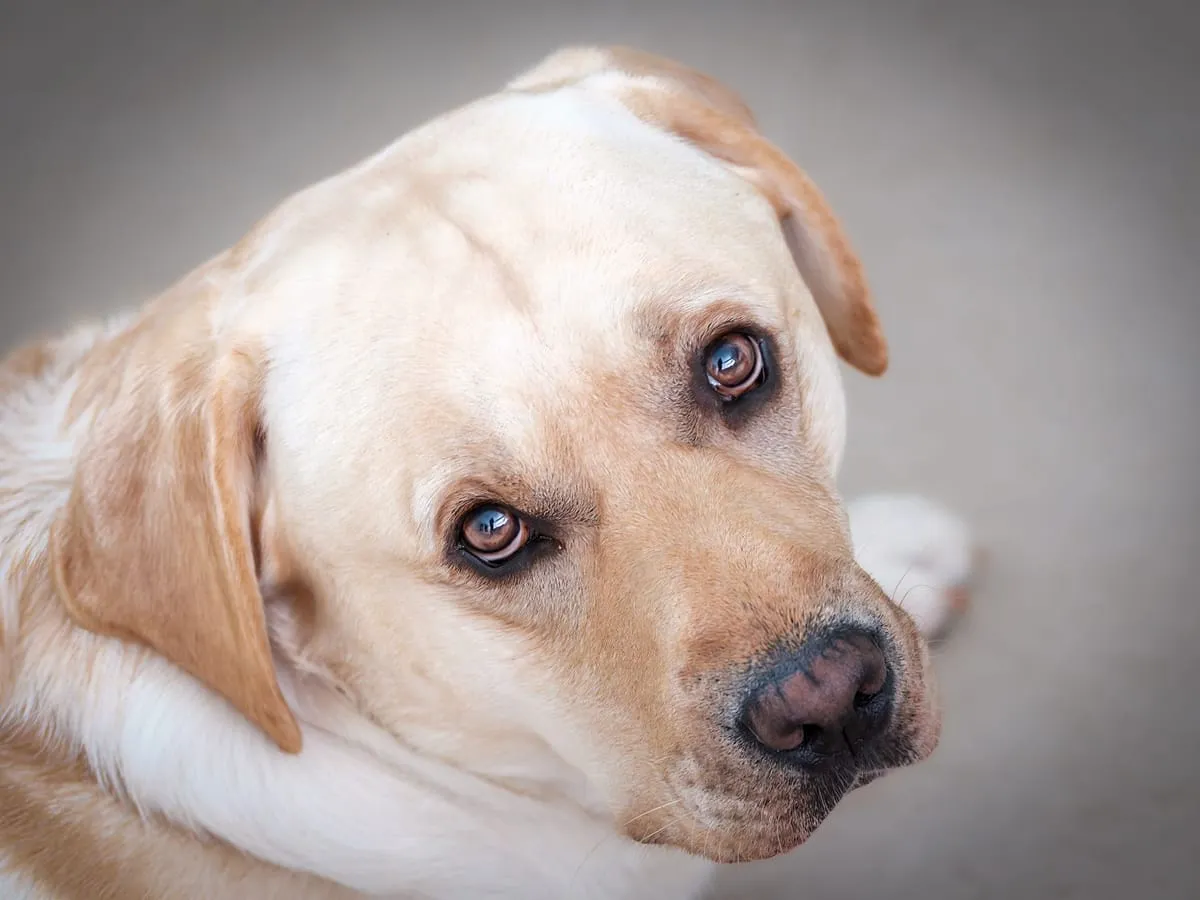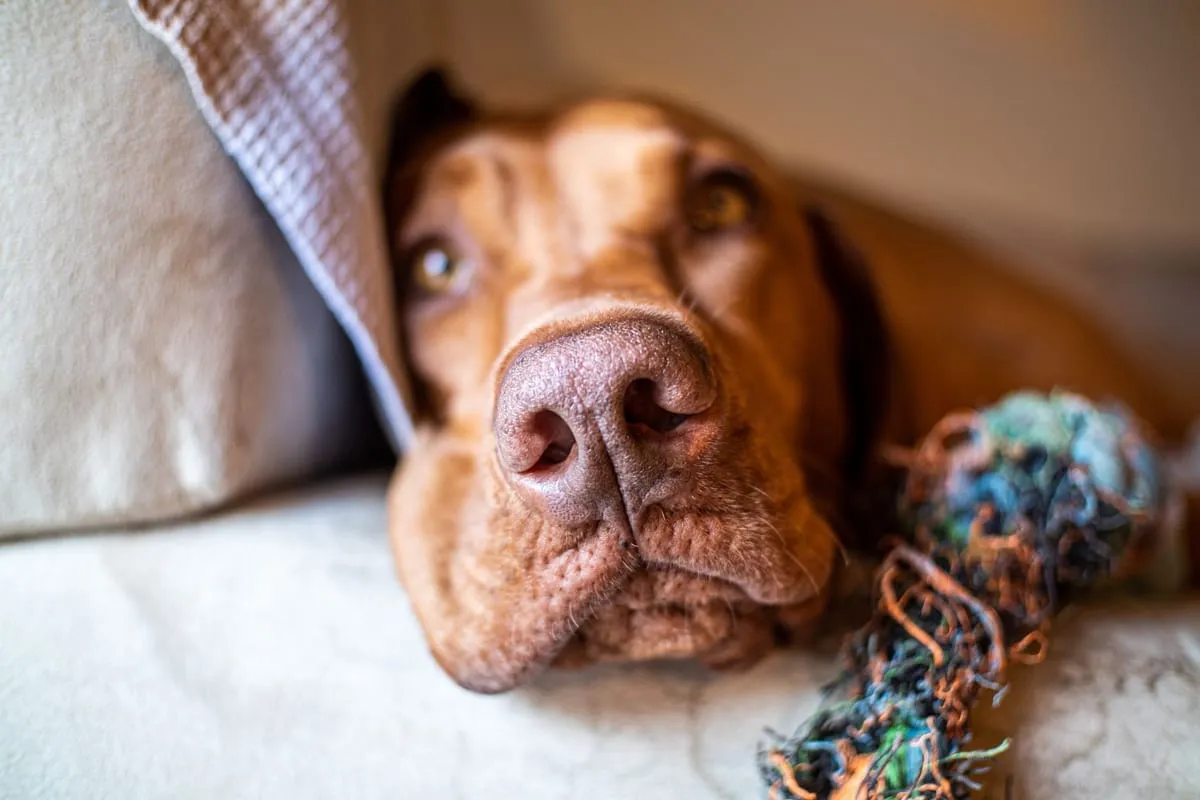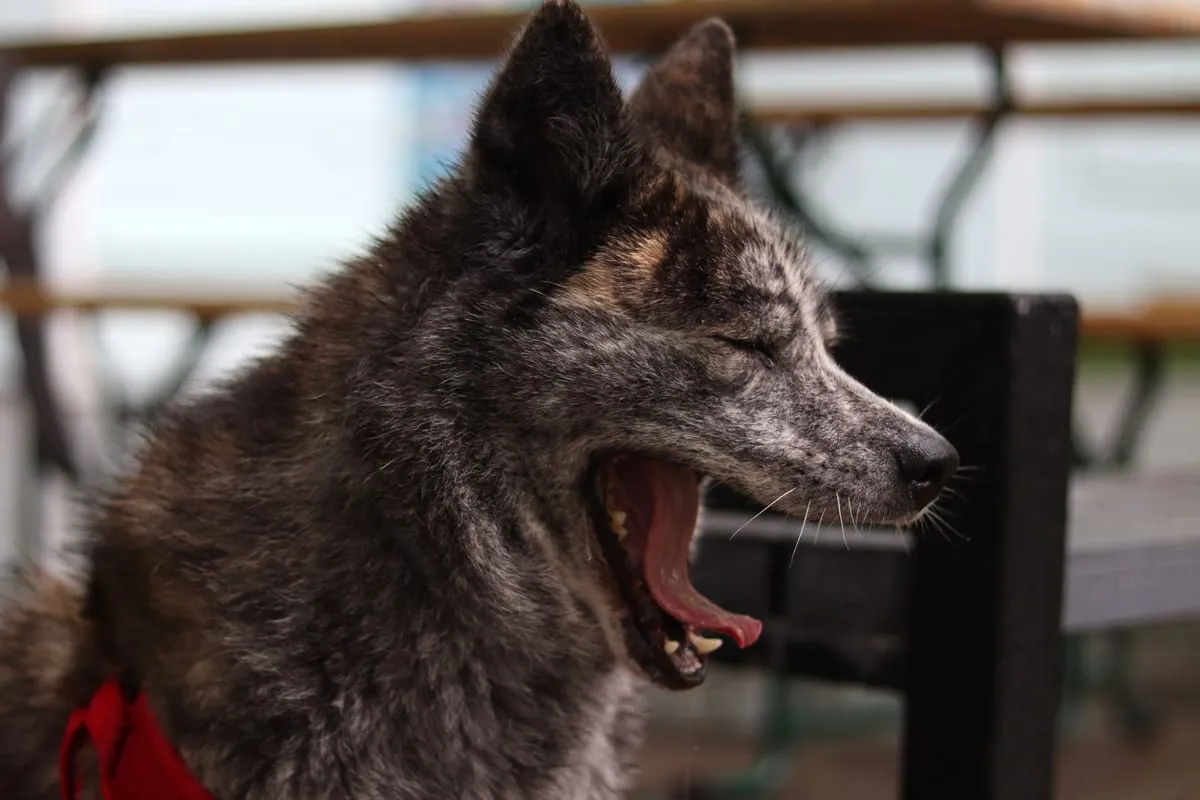
A big, jaw-cracking yawn in a dog curled up on the sofa at the end of the day means exactly what it looks like. The same yawn at the vet’s, mid-walk past a loud group of kids, or three times in a row during a training session means something else entirely. Dogs only have a handful of ways to tell you they are uneasy, and yawning is one of the most overlooked, mostly because it looks so much like being tired that owners talk themselves out of noticing it.
The two yawns look identical and mean opposite things
There is no special stress-yawn shape. It is the same wide, slow mouth-open stretch either way, which is exactly why it gets missed. What separates the two is everything around it, not the yawn itself.
A tired yawn shows up when it makes sense: after a long walk, in the evening, first thing after waking, or during a lull with nothing much happening. It is usually a single yawn, the dog’s body stays loose, and it is often followed by a stretch and a settle.
A stress yawn shows up when nothing about the situation calls for sleep. At the vet, during a nail trim, meeting a new dog, in a crowded or loud place, mid-training when something is not clicking, or right after being told off. It often comes in a cluster, two or three yawns close together, and the rest of the dog’s body tells the same story: stiff rather than loose, head lowered, ears back or pinned sideways, maybe a tongue flick or a turned-away head alongside it.
Yawning is a calming signal, not a complaint about boredom
It is tempting to read a yawn during training as “this is boring, can we stop”, but that is usually the wrong read. Yawning belongs to a group trainers call calming signals: small, low-key behaviours dogs use to defuse tension, either to soothe themselves or to signal to whoever is nearby that they mean no harm. Lip licking, turning the head away, a slow blink, and a lowered body often travel in the same pack as the yawn, and together they are a dog trying to lower the temperature of a moment that feels too intense.
That reframe matters because the instinctive response to “my dog looks bored” is to push on, add more repetitions, raise your voice to get through. The right response to a stress yawn is closer to the opposite: shorten the session, lower the stakes, or give your dog a second to settle before asking for more. A dog who is stressed rarely learns well anyway, so the yawn is often telling you the session has already stopped being productive.
Where this shows up most often
A few situations account for most of the yawning owners ask about.
At the vet or groomer. Clinical smells, a stranger’s hands, an exam table, this is a near-perfect storm for a nervous dog, and a string of yawns in the waiting room or on the table is one of the most reliable tells of a dog who is coping rather than comfortable.
During training. A dog that yawns repeatedly when a new exercise is not working is usually not bored, it is finding the pressure or the confusion stressful. Breaking the skill into easier steps, or simply ending on a win and trying again later, usually gets further than repeating the same ask louder.
Around other dogs or strangers. A yawn when a boisterous dog gets in your dog’s space, or when a stranger leans in for a pat, is a polite “I am not a threat and I would like some room”. It is worth honouring rather than encouraging the interaction to continue.
Right after being corrected. If a yawn follows a sharp “no” or a telling-off fairly reliably, your dog is telling you the correction landed as more pressure than intended. A calmer, more settled dog generally responds to smaller, clearer feedback than a dog living with frequent, startling corrections.
What to actually do about it
Once you have placed a yawn as the stress kind, the fix is rarely complicated: reduce whatever is making the moment too much. At the vet, that might mean treats, a calmer handler, or asking staff to slow down. In training, it means shorter sessions and easier steps. Around other dogs, it means more space and less forced interaction. You are not trying to stop the yawning itself, you are trying to lower the pressure that is causing it, and the yawning should ease on its own once you do.
A dog that yawns constantly across totally ordinary, low-pressure situations, with no obvious trigger and no sign of tiredness explaining it, is the one exception worth a vet visit rather than a behaviour fix, since persistent yawning with no behavioural explanation occasionally points to discomfort rather than stress. That is the less common case. Most of the time, a yawn is simply your dog doing the dog equivalent of taking a breath, and the kindest response is to notice it and ease off.
Common questions
- Why does my dog yawn so much?
- Usually for one of two very different reasons. Ordinary tiredness, the same yawn you would expect before a nap, or a stress signal, the kind that shows up when a dog is anxious, overwhelmed, or trying to defuse a tense moment with a person or another dog. The context tells you which one you are looking at. A yawn on the sofa at 9pm is sleepy. A yawn at the vet, mid-training, or when a toddler gets too close is something else.
- Is yawning a sign of stress in dogs?
- Yes, it is one of the clearest calming signals trainers and behaviourists watch for. Dogs yawn to self-soothe in situations that make them uneasy, and often to signal to a person or another dog that they are not a threat and would like the tension to ease. It tends to arrive alongside other stress signs, lip licking, a lowered head, turning away, or a stiff, still body, rather than on its own.
- Why does my dog yawn when I tell it off?
- Because being told off is stressful, and yawning is one of the fastest ways a dog has to signal "I am uncomfortable, please stop". It is not defiance or a dog finding the moment boring, even though it can look that way. If your dog yawns during corrections fairly often, it is worth treating as feedback that your tone or the situation is landing harder than you intend, not as something to push through.
- Can yawning in dogs mean pain or a health problem?
- Occasionally, yes, though it is far less common than the stress or tiredness explanations. A dog yawning unusually often alongside other changes, reduced appetite, reluctance to move, drooling, or general flatness, is worth mentioning to a vet, since discomfort can sometimes show up as repeated yawning the same way it can in people. On its own, without any of those other signs, yawning is almost never a pain symptom.