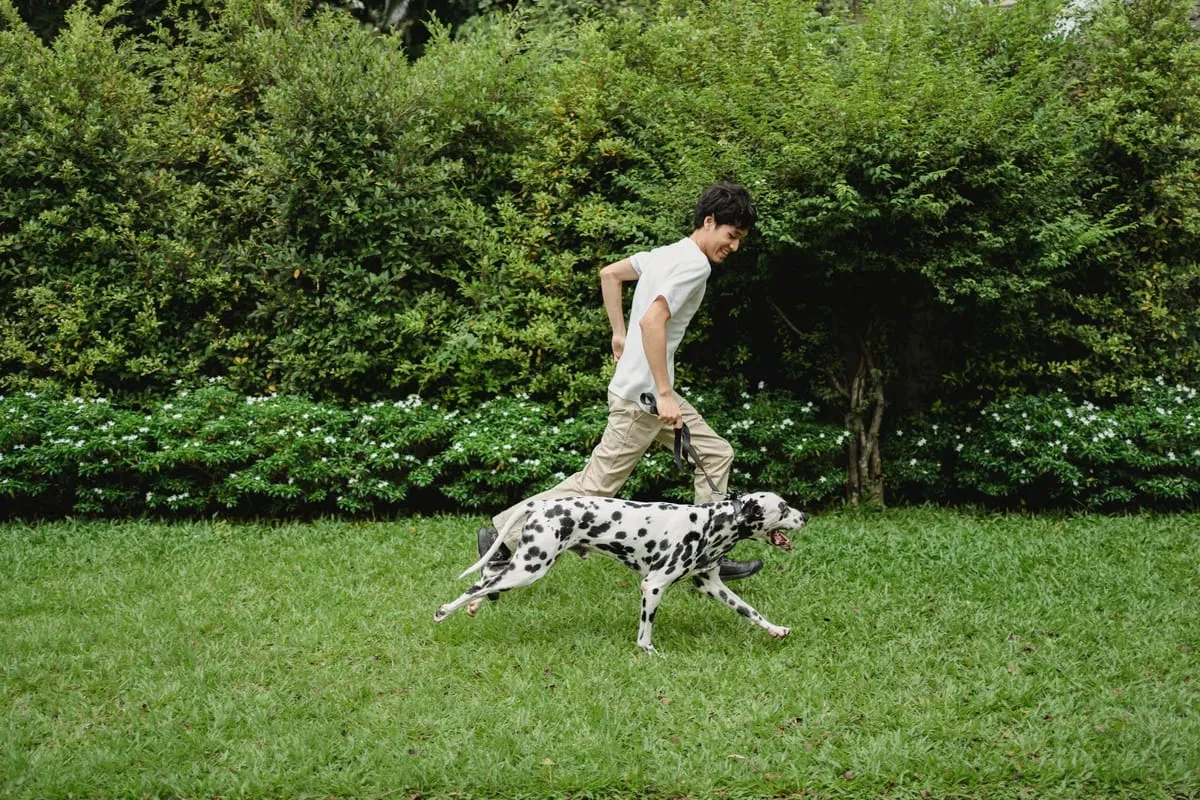
Most people meet the Dalmatian through a cartoon long before they meet the actual dog, and the real version is a far more demanding animal than the one on screen. Underneath the spots is a breed with a genuine metabolic quirk that most owners have never heard of, a real and well-documented rate of inherited deafness, and the stamina of a dog that used to run alongside carriages for a living. None of that makes a Dalmatian a bad choice. It makes it a breed where the fun facts matter less than the three things most people find out too late.
The quirk almost nobody expects
This is the single most important thing to understand about this breed before anything else, and it has nothing to do with the coat.
The everyday precautions are manageable once you know they are needed. Constant access to fresh water matters more for this breed than almost any other, since dilute urine is genuinely protective. Regular opportunities to urinate rather than holding it for long stretches helps too, since concentrated, held urine gives crystals more time to form. Your vet may also recommend a lower-purine diet, since purines are what break down into uric acid in the first place, and can check urine periodically for crystals before they become a full stone. None of this guarantees a Dalmatian will never develop a stone, but it is a world away from not knowing the risk exists at all, which is unfortunately still common among new owners.
Deafness, and the gene behind the coat
The second thing worth knowing is also genetic, and it is tied to the very trait that makes the breed recognisable.
Dalmatians carry the piebald gene responsible for their white base coat, and that same gene is linked to a notably higher rate of congenital sensorineural deafness than almost any other breed. Figures commonly cited put somewhere around a quarter to a third of Dalmatians with reduced hearing in at least one ear, and a smaller percentage deaf in both. This is not a disease the dog develops, it is present from birth, caused by the degeneration of the inner ear’s blood supply in the first weeks of life.
Born white, and shedding far more than people expect
Two smaller things catch new owners off guard, and both are about the coat rather than health.
Every Dalmatian puppy is born pure white. The spots are not visible at birth and begin emerging over the first couple of weeks, continuing to develop and darken for weeks after that, so the adult spot pattern is genuinely a surprise that unfolds gradually rather than something you can judge from a newborn litter. The second surprise is shedding. The short, dense coat looks low-maintenance and is often marketed that way, but Dalmatians shed heavily and constantly, with the short, stiff hairs working themselves into carpet, upholstery, and clothing in a way that is notoriously hard to remove compared with longer fur. Regular brushing with a rubber curry brush or a deshedding tool cuts down what ends up on the furniture, but this is not a breed to pick if you were hoping to avoid dog hair.
Built to run, and it still needs to
The breed’s history explains almost everything about its exercise needs. Dalmatians were developed as coaching dogs, bred to trot and run alongside horse-drawn carriages for miles at a steady pace, clearing the road ahead and guarding the horses and the coach. That job required genuine distance stamina, not a quick sprint, and the dog in front of you today still has that engine fully intact even though the carriages are long gone.
In practice that means an hour or more of real, heart-rate-up exercise most days, a brisk walk around the block does not come close to meeting it. Dalmatians that do not get this tend to find their own outlet through destructiveness, excessive barking, or a restless, unsettled energy indoors that owners often mistake for a training problem when it is really an exercise deficit. Alongside the physical side, Dalmatians are intelligent and can be independent-minded, so consistent training from puppyhood, covered more generally in how to socialize a puppy, matters for building a dog that is as manageable as it is energetic.
Who this breed actually suits
A Dalmatian suits an active owner who can realistically deliver serious daily exercise, who will take the urinary stone risk seriously with water access and diet rather than finding out about it from a vet bill, and who either buys from a breeder that BAER tests or is genuinely prepared to manage a partially or fully deaf dog. It is a poor match for a low-activity household, an apartment with no real way to deliver an hour of running a day, or anyone drawn purely to the spotted look without having budgeted time for the dog underneath it. Get the exercise, the hydration, and the hearing question right from the start, alongside the basics covered in choosing the right dog for your life, and a Dalmatian is a genuinely loyal, athletic companion. Go in expecting the cartoon, and the real dog will come as a surprise on more than one front.
Common questions
- Why do Dalmatians get urinary stones more than other breeds?
- Almost every Dalmatian carries a genetic quirk that makes the liver handle a waste product called uric acid differently from other dogs, so it ends up excreted through the kidneys at a much higher concentration. That high uric acid level in the urine can crystallise into urate stones, which is why the breed is so strongly linked to this specific type of urinary stone when most other breeds rarely see it.
- Are all Dalmatians deaf?
- No, but the rate of inherited deafness is genuinely higher in this breed than in most others, commonly cited around a quarter to a third of Dalmatians having reduced hearing in at least one ear, and a smaller number deaf in both. It is linked to the same piebald gene responsible for the white coat. Reputable breeders BAER test every puppy's hearing before it goes to a new home.
- Are Dalmatians born with their spots?
- No, Dalmatian puppies are born completely white. The spots start appearing within the first couple of weeks and keep developing and darkening for the next several weeks, so a very young puppy gives little clue as to its final spot pattern.
- How much exercise does a Dalmatian actually need?
- A lot, and it needs to be genuine aerobic exercise, not just a short walk around the block. Dalmatians were bred to run alongside horse-drawn carriages for miles at a steady pace, and that stamina is still fully intact. An hour or more of real exercise a day, running, jogging alongside a bike, or a proper off-lead session, is closer to the baseline than the exception for this breed.