Potato is one of the most common things sitting on a plate a dog is staring at, which makes this a genuinely useful one to get right. The short version is that plain, cooked potato is fine for most dogs in small amounts, but potatoes come with two separate catches that trip owners up: what state the potato itself is in, and what you actually served it with.
The short answer
Plain potato, boiled, baked, or steamed with nothing added, is safe for dogs in small amounts as an occasional addition to a meal. The caution sits with raw potato and with any potato that has turned green or started sprouting, both of which carry higher levels of a natural toxin called solanine, the same family of compounds that makes our guide to tomatoes and its green, unripe fruit a similar caution rather than a flat no. The other real-world risk has nothing to do with the potato itself: mashed potato, fries, and chips are almost never served plain, and butter, salt, and onion or garlic seasoning are where most potato-related problems actually come from.
How much is safe
A few small pieces of plain cooked potato, cooled and unseasoned, is a reasonable occasional addition to a meal for most healthy dogs. Potato is a starchy carbohydrate with little to offer beyond calories, so there is no nutritional reason to feed it regularly, and a dog with diabetes or a weight problem is better off without the extra starch at all given how much a complete dog food is already providing. This amount applies strictly to potato you cooked plain yourself, not to anything already seasoned on a family plate.
How to serve it
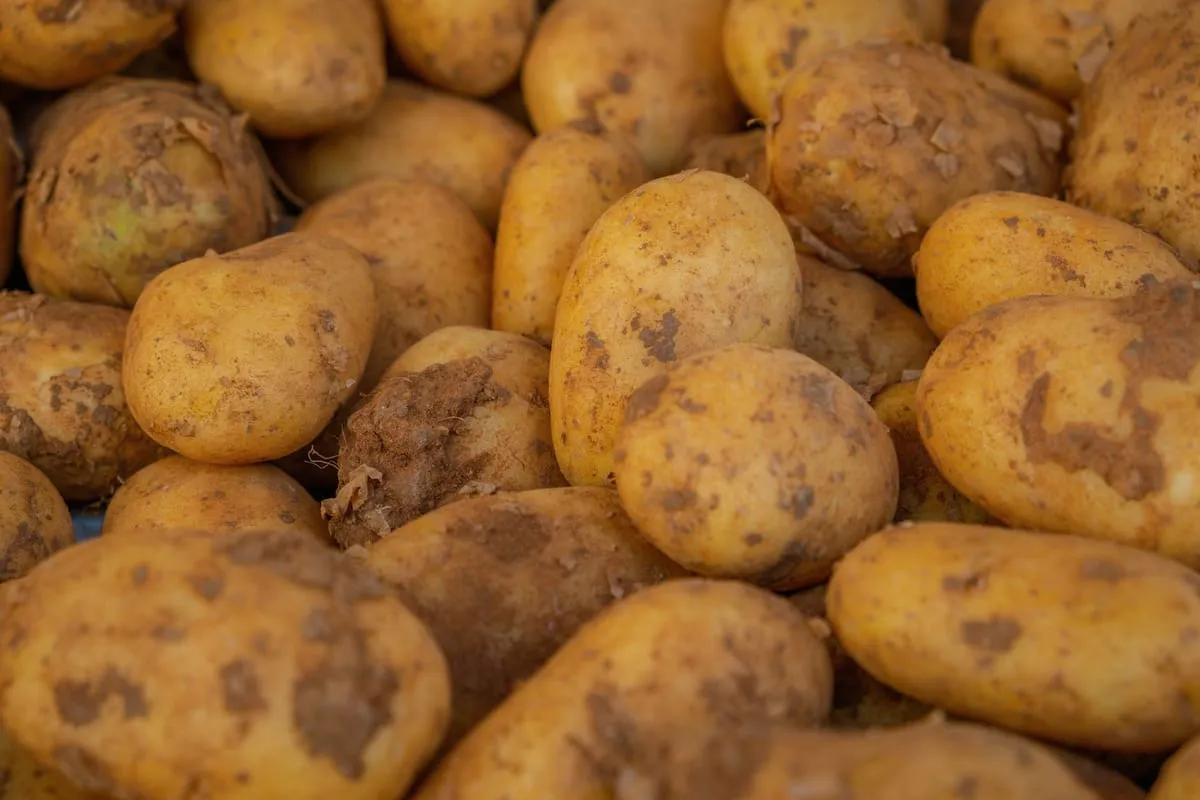
Boil, bake, or steam the potato with nothing added, no butter, oil, salt, milk, cream, or seasoning of any kind, and let it cool before offering small, dog-sized pieces. Leave the skin off, or on, in a small plain amount, it is not toxic once cooked, though it is tougher to digest and worth skipping if your dog has a sensitive stomach. Never use a potato that has turned green anywhere on the skin or has started sprouting eyes, both signs of rising solanine levels, and discard rather than trim and use the rest.
When it becomes a problem
Green-tinged or sprouted potatoes are the main direct danger, since solanine poisoning can cause vomiting, diarrhoea, lethargy, and in serious cases affects the nervous system. Raw potato carries a smaller amount of the same toxin and is also simply harder for a dog to digest, so it is worth keeping out of reach rather than treated as a safe snack. Separately, and more commonly in practice, dogs get into trouble from potato dishes rather than potato itself: a whole bowl of buttery mashed potato, a plate of salted fries, or leftovers made with onion or garlic gravy each carry their own risks that have nothing to do with the potato being unsafe on its own.
What to do if they had too much
If your dog eats a green or sprouted potato, a significant amount of raw potato, or a potato dish made with onion, garlic, or a large amount of butter or salt, call your vet or an emergency animal poison line rather than waiting to see what happens. Watch for vomiting, diarrhoea, unusual lethargy, or weakness over the following day. For an ordinary slip, a dog snatching one plain chip or a small piece of skin off the counter, most dogs are simply fine, but it is still worth keeping an eye on appetite and stools for a day. Our guide to why is my dog vomiting is a reasonable next read if symptoms do appear.
So, can dogs eat potatoes? Plain, cooked, and in small amounts, yes. Raw, green, sprouted, or dressed up as mash, fries, or chips, no, and the second category is where most real-world problems actually start. For the fuller picture of what else belongs on that plain-and-in-moderation list, see our guide to which human foods are safe for dogs.
Common questions
- Can dogs eat mashed potato?
- Plain mashed potato in a small amount is fine, but most mashed potato is not plain. Butter, milk, cream, salt, and garlic or onion powder are common additions and all cause problems for a dog in enough quantity, garlic and onion seriously so. Only offer mashed potato you made yourself with nothing added, not a spoonful from the family dinner.
- Are potato skins safe for dogs?
- Cooked, plain potato skin in a small amount is not toxic, but it is tougher to digest than the flesh and offers nothing extra nutritionally, so there is little reason to include it. Green-tinged skin is different and should never be fed, since the green colour signals a higher level of solanine, the toxin potatoes share with the nightshade family.
- Can dogs eat raw potato?
- It is best avoided. Raw potato is hard for a dog to digest and contains more solanine than the cooked flesh, along with starches that are simply easier on the stomach once cooked. A dog stealing a small piece of raw potato from the counter is unlikely to come to serious harm, but it is not something to offer deliberately.
- Can dogs eat French fries or potato chips?
- Not as a regular thing. Fries and chips are cooked in oil and usually salted, and shop-bought or restaurant versions often carry onion or garlic seasoning, all of which are unsuitable for a dog even though the potato underneath is not the problem. An occasional plain fry with nothing on it will not hurt most dogs, but it is a treat with no upside, not a food worth sharing regularly.