A Staffy’s skin reacts after swimming because the breed’s coat is so short and fine that chlorine, salt and even plain dam water sit almost directly against bare skin, drying it out and leaving it tight and itchy within hours. Most of what owners call a “swimming allergy” is actually irritation rather than a true allergic reaction, and it responds well to a proper rinse and dry routine rather than a trip to the vet.
That said, Staffies really do seem to come off worse than a lot of other breeds after a swim, and there are real reasons for that rather than it just being bad luck.
Why Staffies react more than other breeds
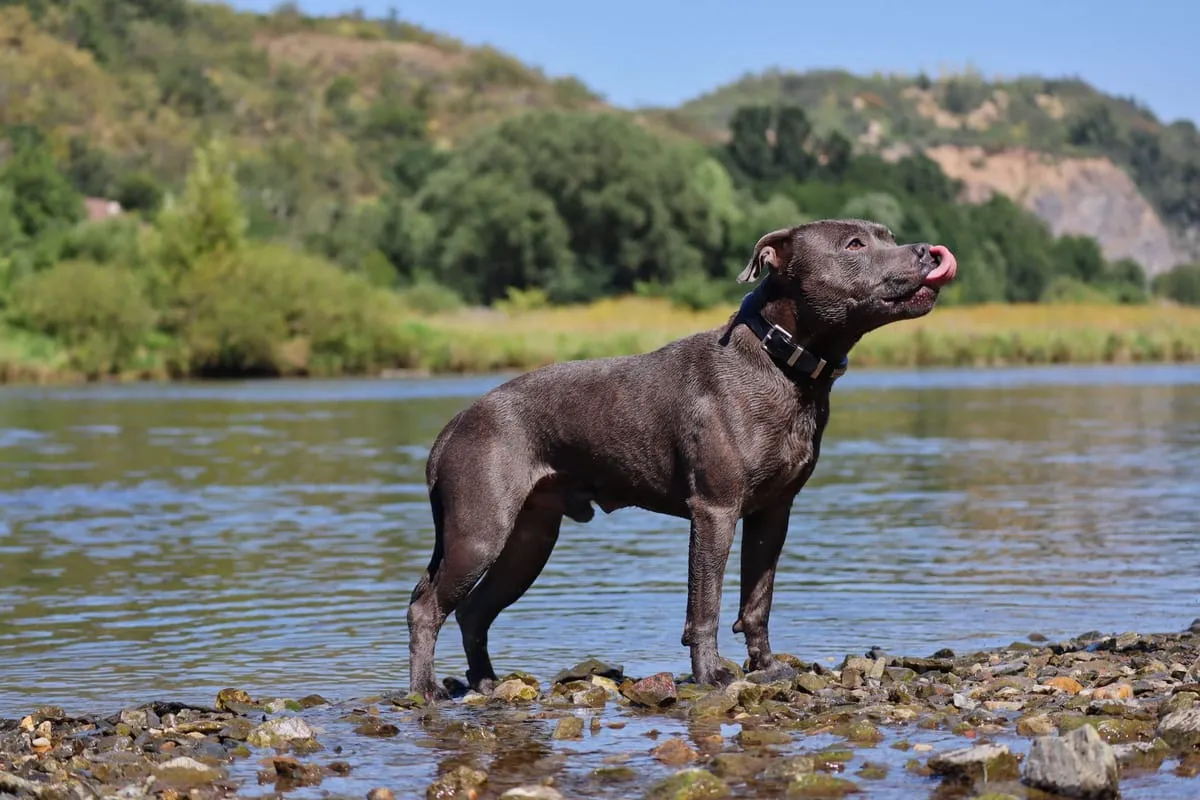
A Staffordshire Bull Terrier’s coat is about as minimal as dog coats get: short, smooth and close to the skin, with no undercoat to speak of. That coat looks great and needs almost no grooming, but it also means there is very little protection between the skin and whatever it is swimming in. A breed with a thicker double coat gets some buffering from its fur. A Staffy’s skin is doing the work on its own.
On top of that, a lot of Staffies carry a degree of general skin sensitivity even on dry land, which is part of why the breed shows up so often in conversations about general itching and scratching. Swimming does not cause that underlying sensitivity, but it is often the thing that tips a skin that was already a bit reactive over into visibly red and uncomfortable.
Chlorine, salt and dam water are not the same problem
Chlorine pools dry the skin out chemically. It strips natural oils fast, and a Staffy that swims regularly in a backyard or public pool often ends up with skin that feels tight and looks slightly flaky a few hours later, most noticeably on the belly and inner thighs where the coat offers the least cover.
Salt water at the beach does something similar through plain osmosis, pulling moisture out of the skin, and it usually comes with sand as well, which acts like a mild abrasive on skin that is already drying out. A red belly after a beach swim is almost always this combination rather than anything in the sand itself being toxic or allergenic.
Dams, rivers and lakes are gentler on skin chemically, but they bring their own risks: algae, bacteria and whatever runoff has gone into the water, which can trigger a more localised irritation or, less often, something that genuinely needs a vet look.
The rinse and dry routine that actually stops it
The single biggest fix is boringly simple: rinse with fresh water every time, not just the times the skin already looks annoyed.
A quick hose-down or a tap at the park, run over the belly, legs and armpits where water tends to sit, removes most of the chlorine or salt before it has time to dry out the skin. Pat the coat dry with a towel afterwards rather than rubbing, since rubbing on already-irritated skin tends to make things worse rather than better. A gentle, soap-free oatmeal shampoo once a week through summer, rather than every day, keeps the skin calmer than plain water alone for a Staffy that swims a lot.
If a patch has already gone red, inflamed and a bit angry despite rinsing, an antimicrobial hot spot spray calms the specific spot without stinging, which matters for a dog already tempted to chew at it. It is a treatment for an existing hot spot though, not a substitute for rinsing in the first place.
When it has become a true allergy
For most Staffies, though, this is a management problem rather than a medical one. Rinse every time, dry properly, and the breed’s thin coat stops being a liability in the water.
Related questions
Common questions
- Why does my Staffy get itchy after swimming in the pool?
- Chlorine strips the thin layer of natural oil that normally protects a Staffy's skin, and because the coat is so short and fine there is almost nothing between the chemical and the skin itself. The result is dry, tight, itchy skin within a few hours of a pool swim, especially along the belly and inner legs where the coat is thinnest.
- Why does my Staffy get a red belly after a beach swim?
- Salt water draws moisture out of the skin the same way it dries out your own hands, and a Staffy's exposed, lightly furred belly takes the brunt of it, along with sand grit rubbing against already-irritated skin as the dog walks and rolls on the beach. A rinse with plain fresh water as soon as you are off the sand stops most of this before it sets in.
- How do I stop my Staffy's skin reacting after every swim?
- Rinse with fresh water straight after any swim, whether it was a pool, the beach or a dam, then pat the coat dry rather than rubbing, paying particular attention to the belly, armpits and any skin folds where water sits. Doing this every single time, not just when the skin already looks annoyed, is what actually breaks the cycle.
- When is this an actual allergy and not just irritation?
- See your vet if the redness does not settle within a day or two of rinsing and drying properly, if you see hives, facial swelling or sudden widespread itching rather than irritation limited to the belly and legs, or if a patch turns into a weeping, chewed hot spot. Those point toward a true allergic reaction or an infection that needs more than a good rinse.