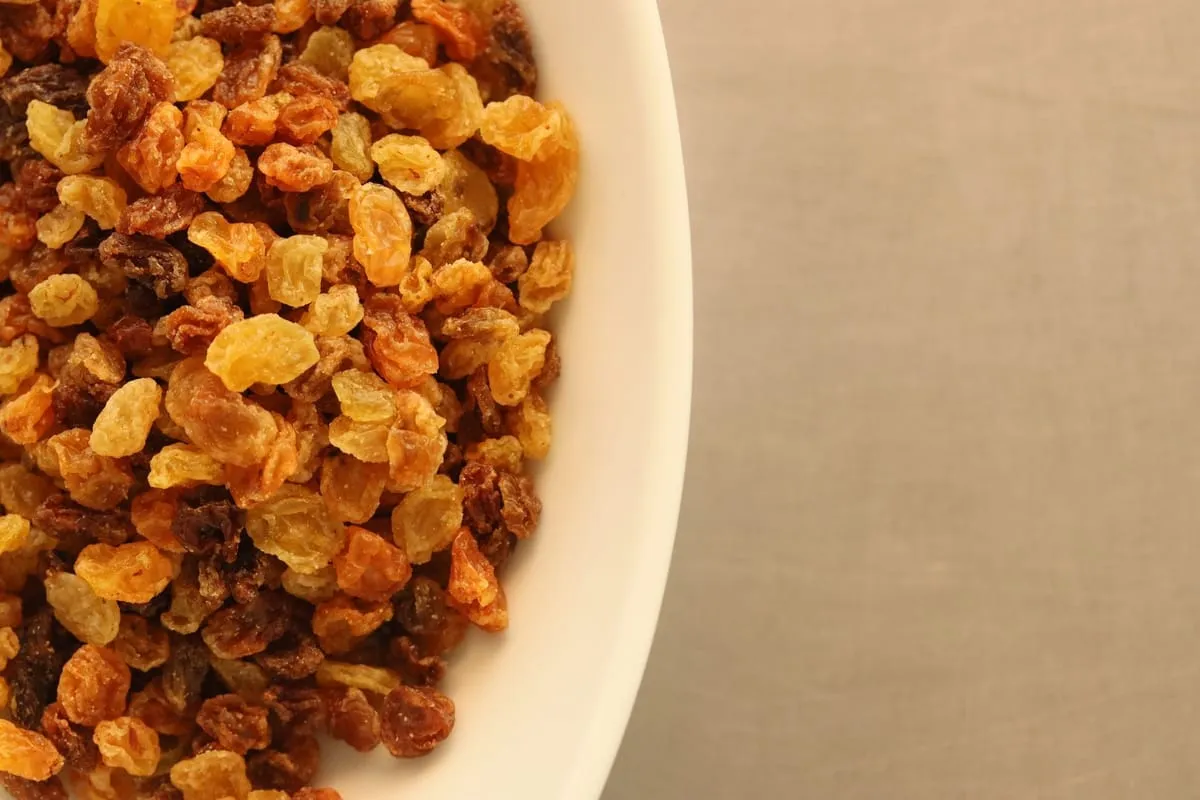
The short answer is no. Raisins carry the same risk as grapes, sudden and potentially severe kidney failure in dogs, and because they are dried and concentrated, a small handful can contain the toxic load of a much larger bunch of fresh grapes. That makes raisins, if anything, the more dangerous of the two in practice, simply because they are so easy for a dog to find and gobble in one go.
I am a writer, not a vet, and this is a genuine emergency food, not a “feed in moderation” one. If your dog has eaten raisins, the right move is a phone call to your vet, not a search engine.
Why dried grapes are the bigger everyday risk
The toxin behind grape and raisin poisoning in dogs is still not fully identified, but the effect on the kidneys is well documented and the drying process does not remove it. If anything, drying concentrates it, packing the toxic load of several grapes into a few raisins that take up far less space in a cereal bowl, a lunchbox, or a dropped handful of trail mix. For the full picture of how the kidney damage develops, see our guide to can dogs eat grapes, which covers the mechanism in more depth.
What makes raisins specifically risky day to day is not the biology, it is where they turn up. Grapes mostly live in a fruit bowl a dog has to actively target. Raisins get baked, mixed, and scattered through foods that are already sitting at dog height.
Where raisins actually hide
This is the part worth sitting with, because most accidental raisin poisonings are not a dog raiding a box of raisins on purpose. They come from foods that do not read as dangerous at a glance:
- Trail mix and granola bars left in a bag or on a low table
- Breakfast cereal and muesli, often with raisins mixed right through
- Oatmeal and fruit cookies, including some sold as lunchbox snacks
- Fruit cake, Christmas pudding, mince pies, and hot cross buns, see our guide to keeping your dog safe at Christmas for the wider festive-food list
- Scones and tea bread with sultanas baked in
- A child’s school lunchbox or packed snack, within easy reach of a dog that free-roams the house
None of these look like “feeding my dog grapes.” That gap between how the food is perceived and what it actually contains is exactly why raisin poisoning catches careful owners out.
Signs to watch for
Signs usually develop over hours to a couple of days after a dog eats raisins, and they follow the same pattern as grape toxicity. Early on, expect vomiting, diarrhoea, and a dog that seems unusually quiet or off its food. As kidney damage progresses, increased thirst is common, followed by the more worrying sign, reduced or absent urination as the kidneys begin to fail.
Do not wait for these signs to appear before acting. By the time a dog is showing them, treatment is already playing catch-up, whereas intervening early, before symptoms start, gives the kidneys the best chance of coming through undamaged.
What to do if your dog eats raisins
Treat it as an emergency regardless of how your dog seems in the moment.
If the raisins were part of something else, a fruit cake, a chocolate-raisin mix, a nut-and-raisin trail mix, say so clearly when you call. Chocolate and macadamia nuts are their own separate dangers (see our guide to can dogs eat macadamia nuts), and your vet needs the full picture, not just the raisin part of it.
So, can dogs eat raisins? No, not in any amount, and not baked, dried, or hidden in something else. Keep raisins, sultanas, and currants, and the cereals, baking, and trail mixes that contain them, properly out of reach, and treat any accidental ingestion as a reason to call your vet immediately rather than wait and see. For the fuller list of what else belongs on that same “never” shelf, see our guide to which human foods are safe for dogs.
Common questions
- Are sultanas and currants as dangerous as raisins for dogs?
- Yes. Sultanas and currants are just different styles of dried grape, and vets treat all three the same way, as a genuine kidney-failure risk with no known safe amount. If a recipe or cereal lists any of the three, treat it exactly like raisins.
- My dog got into a whole box of raisins. What do I do?
- Contact your vet or a pet poison helpline immediately and tell them roughly how many raisins and how long ago, since dried fruit means a lot of toxin in a small volume compared to fresh grapes. Do not wait to see if your dog seems fine first, and do not try to make your dog sick without being told how.
- Can one raisin hurt a small dog?
- It is possible, which is why vets will not give a safe lower limit. Because the reaction does not reliably scale with size or amount, a single raisin eaten by a small dog is treated as a reason to call your vet, not dismissed as too little to matter.
- Are raisin dog treats actually safe?
- Genuine raisin-free dog treats are fine, but read the label carefully, since some trail mix style treats and "fruit and oat" biscuits marketed for dogs have, in the past, been found to contain dried vine fruit by mistake or poor sourcing. If a treat lists raisins, sultanas, or currants in the ingredients, do not feed it, regardless of what the packaging implies about being dog-safe.