Every dog pants. It is how they cool down, since dogs do not sweat through their skin the way people do, and a bit of open-mouthed panting after a walk or on a warm afternoon is not something to worry about. The harder question is knowing when panting has stopped being ordinary and started being a symptom, because dogs cannot tell you which one it is, and a heavy panting dog stretched out on the kitchen floor can mean anything from “I just chased a ball” to something that needs a vet today.
What ordinary panting looks like
Start with the baseline, because knowing what normal looks like is what makes the abnormal stand out.
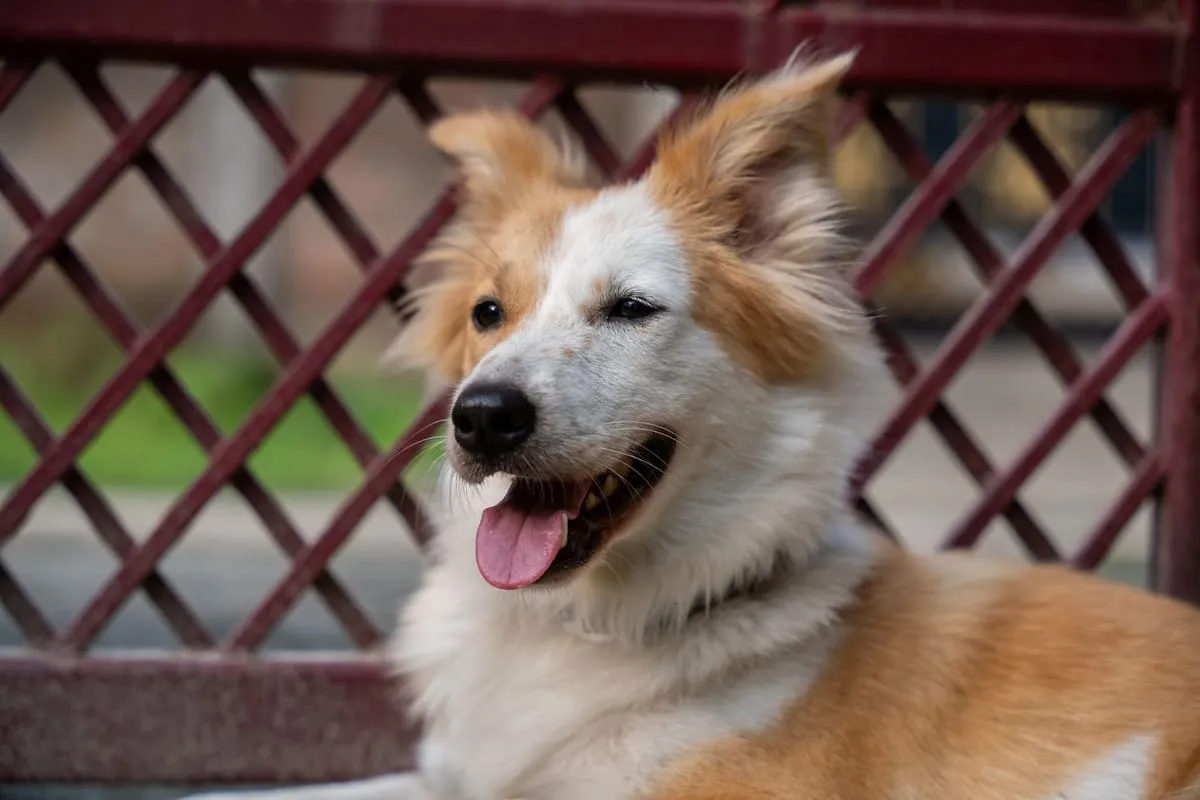
Ordinary panting shows up after exercise, in warm weather, when a dog is excited or briefly startled, and it is open-mouthed, fairly even, and settles down within ten or twenty minutes once the dog rests somewhere cool. It has an obvious trigger you can point to, and it has an end. If your dog’s panting fits that pattern, this is your dog’s cooling system doing exactly its job.
The trigger tells you what you are dealing with
Once you know what normal looks like, the fastest way to work out whether unusual panting is a problem is to ask what, if anything, set it off.
Panting after real exercise or on a genuinely hot day is expected, though it should still settle with rest, shade, and water, and if it does not, that is worth treating seriously. Our guides on the signs of heatstroke in dogs and whether it is too hot to walk your dog cover that specific, urgent version of heavy panting in depth. Panting around fireworks, storms, car journeys, or a stressful change at home is very often anxiety rather than anything physical, and usually comes with pacing, whining, or trying to hide alongside it. Our guide on keeping a dog calm during fireworks has practical help for that version.
Pain is a common, easy-to-miss cause
One of the reasons unexplained panting is worth taking seriously is that dogs are built to hide pain, and panting is one of the few tells that leaks through anyway.
A dog that is sore, from an injury, arthritis, a bad tooth, or something internal, will often pant as a physical response to discomfort even while giving away almost nothing else. It can look exactly like a dog that is simply warm, which is why it gets missed. Our guide on the signs your dog is in pain covers the other, quieter signs that tend to travel with it, restlessness, reluctance to settle, changes in posture, and is worth reading alongside this if your dog’s panting comes with any hint of stiffness or a change in how it is moving.
Heart, lung, and hormonal causes in older dogs
In older dogs particularly, panting that will not settle can point to something happening internally rather than anything behavioural.
Heart disease and some respiratory conditions reduce how efficiently a dog’s body gets oxygen around, and panting is often one of the earliest, most easily dismissed signs, especially if it shows up with a cough, reduced ability to exercise, or panting that gets worse lying down rather than better. Cushing’s disease, a hormonal condition more common in older dogs, causes persistent panting as one of its hallmark symptoms, often alongside increased thirst, a pot-bellied look, and hair thinning. None of these are things to diagnose at home. They are reasons to get a vet to listen to the heart and lungs and ask a few questions, because catching any of them earlier makes a real difference to how well they are managed.
Medication is a common overlooked cause
It is easy to forget that panting can be a side effect rather than a symptom of illness itself.
Steroids, commonly prescribed for allergies, joint problems, and a range of other conditions, are well known for causing increased panting as a side effect, sometimes dramatically so, even in a dog that otherwise feels fine. If your dog started a new medication around the time the panting began, mention it to your vet rather than assuming it must be something new and separate. They can usually tell you straight away whether it is an expected effect of the drug or something to look into further.
When to just call the vet
If you are working through the list above and still unsure, the simple rule is that panting with no obvious trigger, panting that does not settle with rest and a cool environment, or panting alongside any other change, appetite, energy, thirst, weight, is worth a call to your vet rather than a wait. Most of the time it turns out to be something manageable, caught earlier because someone noticed the panting did not add up. Trust that instinct. Nobody knows your dog’s ordinary better than you do, and it is that ordinary you are actually watching for changes against.
Common questions
- How much panting is normal for a dog?
- A fair amount. Dogs pant after exercise, in warm weather, when excited, and briefly after something startling, and it settles within ten to twenty minutes of rest in a cool spot. Normal panting is open-mouthed, roughly even, and stops on its own. It is the panting that does not fit any of those triggers, or does not settle, that is worth paying attention to.
- Why is my dog panting at night when it is not hot?
- Panting at rest, especially overnight, in a house that is not warm, is one of the more reliable signs something is actually wrong rather than environmental. Pain, anxiety, an early heart or lung problem, and in older dogs sometimes Cushing's disease can all show up first as panting that has no obvious trigger. It is worth a vet visit rather than waiting to see if it passes.
- Can anxiety cause a dog to pant a lot?
- Yes, anxiety and stress are common, genuinely non-medical causes of panting, whether from thunderstorms, fireworks, a car journey, or a stressful change at home. Anxious panting usually comes with other signs, pacing, whining, trying to hide, or clinginess, and settles once the trigger passes or the dog is helped to calm down.
- When is panting an emergency?
- Heavy, distressed panting alongside pale, blue, or grey gums, collapse, wobbliness, vomiting, or a swollen, hard abdomen needs a vet immediately, since these point to heatstroke, bloat, or a heart or breathing emergency. Panting that suddenly stops in a dog that was overheating is also a bad sign, not a good one, since it can mean the dog is too exhausted to keep cooling itself.