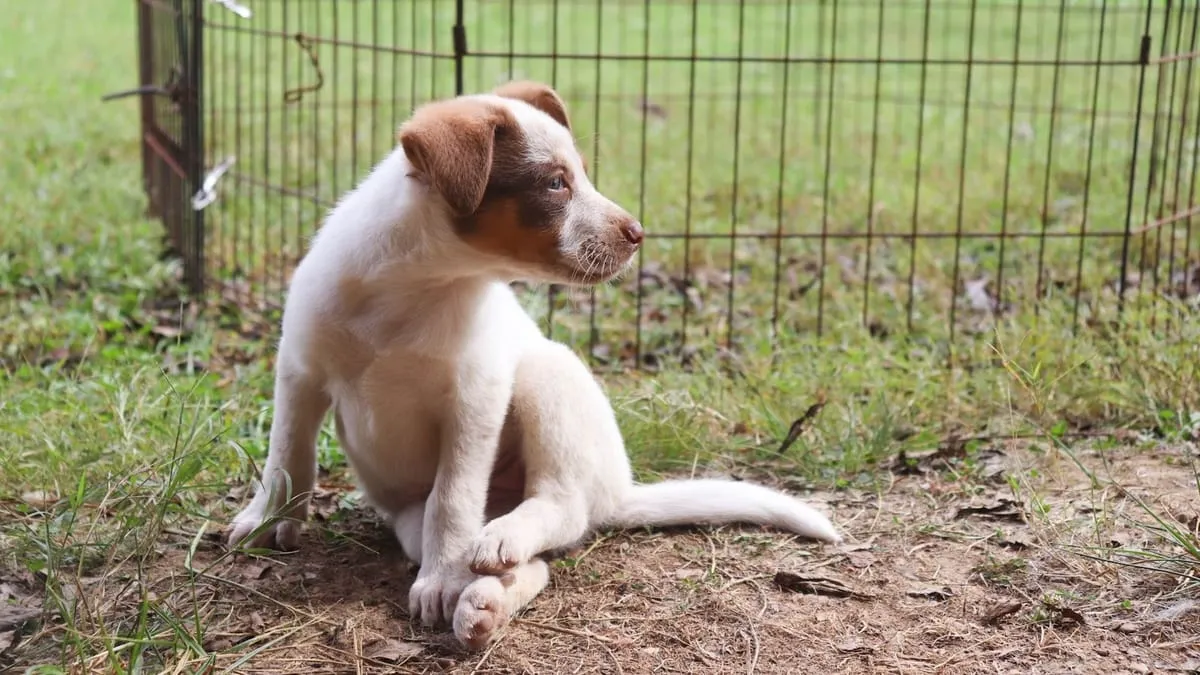
If you have just brought a puppy home, socialization is the training job with an actual deadline. Most of a dog’s lifelong comfort with people, other dogs, places, sounds and handling gets built or missed in a short window that closes by around twelve to sixteen weeks old, long before the full vaccine course is usually finished. That timing catches a lot of new owners out, because the instinct is to wait until every jab is done before doing anything. Wait that long and you have given away most of the window for nothing. Here is how to use it safely instead.
Why the timing matters more than the checklist
Puppies go through a genuine developmental window where new experiences are absorbed as normal rather than filed away as a threat, and it does not last long.
Whatever a puppy meets calmly during this window, a vacuum cleaner, a man in a hat, a skateboard, a busy pavement, tends to register as an unremarkable part of life. Whatever they never meet until later, or only meet during a frightening moment, is far more likely to become something they react to as an adult. This is why breeders and vets talk about socialization as time-limited rather than something to get around to eventually. The practical result is that you start the day you bring your puppy home, not the day the vaccine course finishes.
What to expose a puppy to, and how
Good socialization is broad and calm, not a single big event.
Spread a wide variety of experiences across the weeks: different types of people (in hats, uniforms, using a wheelchair or pushchair, children), different surfaces underfoot (grass, gravel, tile, a wobbly board), household sounds (the hoover, the doorbell, pans), being handled all over (ears, paws, mouth, tail, for future grooming and vet visits), a car ride, and calm, controlled meetings with healthy, vaccinated, puppy-friendly dogs. Little and often works better than one exhausting outing. A few short, positive sessions most days beats a single crowded trip to a fair, which risks overwhelming a young puppy in one go and doing the opposite of what you intended.
Keep every new thing paired with something good. Let your puppy approach at their own pace, reward calm curiosity with a treat or praise, and never force or drag a puppy toward something they are backing away from. The goal is a puppy that finds the world unremarkable, not one that has been marched past their fears and told to cope.
Reading when it is too much
The other half of socializing well is noticing when a puppy has had enough, and backing off before it turns into a bad memory.
Signs a puppy is overwhelmed rather than curious include tucking the tail, trying to hide behind you or under furniture, lip licking and yawning outside of tiredness, or freezing in place. If you see this, add distance immediately, let your puppy watch from further away where they feel safe, and reward any relaxed glance toward the scary thing rather than insisting they approach it. A treat pouch kept loaded on outings means you can reward the instant your puppy notices something new and stays loose and curious, and a clicker is a clean way to mark that exact calm moment if you are already using one for other training. Forcing contact, or laughing off a growl or a hide as your puppy being silly, teaches the opposite lesson from the one you want.
If you missed the window
Because the window is short, plenty of owners end up here with a rescue, a late start, or a puppy that simply had a smaller world than planned in those first months.
It is not hopeless, it just takes more patience. Older puppies and adult dogs can still build comfort with new things through the same slow, positive, distance-first approach, it simply moves more gradually and the improvements come in smaller steps than they would have at eight weeks. If your dog is genuinely fearful, reactive, or the anxiety is affecting daily life, a good reward-based trainer or a veterinary behaviourist can build a tailored plan rather than you guessing alone.
Socializing a puppy is really just spreading calm, positive experience as widely as you reasonably can while the window is open, and knowing when to step back rather than push through. Pair it with toilet training and working through the normal biting phase and the early months stop feeling like a race against a deadline and start feeling like the foundation they actually are. Our new puppy checklist covers the rest of what a new arrival needs.
Common questions
- When should I start socializing my puppy?
- As soon as you bring your puppy home, usually around eight weeks, not once the full vaccination course is finished. The prime socialization window closes by around twelve to sixteen weeks, so waiting for every vaccine forfeits most of it. You can start straight away with carried outings, visitors at home, and car rides, and add paw-on-the-ground public places once your vet confirms it is safe given the vaccines your puppy has had.
- How many new things should I introduce a puppy to?
- Aim for quality over quantity, a handful of calm, positive new experiences most days rather than one overwhelming outing. Different surfaces, sounds, people and dogs spread through the week works better than a single big trip to a crowded event, which can do more harm than good if your puppy gets overwhelmed.
- What if my puppy seems scared during socialization?
- Stop, add distance from whatever spooked them, and let them watch from somewhere they feel safe rather than pushing closer or forcing contact. Reward calm curiosity, never force or lure a frightened puppy toward the scary thing, and end the session on a better note even if that means a shorter session than planned. A few bad experiences in this window can create a lasting fear.
- Is it too late to socialize an older puppy or adult dog?
- The prime window is closed, but it is not hopeless. Older puppies and adult dogs can still learn to be more comfortable around new things through slow, positive exposure, it just takes more patience and repetition than it would have at eight weeks. If your dog is fearful or reactive, a reward-based trainer or veterinary behaviourist can help you build a safe plan.