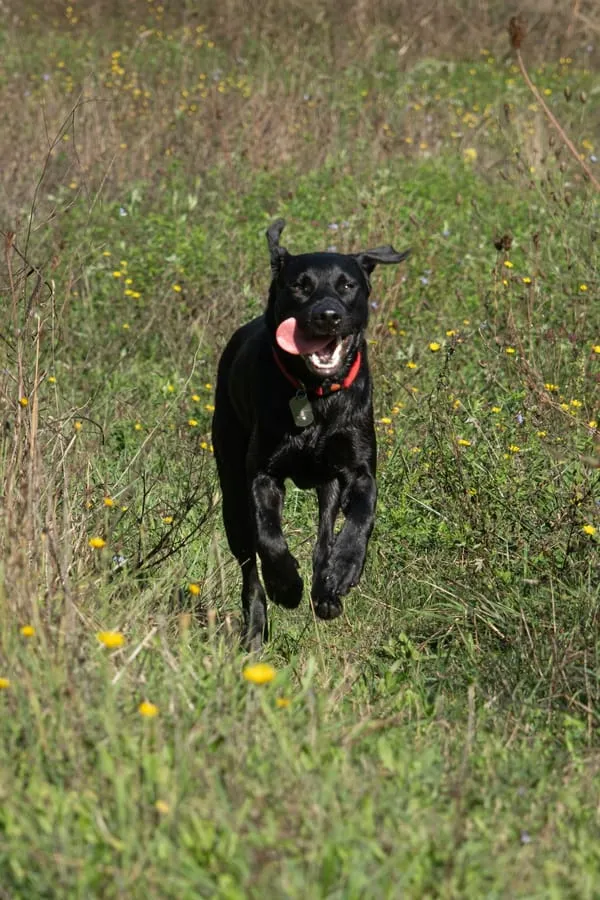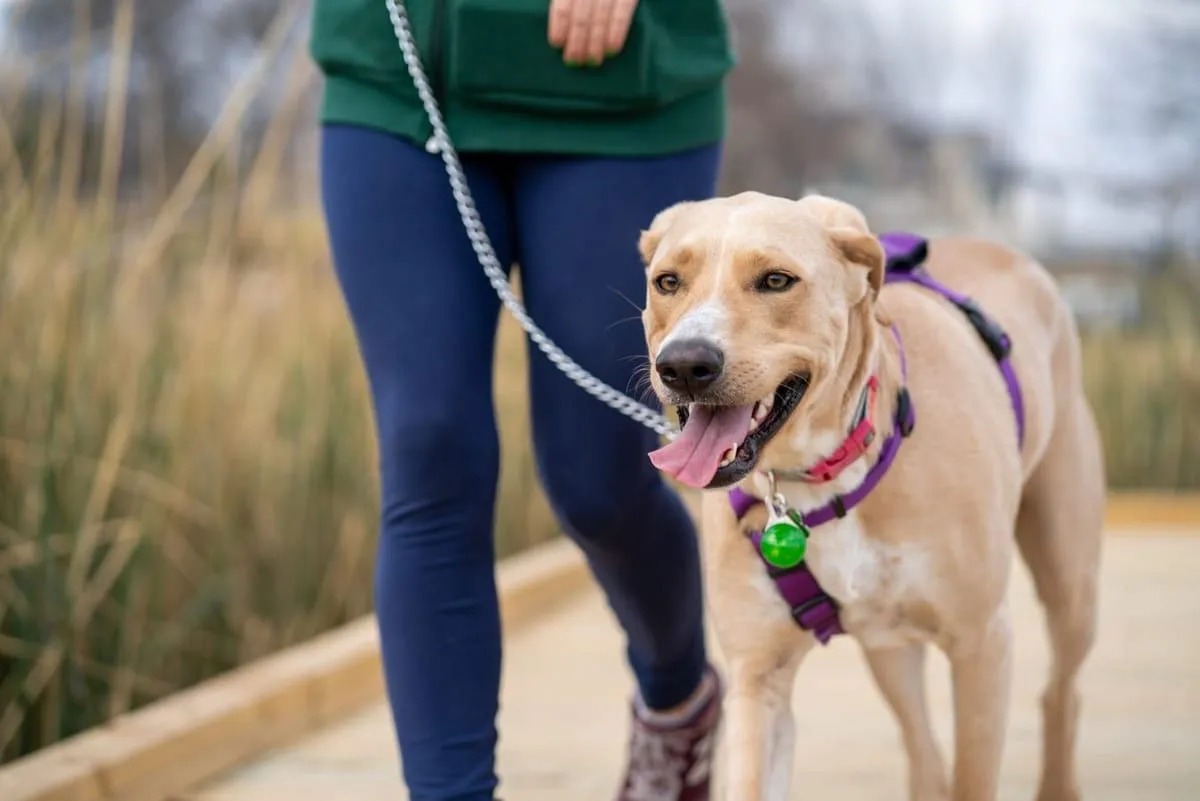
You open the front door, your dog catches sight of the street, and for the next half hour you are more or less water-skiing. Lead-pulling is the single most common thing people bring to me, and it is one of the most maddening, because your instinct, to haul back on the lead, is the one thing that makes it worse.
So before any training, it helps to understand two things about why your dog does this. Both point to why the obvious fixes fail.
Why pulling is such a hard habit
The first reason is simple. Pulling works. Your dog wants to get to the lamppost, they lean into the lead, and they arrive at the lamppost. Every single walk where pulling gets them where they want to go is a training session teaching them to pull, run by you, by accident.
The second reason is physical. When a dog feels steady pressure against their chest or neck, their reflex is to lean into it, not to ease off. It is the same reflex that lets sled dogs haul a sledge. So when you brace and pull back, your dog braces and pulls harder, and you have a tug of war that they are built to win.
Put those together and you can see why shouting, yanking, and stopping to tell them off do nothing. The pulling is being rewarded faster than you can correct it.
Start with the right gear, but know what it does
Gear buys you control while you train. It does not train the dog.
A front-clip harness, where the lead attaches at the chest rather than the back, is the tool I recommend most. When your dog pulls, it gently turns them back towards you instead of letting them dig in, which takes the power out of the pull and keeps you safe on the way to changing the habit. A well-fitted harness also spreads any pressure across the body rather than the throat, which matters for the dog’s neck.
What I would steer you away from is anything that works by causing pain or fear. Choke chains and prong collars can suppress pulling in the moment, but the effect tends to fade, and they carry a real risk of hurting your dog and making a nervous one more anxious on walks. You do not need them.
(We are lining up a tested front-clip harness recommendation to sit here. For now, any well-fitted Y-shaped harness with a chest ring will do the job.)
The training that actually works
The whole method comes down to one rule your dog needs to learn: a loose lead means the walk continues, a tight lead means it stops.
Here is how you teach it. Set off, and the moment the lead goes tight, stop dead and stand still. Do not yank, just become a boring anchor. Your dog will eventually ease the tension, look back, or step towards you. The instant the lead softens, say “yes” and walk on again. You are showing them, over and over, that pulling switches the walk off and a loose lead switches it back on.
Alongside that, make being next to you worth their while. Keep some small, soft treats in the hand nearest your dog, and every few steps that they walk near your leg without pulling, feed one down at your side. You want your dog to learn that the good stuff happens in the position you actually want them in.
Two things make or break this in the early days.
The first is where you practise. You cannot teach loose-lead walking next to a field of rabbits any more than you could learn to drive on a motorway. Start in the most boring place you have, the garden, the hallway, a quiet bit of pavement, and only add distraction once your dog is getting it right.
The second is keeping sessions short. Ten focused minutes where you stop for every pull will teach more than an hour of being towed while you check your phone. End while your dog is still doing well.
The part nobody likes: staying consistent
This is where most people come unstuck, and it is worth being honest about. If pulling works even some of the time, the habit stays alive. The morning you are running late and let your dog drag you to the car has quietly undone three good training walks.
The way through is to split your walks in two. Have training walks, where you have the time to stop for every pull and reward the good position. And have the walks where you just need to get somewhere, on which you put the front-clip harness on and accept that today is about management, not teaching. The harness stops the pulling from paying off while you are not actively training, so you are never going backwards.
When it is more than pulling
Watch for a different pattern. If your dog pulls hardest towards specific things, other dogs, people, cyclists, and it comes with barking, lunging, or a hard stare, that is usually excitement or worry rather than plain pulling. The loose-lead work still helps, but that situation is really about distance and calm, and if it tips into reactivity it is worth bringing in a behaviourist rather than grinding away alone.
It is also worth remembering that a dog with nothing else to burn off will put all of that fuel into the lead. A walk is not the only way to tire a dog, and the enrichment that keeps a bored dog busy at home takes some of the pressure off the walk too. A dog who has already used their brain that day tends to have less to prove on the pavement.
Go in expecting weeks, not days, and count small wins. Three loose-lead steps today, five tomorrow. You are not just teaching a new skill, you are unpicking a habit the two of you built together, and that always takes a little patience.
Common questions
- Do no-pull harnesses actually stop pulling?
- They reduce it and give you much better control, but they manage the pulling rather than teach the dog to stop. Used alongside training they are genuinely useful. Used on their own, the pulling usually creeps back.
- How long does it take to train a dog to walk on a loose lead?
- For most dogs, a few weeks of short, consistent sessions. A dog that has spent years practising pulling takes longer, because you are undoing an old habit as well as building a new one.
- Should I use a choke or prong collar to stop pulling?
- No. They work by hurting or startling the dog, the effect often fades as the dog gets used to it, and they can cause real harm and make anxious dogs worse. Loose-lead training with a well-fitted harness gets you there without any of that.
- Why does my dog pull hard towards other dogs or people?
- That is usually excitement, or sometimes worry, rather than everyday pulling, and it needs a slightly different approach built around keeping distance and rewarding calm. If it comes with barking or lunging, it is worth getting a behaviourist involved.