You walk past the tank, and the fish you paid attention to all week is gone again, tucked behind the filter or buried nose-first into the plants. The first instinct is to assume something is badly wrong, and sometimes it is. But a lot of hiding is completely normal fish behaviour, and the single most common fix, when it genuinely is a problem, is the opposite of what most new keepers try first.
Hiding is not automatically a bad sign
Before troubleshooting anything, it helps to know that fish hide for ordinary reasons, not just distressed ones.
Plenty of species are naturally more cover-loving than others. Corydoras and many loaches are more active at dawn and dusk and rest tucked away for a good part of the day. A fish that is startled by a hand near the tank, a loud noise, or a light flicking on will dart for the nearest cover, exactly as it would from a predator in the wild, then come back out once it decides the coast is clear. And a brand new fish, just moved from a bag into a strange tank full of unfamiliar shapes and other fish, hiding heavily for its first few days is close to the default, not the exception. None of that is a problem on its own. What matters is whether a fish still eats, still looks physically normal when you do see it, and gradually spends more time out in the open as days pass, not less.
The fix most people get backwards
Here is the part that trips a lot of new keepers up: a bare tank does not make a nervous fish braver, it makes the hiding worse.
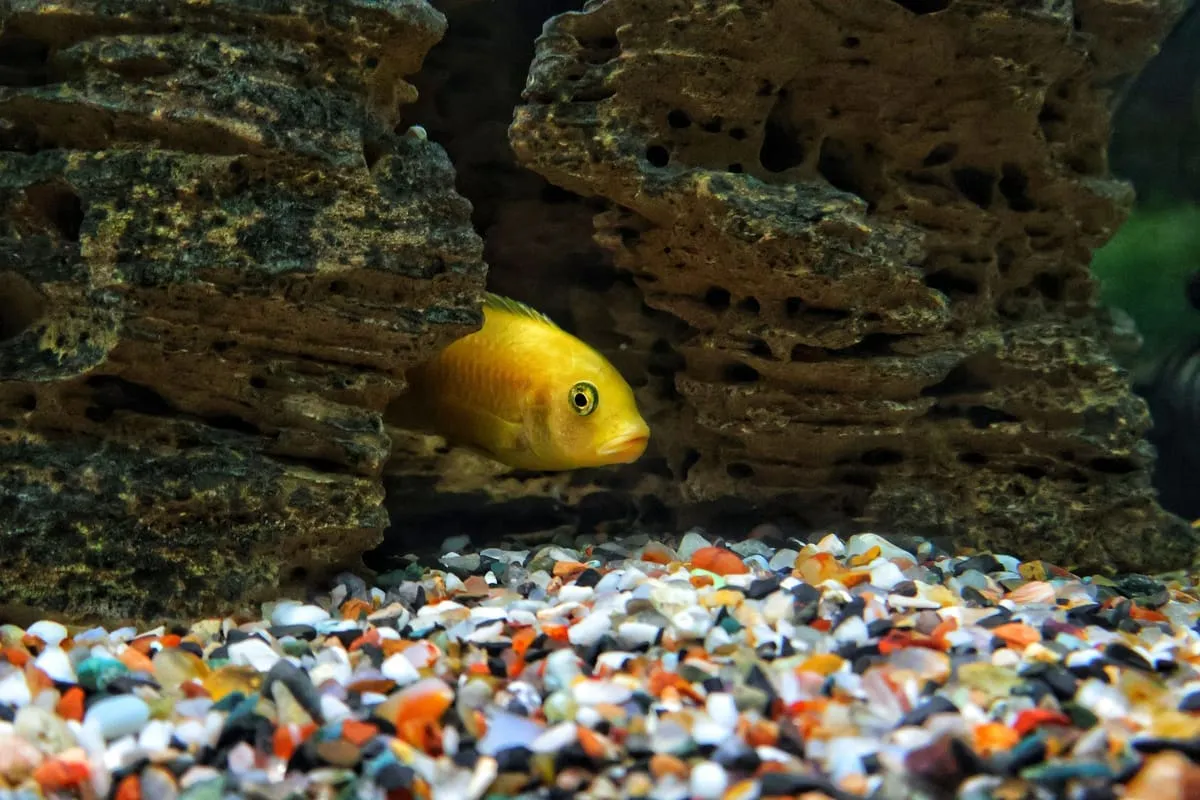
A fish with no caves, no dense planting, and no driftwood to retreat to is a fish with nothing to fall back on if something startles it, so it stays wound up and defensive most of the time, hovering near whatever scrap of cover exists or pressed into a corner. Add proper cover, a cave, a clump of plants, a piece of driftwood, and something counterintuitive happens: the fish that finally has somewhere safe to go generally uses it less, because it is no longer on permanent alert. Confidence comes from knowing an escape exists, not from having nowhere to hide at all. If your tank is sparse, more cover is very often the fastest improvement you can make, not the thing to avoid because “it will just hide in there instead.” A set of real hiding caves spread around the tank, rather than one lonely ornament, gives every fish, not just the boldest one, somewhere to go.
When hiding points to something else
Constant hiding that is not explained by species, a recent move, or a startle is worth digging into properly, and a short list of causes covers most real cases.
Bullying from a tankmate, often one too aggressive or too large for the mix, can push a weaker fish into permanent hiding, and it is covered in more depth in why are my fish fighting. Water quality problems, ammonia, nitrite, or wild temperature swings, make fish feel unwell generally, and a fish that feels bad often hides rather than displaying it openly, which ties into the invisible cause behind most unexplained fish deaths. A shoaling species kept alone or in too small a group will often hide far more than the same fish kept in a proper school, since safety in numbers is not just a saying for them, it is how they actually function. Lighting that is too bright with no shaded area can push light-sensitive fish to hide for most of the day, which a floating plant or a shadier corner usually fixes. And hiding paired with not eating, faded colour, or ragged fins points toward illness or stress serious enough to need investigating properly, which the fuller signs of fish stress and why is my fish not eating both cover.
Working out which one it is
Watch the fish rather than guessing. A fish that hides but comes out to eat, looks bright and intact when it does, and is gradually spending more time visible as the days pass is almost always fine, whether it is a naturally shy species or a new arrival finding its feet. A fish that stays hidden around the clock, skips food, or looks faded or damaged on the rare occasions you do see it is telling you something is actually wrong, and that is when water testing, a look at the tankmates, and more cover all earn a place on the checklist, roughly in that order.
Most of the time, a hiding fish just wants somewhere to feel safe, and giving it that, rather than taking cover away, is what gets it swimming out in the open again.
Common questions
- Is it normal for a fish to hide sometimes?
- Yes. Many species rest in a favourite spot, dart for cover when something moves near the tank, or hide more during the day if they are naturally more active at dawn and dusk. Occasional hiding from an otherwise healthy, eating fish is usually just how that fish lives. Hiding that is constant, or that is new for that individual fish, is the version worth investigating.
- Why would adding more hiding spots make my fish hide less?
- Because an exposed fish with nowhere to retreat to stays on edge all the time, and a fish on edge spends more of its time trying to disappear. A tank with caves, plants, or driftwood lets a fish check that cover exists, relax, and come out to swim and feed normally. A bare tank gives it nothing to fall back on, so it hides harder and longer out of a kind of low-grade panic rather than less.
- How long should a new fish keep hiding before it settles in?
- Most healthy fish ease up within a few days to about two weeks in a stable, established tank, coming out more each day as they learn where the food comes from and that nothing in the tank is a threat. A new fish that is still hiding constantly well past that point, especially if it is also not eating, is worth a closer look at the water and the tankmates rather than more patience.
- When is hiding a sign my fish is sick?
- Treat it as a possible illness when constant hiding comes with other changes, not eating, clamped or ragged fins, faded colour, laboured breathing, or visible spots or sores. Hiding on its own in a fish that still eats and looks physically normal is far less concerning than hiding stacked on top of those other signs.