Angelfish are sold in most fish shops as an easy, striking community fish, tall silver fins gliding among the tetras and corydoras, and as juveniles that picture is often close to true. What the shop rarely mentions is what that same fish grows into: a genuinely tall-bodied cichlid that can outgrow a standard tank, turn territorial once mature or paired, and put its long trailing fins within easy reach of any nippy tankmate. None of that makes angelfish a bad choice, they are a rewarding, long-lived, characterful fish, but it does mean the easy community picture on the shop label is only half the story. Here is what actually keeping one well looks like.
Height matters more than length
The first thing that trips people up is tank shape, not just tank size.
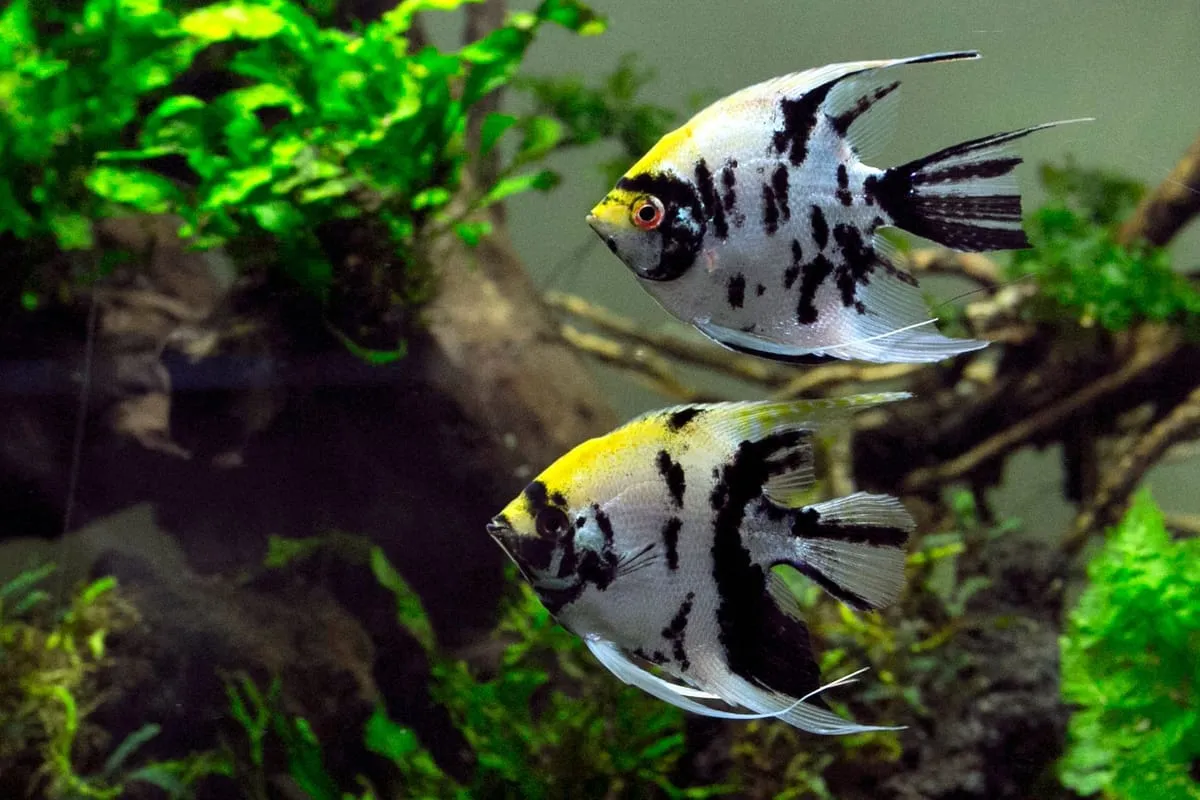
An adult angelfish’s body can reach around six inches tall, with its dorsal and anal fins trailing well beyond that, so a tank needs real vertical depth for it to swim and turn comfortably, not just a long footprint. A standard tank sized by length alone for a “six inch fish” often turns out too shallow in practice. A single angelfish needs at least a 20 to 29 gallon tank with genuine height, and more for a pair or a small group, sized for the adult it will grow into over its first year or so rather than the two-inch juvenile in the shop tank. Getting the tank right from the start, cycled properly before the fish goes in, avoids the outgrown-tank problem that catches so many owners later.
A cichlid temperament hiding in a peaceful-looking fish
Angelfish belong to the cichlid family, and it shows more as they mature than it does as juveniles.
A young angelfish in a community tank is often genuinely easygoing, which is exactly why they are sold as community fish. That tends to shift with age, and shifts more sharply once two angelfish pair off to breed: a bonded pair will stake out a territory, often around a flat leaf or slate they have chosen to lay eggs on, and chase off anything, including tankmates that lived alongside them peacefully for months, that gets too close. This is not illness or a personality change to worry about, it is normal cichlid behaviour, but it means a tankmate plan that works for six months of juveniles can stop working once the fish mature or pair up, and it is worth watching for rather than assuming the peaceful start will last forever.
Choosing tankmates around the fins, not just the fish
The angelfish’s other defining feature, those long flowing fins, is also its main vulnerability.
Trailing fins are a standing target for fin-nipping fish, tiger barbs and serpae tetras being classic offenders, so those species are best avoided as tankmates regardless of how calm an individual angelfish seems. A nipped fin is also an entry point for infection, the same kind of ragged, worsening edge covered in fin rot in fish, so steady water quality and non-nippy company both matter for keeping fins intact. The reverse risk matters too: an adult angelfish has a real mouth on it, and a tankmate small enough to fit inside that mouth, fine as a same-sized juvenile, becomes a meal once the angelfish is grown. Choose tankmates for the angelfish they will become, not the one currently in the tank.
Who an angelfish actually suits
An angelfish suits someone drawn to a striking, long-lived centrepiece fish and willing to plan a tank around its adult height and eventual temperament rather than the peaceful juvenile they see in the shop. They reward a keeper who chooses tankmates thoughtfully, tests water regularly, and is prepared for a fish that can live a decade or more, a genuinely long commitment worth weighing seriously before buying on looks alone.
They are a poor fit for a small or shallow community tank stocked with nippy or tiny fish, or for anyone expecting the juvenile’s peaceful temperament to hold unchanged for its whole life. Get the tank height, the tankmate choices, and the water quality right, and an angelfish becomes one of the most rewarding centrepiece fish in the freshwater hobby, elegant, interactive, and around for years to come.
Common questions
- How big a tank does an angelfish need?
- Bigger and, crucially, taller than most first-time buyers expect. An angelfish's body alone can reach around six inches tall with its fins trailing further, so tank height matters as much as length, a standard "long and shallow" tank sized for smaller fish does not give it room to swim upright comfortably. A single angelfish needs a genuinely tall tank of at least 20 to 29 gallons, more for a pair or a group, since they also grow steadily for a year or more and need to grow into that space.
- Are angelfish aggressive?
- Not usually as juveniles, but often yes as adults, especially once paired. Angelfish are cichlids, and cichlid territoriality runs in the family, a young angelfish in a community tank is often peaceful, but a mature one, and particularly a bonded breeding pair, will claim a territory and chase off anything that gets too close, including tankmates that were fine with it for months. This shift catches a lot of owners off guard.
- Can angelfish live with other fish?
- Yes, with real care in choosing who. Good tankmates are calm, similarly sized, and not prone to nipping at trailing fins, since an angelfish's long fins are a standing target for fin-nippers like tiger barbs or serpae tetras. Fish small enough to fit in an angelfish's mouth are a genuine risk once the angelfish is grown, so pick tankmates with that eventual size in mind, not just their size at the pet shop.
- How long do angelfish live?
- Well kept, angelfish commonly live ten years or more, sometimes longer, which is a genuinely long commitment for a fish often bought on impulse as a pretty community addition. That lifespan, combined with the eventual size and territorial behaviour, is worth weighing before buying one on looks alone.