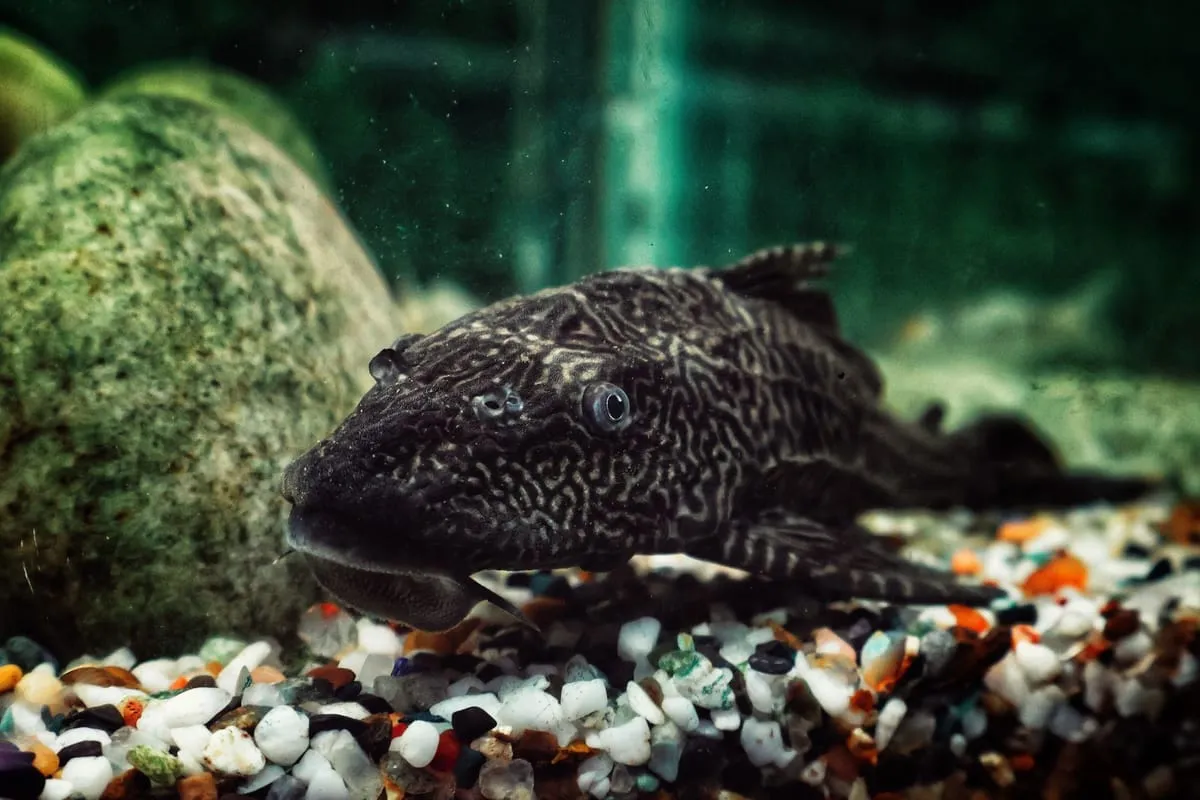
A pleco that hides all day after going into a new tank is almost always acting completely normally, not struggling. Plecos are nocturnal, so disappearing during daylight is baseline behaviour even in a tank they have lived in for years, and a brand new, unfamiliar tank with no claimed territory yet gives them an extra reason to stay out of sight.
That does not mean every case of a hiding pleco is nothing to think about. The timeline and the spot it chooses both tell you something.
Why plecos disappear when they are new to a tank
Most plecos kept as pets, the common pleco, bristlenose and their relatives, are built to forage at night and sleep through the day in the wild, tucked under driftwood, rocks or overhanging banks. A pleco moved into a new tank loses every familiar hiding spot at once, on top of adjusting to different water and the sudden presence of other fish it has not sized up yet. Staying hidden is the safe default while all of that settles.
This is different from a fish that is sick or struggling. A newly hiding pleco that is otherwise breathing normally, has good colour when you do spot it, and is not gasping at the surface is behaving exactly as its biology expects, just in an unfamiliar room.
How long is normal
A pleco won’t come out of hiding on any fixed schedule, but a rough pattern holds across most tanks. In the first few days, expect to barely see it at all, even at night. Over the next one to two weeks, most plecos start foraging after lights off, visible if you check with a dim torch rather than the main tank light. By three to four weeks, a pleco in a tank with decent cover will often be spotted occasionally during the day, grazing algae off the glass or decor.
A bare tank with little driftwood or rockwork, or a particularly shy individual, can stretch that out to six weeks or more. Cycling a new tank properly before adding fish also matters here, since a pleco added to water that is still finishing its ammonia and nitrite cycle has a second, more serious reason to stay hidden and stressed.
Signs it is more than shyness
A cloudy tank alongside a hiding pleco is also worth checking directly rather than assuming it is coincidence, since cloudiness in a new setup is often the same ammonia spike that would make any fish want to disappear. General hiding across several fish, not just the pleco, points toward a water problem rather than one shy individual.
What helps a new pleco settle
Cover matters more than almost anything else. A cave or hideaway ornament gives a pleco a specific, dark spot to claim instead of hovering in the open feeling exposed, and most settle faster once they have one. Driftwood is worth adding too if the tank does not already have any, since plecos rasp at it as part of normal digestion, not just for cover.
Feed after lights out rather than during the day. A sinking wafer dropped in once the room is dark reaches a nocturnal pleco when it is actually out and willing to eat, instead of sitting on the substrate uneaten until the diurnal fish clean it up. Sinking wafers are made for exactly this, reaching the bottom of the tank where flake food never does.
Keep handling to a minimum during the settling period. Tapping the glass, moving decor around to try to spot the fish, or doing more water changes than the tank actually needs all reset the settling clock rather than speeding it up. The most useful thing an owner can do for a newly hidden pleco is mostly leave it alone and let the lights-off foraging routine take hold.
Related questions
Common questions
- Is it normal for a new pleco to hide all day?
- Yes. Plecos are nocturnal by nature, so even a settled pleco mostly comes out after lights off, and a newly added one has the extra reason of being in unfamiliar water with none of the territory it would normally claim. Hiding for the first one to two weeks, sometimes longer in a sparsely decorated tank, is the expected pattern rather than a warning sign on its own.
- My new pleco won't come out of hiding, what should I do?
- Leave the lights on a normal day and night cycle rather than extending them to try to see the fish more, add extra cover such as driftwood or a cave, and check in roughly twenty minutes after lights out, since that is when a settling pleco is most likely to be out foraging. Avoid tapping the glass or moving decor to find it, since that resets the settling clock.
- Pleco hiding behind the filter in a new tank, is that a good sign?
- It usually is. A filter outlet or intake area is tucked, dim and slightly sheltered from the rest of the tank, which is exactly what a stressed or new pleco is looking for, so choosing that spot over sitting in the open is a sign it is behaving normally rather than badly. Just make sure the gap is wide enough that it cannot get wedged in.
- How long until a pleco feels safe enough to come out during the day?
- Most plecos relax enough to be seen occasionally during the day within two to four weeks in a tank with enough cover, though a shy individual or a bare tank can stretch that to a couple of months. A pleco settled enough to graze algae off the glass in daylight with the lights on is a good sign the acclimation period is essentially over.