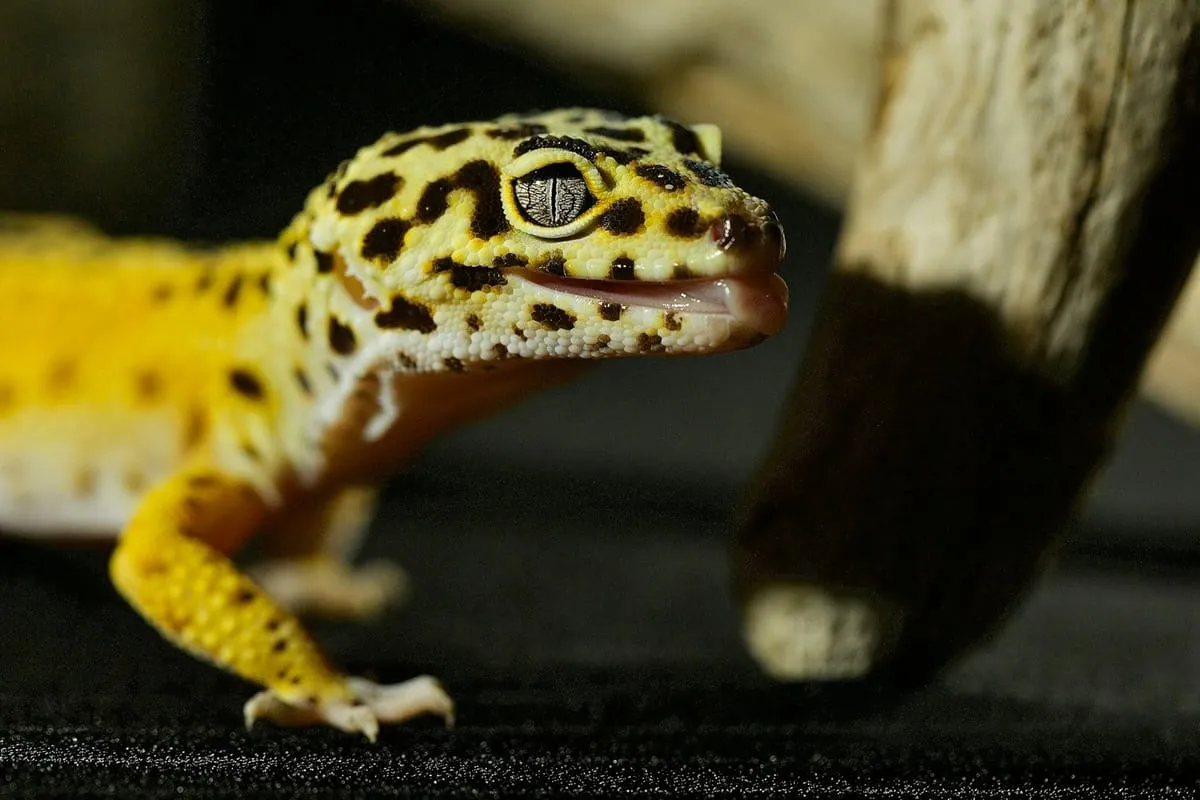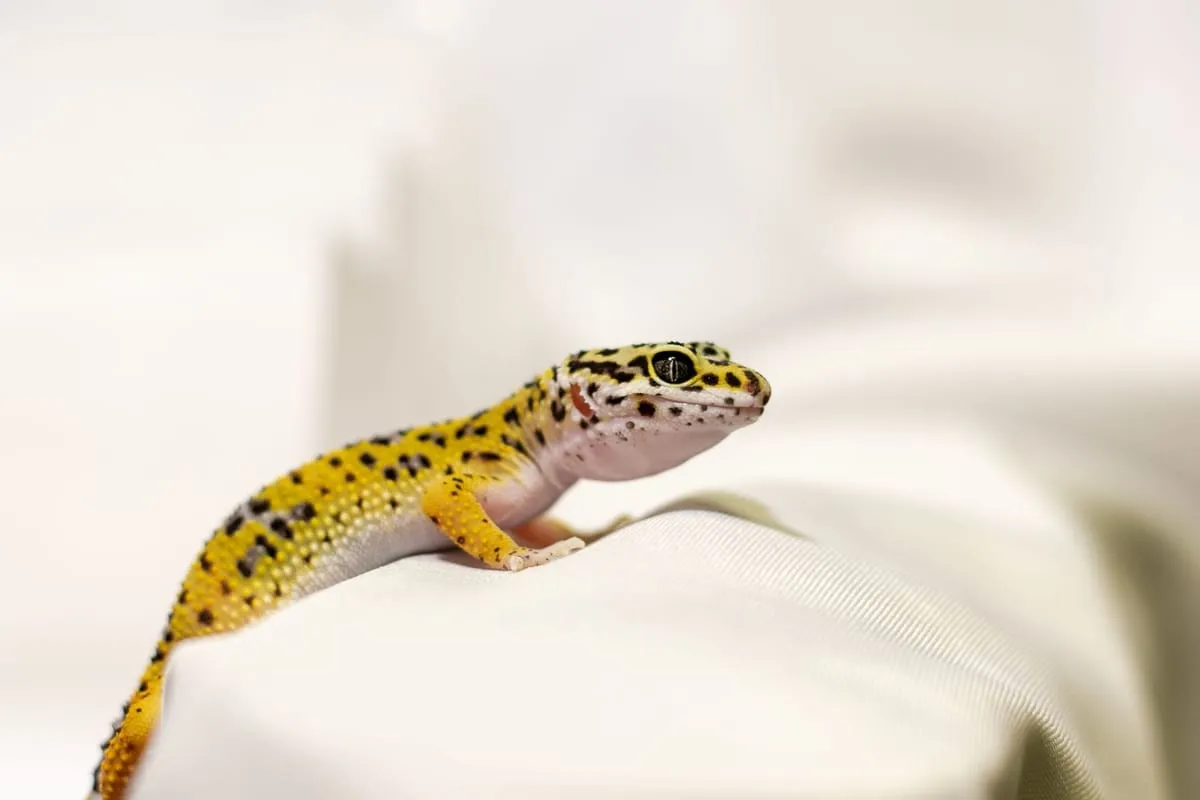
If your leopard gecko carries the Enigma gene and has started circling, tilting its head, or staring straight up at nothing (stargazing), you are most likely seeing enigma syndrome, a neurological condition built into the morph’s genetics rather than anything you have done wrong. There is no cure, but most geckos with mild to moderate symptoms settle into a full, stable life once the enclosure and feeding routine are adjusted around them.
Enigma syndrome catches a lot of new keepers off guard, partly because the Enigma gene is also one of the most popular leopard gecko morphs for its dalmatian-style spotting, and partly because the condition can take weeks or months to show up after a gecko comes home. Knowing what the pattern actually looks like, and what to change once you see it, matters more than chasing a fix that does not exist.
What enigma syndrome actually is
Enigma syndrome is linked to the same gene that produces the Enigma morph’s pattern, not to anything separate that happened to the gecko.
Geckos with the Enigma gene are born with a structural quirk in how certain neural pathways develop, and in a portion of them that quirk produces visible symptoms: circling in one direction, a persistent head tilt, stargazing, missing strikes at food because the aim is off, or losing balance on an uneven surface. Severity varies enormously. Some Enigma geckos show nothing obvious their whole lives, some show a mild tilt only when startled, and some circle constantly and need real adjustments to eat and move around safely. Breeding two Enigma geckos together (“super enigma”) tends to produce more severe symptoms in the offspring, which is why most breeders avoid that pairing, though a straightforward single-Enigma gecko can still land anywhere on the mild-to-severe range.
The pattern to watch for
The giveaway is less any single symptom and more how consistent it is.
A gecko that occasionally wobbles after being startled, or tilts its head briefly when it hears a sudden noise, is behaving normally. Enigma syndrome looks more like circling in the same direction repeatedly, a head tilt that holds rather than passing in seconds, stargazing where the gecko sits with its nose pointed almost straight up for no clear reason, or consistently misjudging the distance to a cricket or mealworm it is trying to grab. Some affected geckos also struggle to right themselves quickly if they end up on their back, which matters more for enclosure setup than it sounds.
Setting up a low-stress enclosure
Once you know you are dealing with enigma syndrome, the enclosure itself becomes the main treatment.
Go flat and solid underfoot. Loose substrate like sand or soil is harder for a gecko with poor aim or balance to move across confidently, and a gecko that is already prone to misjudging distance is more likely to take in a mouthful of substrate while lunging at food. A solid liner substrate removes loose particles from the equation entirely and gives steady, even footing, which matters more here than it would for a gecko with no balance issues.
Keep the water dish shallow, or choose one with an exit built in. A gecko that struggles to right itself is at real risk of drowning in a water dish deep enough to submerge it if it falls or climbs in and cannot climb back out. A dish with moulded exit steps gives a disoriented gecko a way out rather than a trap.
Skip climbing décor and keep hides at ground level. Branches, raised ledges, and tall rock stacks are the kind of thing an enigma gecko is most likely to misjudge and fall from. A low, ground-level hide on both the warm and cool side still gives the security every gecko needs without the fall risk, and it does double duty as a humid shedding spot if packed with damp moss.
Feeding a gecko with poor aim
Missed strikes are common and are not, on their own, a reason to worry.
Feeding from a shallow dish at a fixed spot, rather than loose insects roaming the enclosure, cuts down the hunting and lunging that a gecko with aim trouble struggles with most. Tong-feeding, offering a cricket or mealworm a short distance from the gecko’s nose and letting it take its time, works well for geckos that miss repeatedly when insects are left to wander. It takes more patience than scattering feeders and walking away, but a gecko that is eating consistently, however it gets there, is the actual goal.
When it is something else
Sudden-onset circling or a head tilt in a gecko that does not carry the Enigma gene, or in an Enigma gecko that was previously showing no symptoms at all, is a different situation and deserves a vet visit rather than enclosure changes.
Most Enigma geckos with mild to moderate symptoms go on to live a completely normal lifespan once their home is built around what they can and cannot do reliably. The condition does not get worse with age on its own, and a gecko that is eating, maintaining weight, and moving around its (flat, hazard-free) enclosure without repeated falls is a gecko that is doing fine, spin and all.
Related questions
Common questions
- What is enigma syndrome in leopard geckos?
- Enigma syndrome is a neurological condition linked directly to the Enigma morph gene, the same gene responsible for the dalmatian-spot pattern that makes the morph popular. It shows up as circling, head tilting, stargazing (staring straight up), trouble aiming strikes at food, or losing balance, and it ranges from barely noticeable in some geckos to severe enough that an owner needs to adjust almost everything about how the animal is housed and fed.
- Is leopard gecko head tilt and circling always enigma syndrome?
- Not always. Head tilt and circling are also the classic signs of an inner ear or vestibular infection, and sometimes of metabolic bone disease from poor calcium or UVB, so the first question is whether the gecko actually carries the Enigma gene. A gecko without visible Enigma patterning (dalmatian spotting, often paired with eye and pigment quirks) showing these signs needs a vet workup to rule those other, sometimes treatable, causes out rather than being assumed to have enigma syndrome by default.
- Can enigma syndrome in leopard geckos be treated or cured?
- There is no cure, because it is a structural, genetic trait rather than an infection or deficiency. What changes outcomes is management, a low-stress enclosure built around the gecko's balance and aim issues, since geckos with mild to moderate symptoms generally live a full lifespan when their housing and feeding routine accounts for what they can no longer do reliably.
- When should an enigma gecko with neurological symptoms see an exotics vet?
- See an exotics vet if symptoms appear suddenly in a gecko that was previously fine, if the circling or stargazing is constant rather than occasional, if the gecko cannot right itself when flipped onto its back, if it stops eating, or if you are not sure yet whether it actually carries the Enigma gene. Sudden onset or an un-gened gecko both point toward something else, infection, injury, or MBD, that is worth ruling out properly rather than managed at home as presumed enigma syndrome.