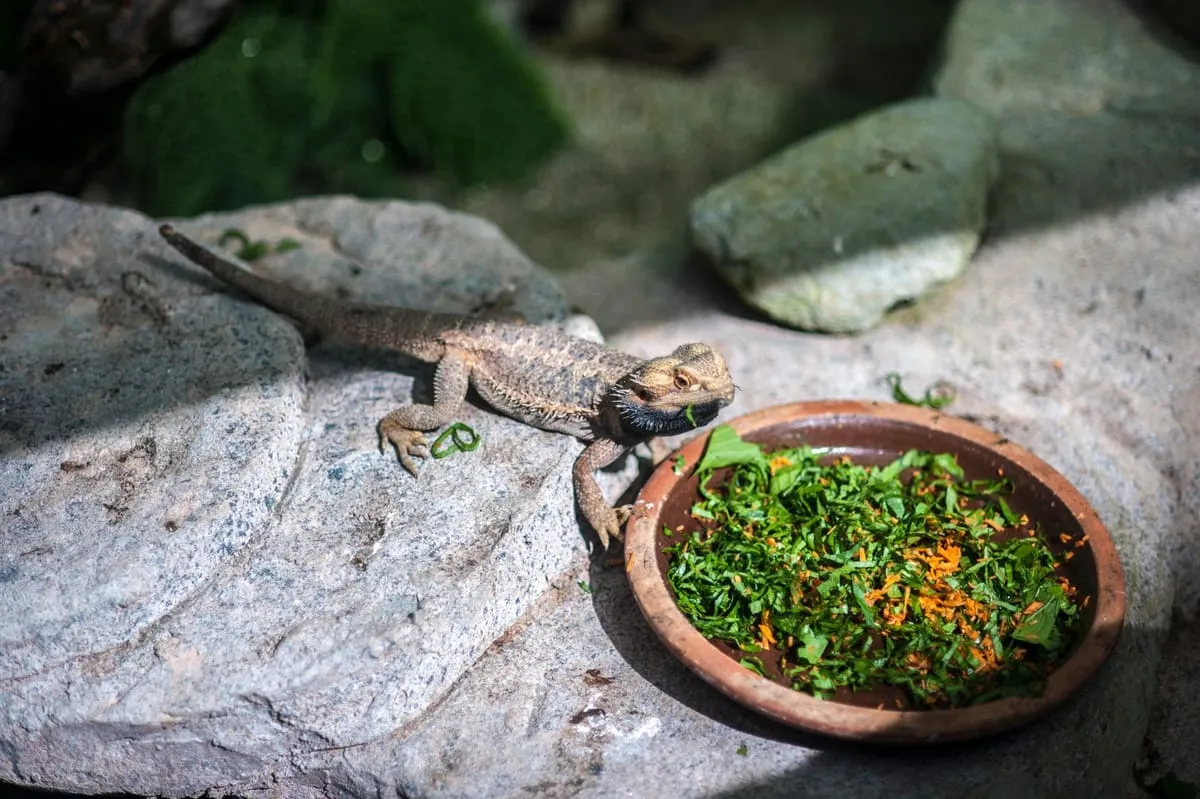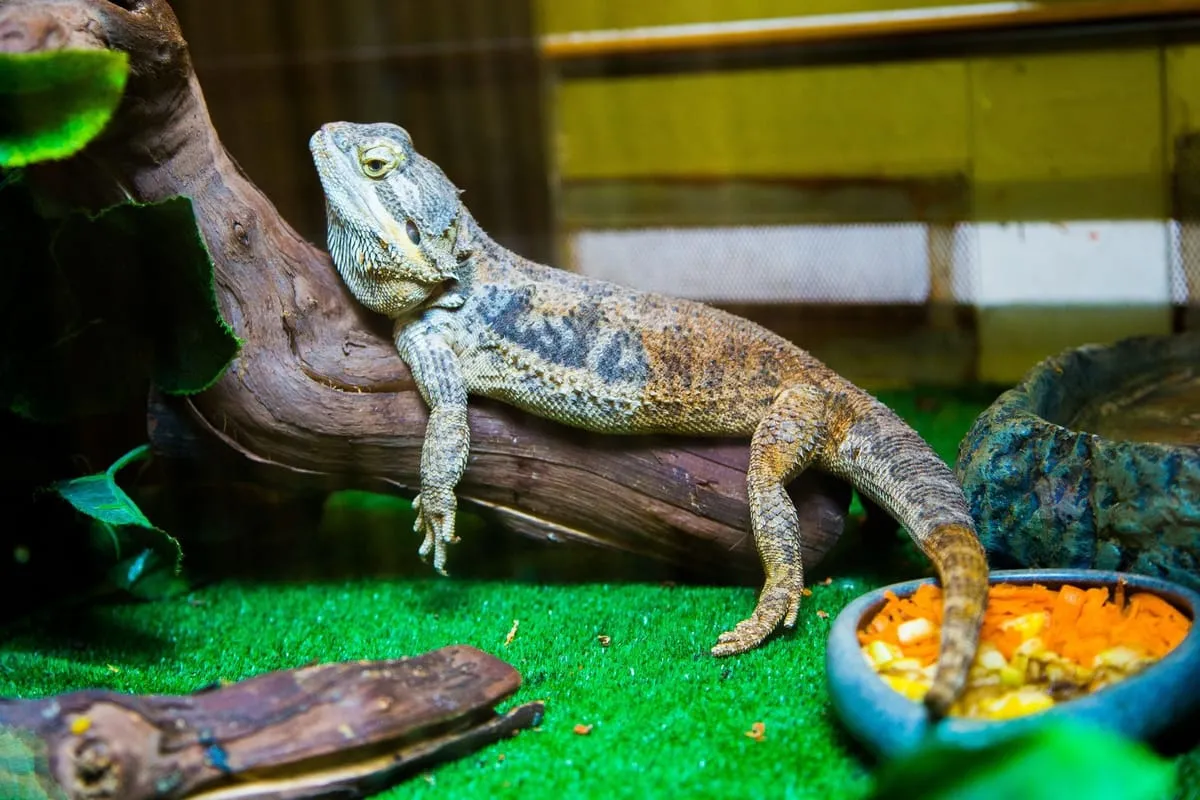
Your bearded dragon snaps up every cricket the second it lands in the enclosure, and then ignores the chopped greens sitting right next to the water dish for the rest of the day. It is one of the most common complaints from beardie owners, and it is rarely about the vegetables themselves being wrong. It is almost always about habit, timing, and presentation, all of which are fixable.
Why this happens so often
Young bearded dragons are built to eat mostly insects while they are growing fast, and the ratio is supposed to flip toward mostly vegetables as they reach adulthood, something we cover in more detail in how often should you feed a bearded dragon. The problem is that insects move, smell strong, and trigger a hunting response that a still pile of greens simply does not, so a dragon that has always been offered both at once learns to wait out the boring salad for the exciting part of the meal. Once that habit sets in at any age, it tends to stick unless something about the routine changes.
Making the greens themselves more appealing
Finely chop a genuine variety of staple greens rather than relying on the same single vegetable every day, since variety alone gets some dragons more interested. A few small pieces of fruit, mango, strawberry, or a touch of butternut squash, mixed through the greens can be enough to tip a reluctant eater into trying the bowl, and a light dusting of a calcium powder adds a flavour most dragons seem to find genuinely appealing on top of the nutritional benefit.
Placing a couple of calcium-dusted feeder insects directly on top of the salad, rather than offered separately, is one of the more reliable tricks: the dragon goes for the insect and ends up biting into the greens underneath in the process. A fortified pellet blend mixed through fresh greens can also help bridge the gap for a dragon that is not yet reliably eating vegetables on their own, though it should sit alongside fresh greens rather than replace them long term.
Changing how and when you offer it
Offer the greens first thing, before any insects are offered that day, so your dragon is genuinely hungry when the salad is the only thing on the menu. Several keepers find that cutting adult insect feeding down to a few times a week, rather than daily, while keeping fresh greens available every single day, fixes the imbalance within a couple of weeks simply because the dragon stops being able to wait out the boring option.
Checking the things that look like fussiness but aren’t
An enclosure that runs too cool, or basking light that is not giving your dragon the UVB and heat it needs, lowers appetite for food generally, not just greens, so it is worth confirming the setup is actually correct before assuming the problem is pure pickiness. See why UVB and heat matter for the basics of getting that right. A reptile multivitamin dusted on food a couple of times a week supports overall appetite and health alongside the feeding changes above, though it will not fix a genuine temperature problem on its own.
When it is something else entirely
Most bearded dragons that ignore their greens are not refusing vegetables outright, they are waiting for the more exciting option to show up, and that habit responds well to changing the order and presentation of meals rather than anything more drastic. Give it a few consistent weeks before worrying, and treat a dragon that stops eating everything, not just salad, as the different, more urgent problem it actually is.
Common questions
- Is it normal for a bearded dragon to prefer insects over vegetables?
- Yes, especially in young bearded dragons, which are built to eat mostly insects while growing and naturally shift toward a greens-heavy diet as adults. An adult that still strongly prefers insects has usually learned that pattern from how food has been offered, not from any real dislike of vegetables, and it is fixable with a change in feeding order and routine.
- How do I get my bearded dragon to actually eat its greens?
- Offer fresh, finely chopped greens first thing, before any insects are offered that day, so hunger is working for you rather than against you. Mixing in a few small pieces of fruit, a light dusting of calcium powder, or a couple of calcium-dusted insects placed directly on top of the salad all help a reluctant eater get started without turning the whole diet into dessert.
- Should I be worried if my adult bearded dragon still barely touches vegetables?
- It is worth taking seriously rather than ignoring, since adults need a greens-heavy diet to stay healthy long term, but it is rarely an emergency on its own. Keep offering fresh greens daily, work through the feeding-order and presentation changes, and involve an exotics vet if weeks of consistent effort make no difference or if the refusal comes with weight loss or lethargy.
- When does a bearded dragon not eating mean a vet visit, rather than just being fussy?
- See an exotics vet if your bearded dragon is refusing food of any kind, not just greens, alongside weight loss, lethargy, or a change in droppings, or if a consistent, patient effort to fix the diet brings no improvement after a few weeks. Picky eating is a feeding-habit problem. A dragon that stops eating altogether is a different, more urgent one.