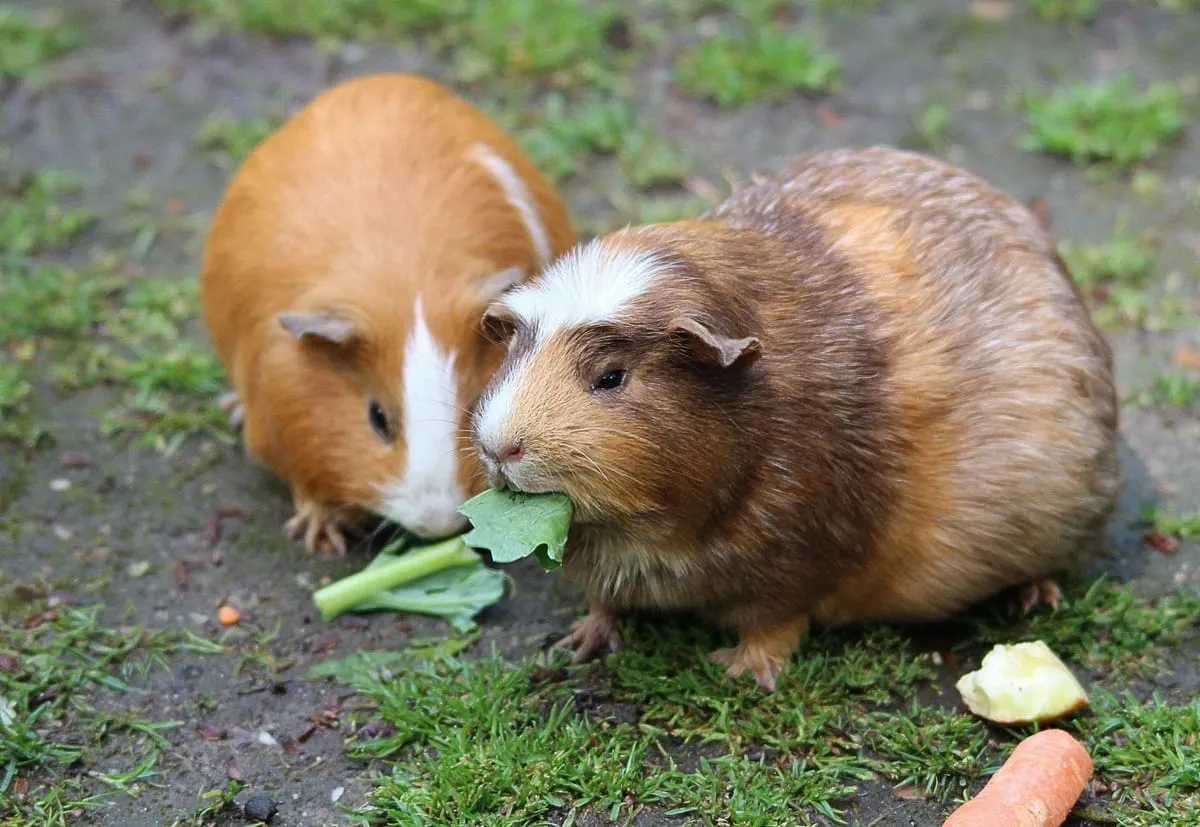
Guinea pigs are one of the most vocal small pets you can own, and that is a real part of why people love them, one of the traits covered in our guinea pig care guide. Most of what they are saying is easy to learn once someone points it out, and a lot of new owners spend months guessing before they realise there was a fairly consistent pattern the whole time. Here is what the main sounds and movements actually mean.
Wheeking, the food sound
The loudest, most recognisable guinea pig sound is wheeking, a rising, almost siren-like squeal. It is overwhelmingly about food.
Guinea pigs learn to associate specific sounds and routines with feeding time, the fridge door, a bag rustling, your footsteps coming down the hall, and wheeking is the response. It is a learned behaviour built on routine rather than a general hello, which is why one guinea pig in a pair might wheek constantly at the fridge while a cagemate barely bothers, depending on which one has clocked the pattern most strongly. A guinea pig that wheeks the moment you walk in the room, regardless of what you are carrying, has usually just learned that your appearance often means food follows shortly after.
Popcorning, the happiness jump
Popcorning is less a sound than a movement, a sudden vertical jump paired with a mid-air twist or kick, often repeated a few times in a row. It looks slightly chaotic and is genuinely one of the best signs a guinea pig owner can see.
It shows up most in young guinea pigs and during floor time in a space the animal feels secure in, and it is a reliable marker of contentment rather than something to worry about. A guinea pig that pops during supervised floor time, particularly right after being let out of its cage, is telling you plainly that it feels safe and glad to be there.
Purring, and the two things it can mean
Guinea pigs make a low, rumbling purr that sounds a lot like a cat’s, and it is genuinely ambiguous without paying attention to the body that comes with it.
A relaxed, low purr during gentle stroking or while settled against you usually means contentment, the guinea pig equivalent of a cat’s slow blink. A higher-pitched, more rapid purr paired with a tense, slightly hunched body, especially during handling or a new introduction, means something closer to unease or mild agitation instead. The pitch and the posture together tell you which one you are dealing with far more reliably than the purr alone.
Teeth chattering, the warning sign
Teeth chattering, a fast, audible grinding or clicking of the front teeth, is one of the few guinea pig sounds that is unambiguously a warning rather than something positive.
It shows up most often between two guinea pigs during a tense introduction or a dominance dispute, and it can precede a lunge or a nip if whatever triggered it does not ease off. Hearing it during a first meeting between two guinea pigs, covered in more depth in how to bond a pair of rabbits or guinea pigs, is a signal to slow the introduction down or separate them for the day rather than push through and hope it settles on its own.
Rumbling, and why it matters in mixed-sex pairs
A slow, deep rumble paired with a side-to-side hip wiggle, sometimes called rumblestrutting, is a dominance and courtship display. It shows up in both sexes, though it is most often noticed in males around females, and it is a normal part of how guinea pigs establish and reinforce social order rather than a sign anything is wrong.
Two guinea pigs rumbling at each other during a new introduction is ordinary posturing and usually settles once the social order is clear. It is only worth stepping in if the rumbling escalates into the teeth chattering and chasing described above rather than staying at the low, strutting level.
Squealing and shrieking
A short, sharp squeal is a startle or pain response, the guinea pig equivalent of a yelp, and it is worth pausing whatever you are doing when you hear one. A single squeal during nail trimming or a sudden pick-up usually just means you caught something sensitive or moved faster than the guinea pig expected. A squeal during handling that keeps happening at the same point, the same foot, the same spot on the back, is worth checking for an injury or sore spot rather than assuming it is just fussiness.
Reading a quiet guinea pig
Guinea pigs cannot tell you in words when something is wrong, but between wheeking, popcorning, purring, chattering, and rumbling, they are actually telling you quite a lot most of the time. Learning your own guinea pig’s normal range of sounds, since individuals vary in how vocal they are, is the fastest way to notice the day something changes.
Common questions
- Why does my guinea pig squeal when I open the fridge?
- That is wheeking, a loud, rising squeal guinea pigs have learned means food is coming. It is a learned response to routine, the fridge door, a rustling bag, your footsteps at feeding time, rather than a general greeting, which is why some guinea pigs wheek constantly and others barely do it at all depending on how predictable their feeding routine is.
- Is popcorning a good sign?
- Yes. Popcorning, a sudden jump with a mid-air twist, is one of the clearest signs of guinea pig happiness there is, most often seen in young pigs or during floor time in a space they feel safe in. A guinea pig that popcorns regularly is a guinea pig that feels secure in its environment.
- What does teeth chattering mean?
- Teeth chattering is a warning, not a greeting. It usually means irritation or a building conflict between two guinea pigs and can precede a lunge or a nip if whatever is triggering it does not stop. Separate the animals or remove the source of stress rather than waiting to see if it escalates.
- Should I worry if my guinea pig goes quiet?
- A guinea pig that has always been vocal and suddenly goes quiet, especially alongside reduced appetite or a hunched posture, is worth watching closely and is a reasonable reason to call your vet. Guinea pigs are prey animals that hide illness well, so a real change in vocal habits is a more useful signal than it sounds.