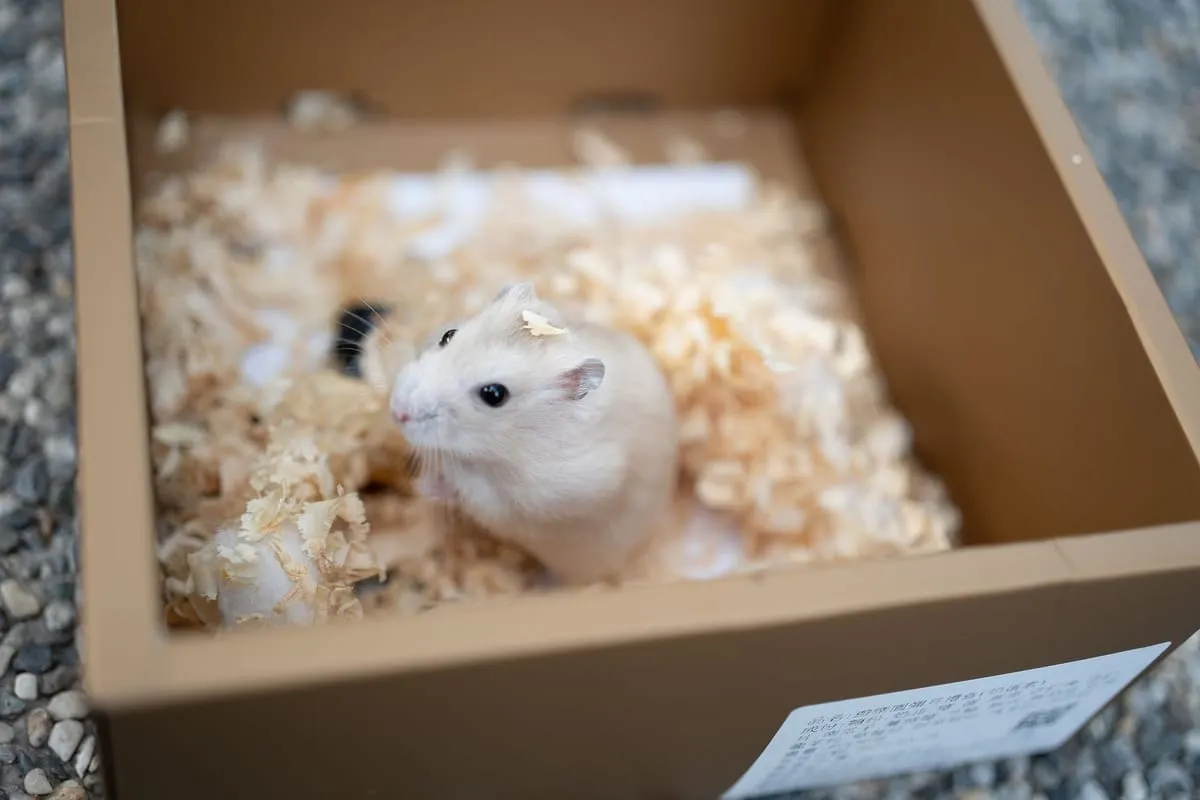
If your hamster has been living on cedar shavings, the fix is simple: swap the bedding out today for a paper-based or aspen alternative. Cedar itself is not an instant poison, so one mouthful chewed out of curiosity is rarely an emergency, but ongoing exposure to the oils it gives off is a genuine respiratory and skin risk that builds up over days and weeks, not minutes.
It is an easy trap to fall into. Cedar shavings look and smell like exactly what a small rodent habitat should be, and plenty of pet shops still stock them next to the safe options with no warning on the bag. Knowing why they are a problem, what to check right now, and what to switch to instead means you only have to learn this lesson once.
Why cedar bedding is a problem at all
The issue is not the wood itself, it is the aromatic oils untreated cedar and pine release as they sit in a warm, enclosed cage.
Those oils, phenols, are what give cedar its strong, pleasant smell to us, and they are volatile enough to be breathed in continuously by an animal living a few centimetres above the bedding all day. In a hamster’s small lungs, sustained exposure is linked to respiratory irritation, and the liver has to work to process what gets absorbed, which matters more for an animal whose entire body weighs around 30 to 50 grams. The same oils can dry out and irritate skin that sits in direct contact with the shavings for hours on end. None of this is about one bad afternoon. It is a slow-burn risk that gets worse the longer a hamster lives on it.
What to do right now
If your hamster chewed cedar shavings or has simply been living on them, the plan is the same either way.
Take the cedar out of the cage completely today, not gradually, and replace it with a safe bedding (more on which below). While you are at it, wipe down hard surfaces and wash any fabric hideouts that have been sitting in direct contact with the cedar, since the smell and residue linger. Then watch your hamster over the next day or two rather than assuming the danger ends the moment the bedding changes. Lungs and skin that have been irritated for a while take a little time to settle, even once the cause is gone.
A single chewed mouthful during the swap itself is not something to panic over. Hamsters sample everything with their mouths, and one bite of cedar passing through is a very different thing from weeks of breathing its oils overnight.
Signs it has already caused a reaction
Most hamsters on cedar bedding show no obvious symptoms for a while, which is exactly why it is worth checking for the early ones rather than waiting for something dramatic.
Laboured, noisy, or faster-than-usual breathing is the clearest respiratory sign, worth checking while your hamster is resting rather than mid-exercise-wheel. Sneezing, or any discharge around the eyes or nose, points the same direction. On the skin side, look for patches of thinning fur, flaking, or redness anywhere that sits against the bedding most of the day, typically the belly and feet. A hamster that seems flat, quieter than normal, or reluctant to come out at its usual active time is also worth a closer look, even without a clear respiratory sign.
The bedding swap that fixes it
Two bedding types cover almost every hamster setup safely, and neither is cedar or pine.
Paper-based bedding, made from shredded and processed recycled paper, is soft, highly absorbent, and low on dust, which is why it has become the default recommendation for small pets generally, not just hamsters. Carefresh Bedding is the one most owners reach for first. If you prefer the look and digging feel of a traditional wood shaving bed, kiln-dried aspen is the safe equivalent, heat treated specifically to drive off the phenols that make cedar and pine risky. Kaytee Aspen Bedding is a solid, widely available option. Either works. The only shavings to actually avoid are untreated cedar and pine, whatever the bag calls them.
A hamster that has been on cedar bedding and gets switched over today, with no ongoing symptoms, usually needs nothing more than the swap itself. The oils causing the problem leave the cage the moment the bedding does, and most mild irritation settles within a few days on its own once the source is gone.
Related questions
Common questions
- Is cedar bedding safe for hamsters at all?
- No, not as everyday bedding. Cedar and pine shavings that have not been heat treated release aromatic phenols, the same compounds that give them their strong smell, and a hamster breathing that air for weeks on end is at real risk of respiratory irritation and liver strain. A single sniff or nibble while you swap bedding out is not the concern. Weeks spent living on it is.
- My hamster chewed cedar shavings, is that worse than just sleeping on them?
- A mouthful chewed out of curiosity is not usually dangerous on its own, hamsters investigate everything with their mouths and most will spit out or swallow a tiny amount without harm. What matters more is how long the exposure lasts and how your hamster is behaving afterward. Watch its breathing and energy over the next day or two rather than panicking about the single bite.
- What bedding should I use instead of cedar?
- A dust-controlled paper bedding or kiln-dried aspen shavings are the two safe standards, and both are widely sold specifically because cedar and pine are not. Paper bedding tends to be softer and more absorbent, aspen looks and behaves more like a traditional wood shaving bed. Either is fine, the only shavings to avoid are untreated cedar and pine.
- How do I tell if my hamster is already reacting to cedar bedding?
- Watch for laboured or noisy breathing, sneezing, discharge from the eyes or nose, patchy or thinning fur, or a hamster that seems unusually flat and uninterested in coming out at its normal active time. Any one of those on its own is worth a closer look, and two or more together is worth a same-day call to a vet who sees small exotics.