If the fur-and-skin sleeve has come off part of your gerbil’s tail, you are looking at a tail slip, sometimes called degloving, an escape defence built into how loosely a gerbil’s tail skin attaches to the tissue underneath. It will not heal or grow back on its own, so the right move is a same-day vet visit, not a wait-and-see approach.
It looks alarming, a length of bare, pinkish tail where there was fur a few minutes ago, and most owners discover it right after handling their gerbil or after another gerbil grabbed at it during rough housing. Knowing why it happens and what to do in the next hour makes a stressful moment much easier to manage.
Why the skin slips off at all
This is not torn skin in the way a scrape or a bite wound is. It is the tail doing exactly what it evolved to do.
A gerbil’s tail skin sits loosely over the tissue and bone beneath it, by design. In the wild, if a bird of prey or another predator manages to grab a gerbil by the tail, the skin slips free, the gerbil escapes with a bare tail stump, and the predator is left holding nothing useful. It is the same basic strategy as a lizard dropping its tail, adapted to skin rather than the whole limb. The near-universal trigger in pet gerbils is a human hand gripping or lifting by the tail, even gently, or a startled gerbil yanking away while being tail-held. A cagemate grabbing at a tail during a scuffle can cause the same injury.
What to do in the first hour
Resist the urge to touch, wrap, or push the exposed tissue back into place, since handling it further only adds pain and infection risk.
Move your gerbil into a small, secure container lined with a few sheets of plain paper towel instead of its usual sawdust or paper bedding, which sticks to raw tissue and makes the vet’s job harder. Keep the container somewhere quiet and warm, away from other gerbils if it lives with cagemates, since a cagemate may investigate or nibble at an exposed tail out of curiosity rather than aggression. Then get it to a vet that sees small exotics the same day. This is not an injury where symptoms need to get worse before it counts as urgent. Exposed tissue that dries out or picks up bacteria from bedding can progress to infection or tissue death within a day or two.
What the vet visit usually involves
Most tail slips, once the bare portion is significant, end in a short procedure rather than ongoing wound care.
A vet will typically amputate the exposed section of tail under anaesthetic, since skin that has slipped off will not regrow and leaving dead or dying tissue in place is the real infection risk, not the amputation itself. The remaining healthy skin is stitched closed over the new, shorter tail end, and your gerbil goes home with pain relief and often a short course of antibiotics. Healing from that point is usually straightforward, most gerbils are back to normal activity within a couple of weeks.
Handling that prevents it happening again
The fix is almost entirely about how your gerbil gets picked up from now on.
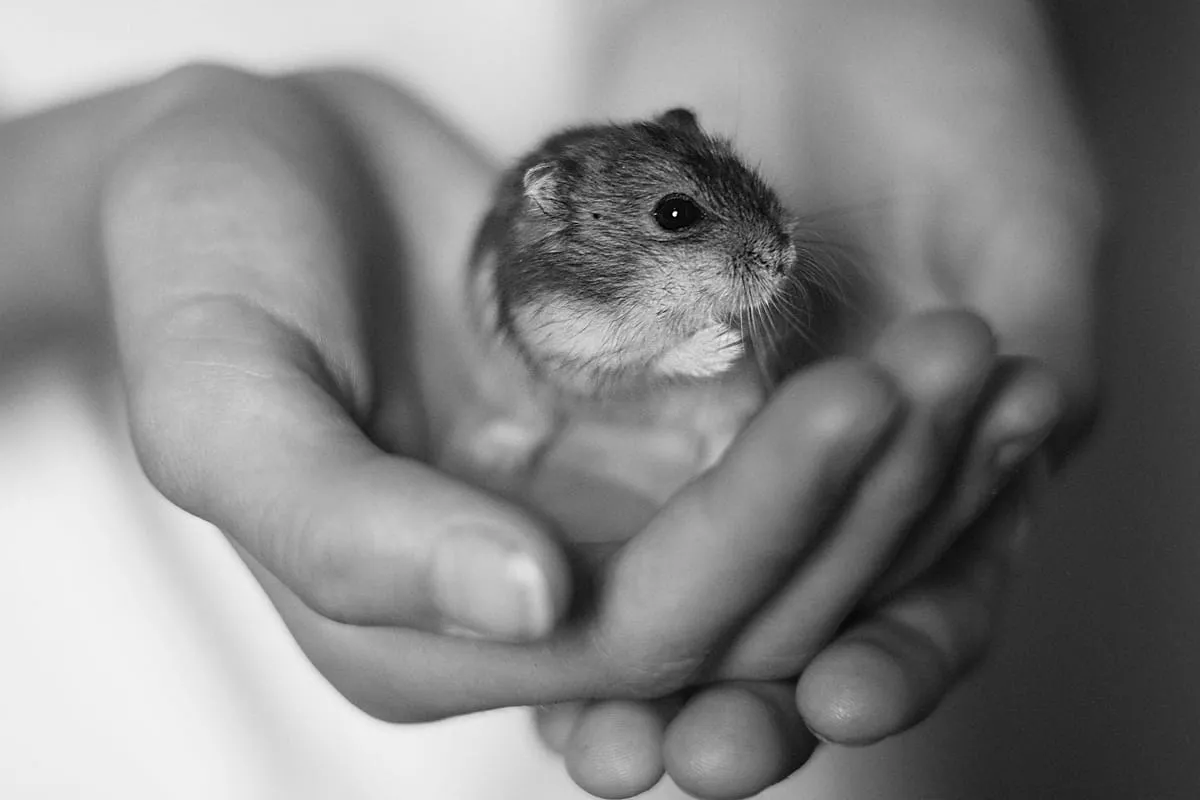
Scoop a gerbil up with both hands cupped underneath it, or let it walk into a cup, tube, or your sleeve and lift that instead of reaching for the animal directly. A gerbil that is flighty around hands generally calms down with short, frequent, low-pressure handling sessions rather than being chased down and grabbed when it is already stressed, which is also when a tail-grab is most likely to happen by accident. The tail itself is never a safe handle, no matter how gently it is held.
A gerbil that has lost part of its tail adapts well and goes back to normal digging, climbing, and running once it has healed. The main lasting change is a shorter tail and a strong reason to make sure it never gets grabbed by it again.
Related questions
Common questions
- Why did my gerbil's tail skin fall off in the first place?
- It is an escape reflex, not an injury that happened by accident in the way a cut or a bruise does. A gerbil's tail skin is only loosely attached to the tissue underneath, and if a predator, or a hand, grips the tail, the skin slips free and lets the gerbil pull away and escape while whatever grabbed it is left holding an empty sleeve of fur. The near-universal cause in pet gerbils is being picked up, restrained, or caught by the tail rather than scooped from underneath.
- I have a degloved gerbil tail, what do I do in the first hour?
- Do not try to push the skin back into place or wrap the tail yourself. Gently move your gerbil into a small, clean, bedding-light container (a few sheets of paper towel rather than sawdust or loose substrate, which sticks to raw tissue) and get it to a vet the same day. The exposed tissue is at real risk of infection and will not heal or regrow skin on its own, so this is not a condition to watch for a few days before deciding whether to act.
- Will my gerbil's tail grow its skin back?
- No. Once the skin sleeve has slipped off, that section will not regrow fur or skin, and the bare tissue underneath will eventually die back if left untreated. Most vets amputate the exposed portion of the tail under anaesthetic, close the remaining skin over the stump, and send the gerbil home with pain relief and antibiotics, after which it heals as a permanently shorter tail.
- Does a shorter tail affect how a gerbil lives afterward?
- Not in any way that changes its day-to-day life. Gerbils use their tails mainly for balance, and while a shortened tail may make tight jumps or balancing on narrow perches slightly less precise for a while, pet gerbils that have lost part of their tail go on to run, dig, and climb normally once the stump has healed.