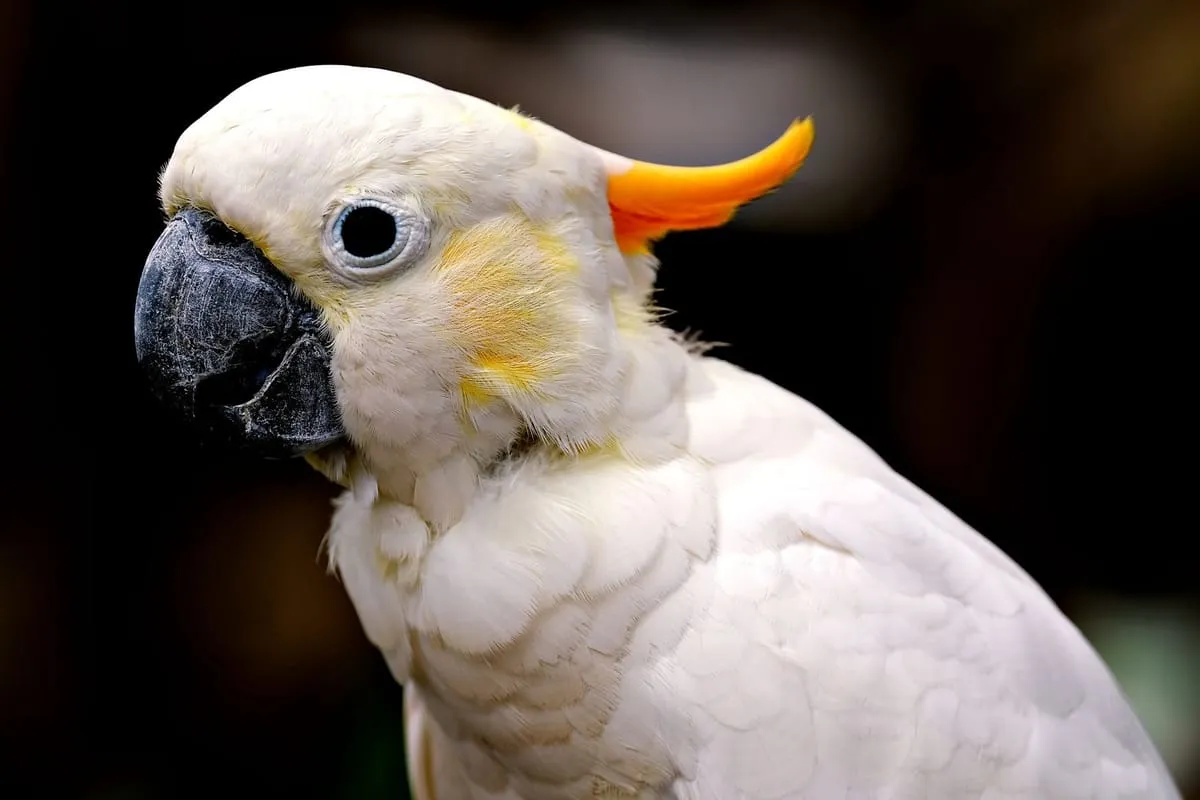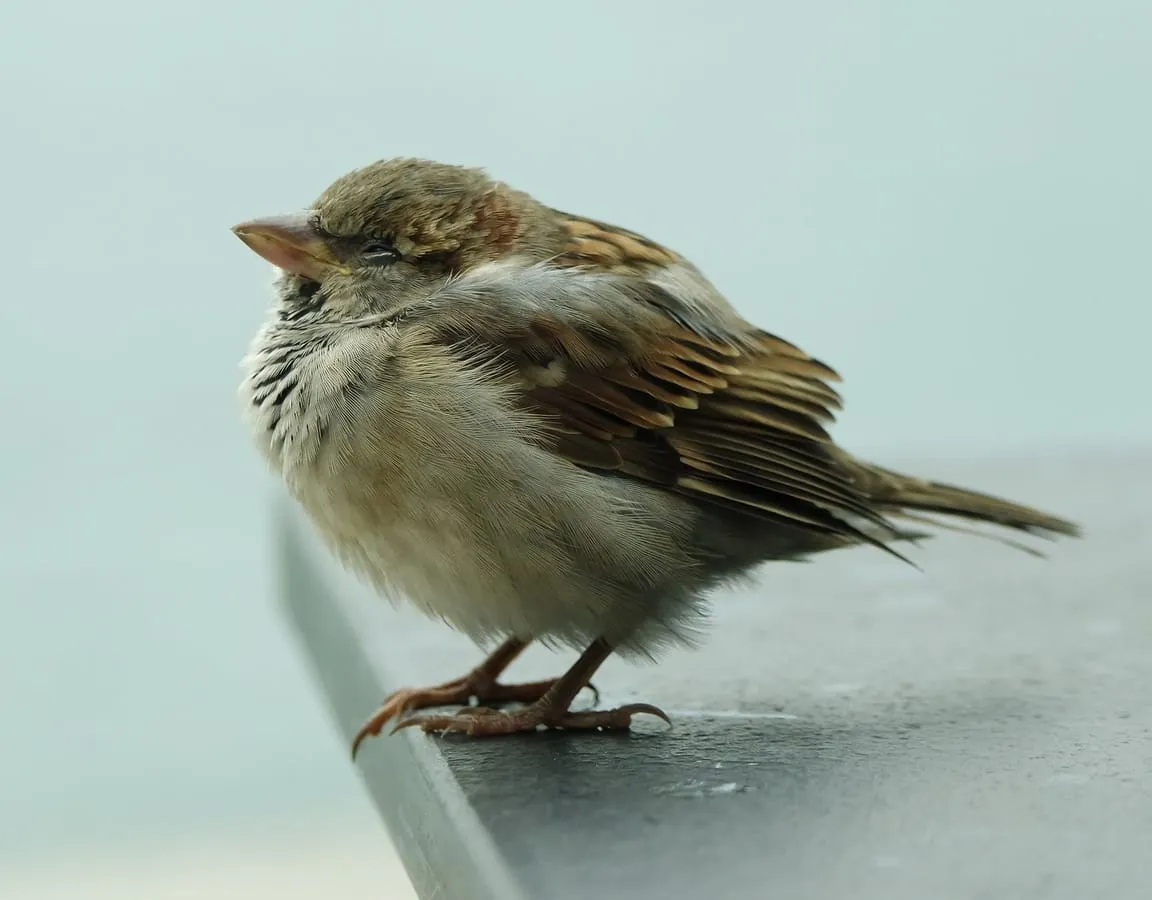
A bird fluffed out into a round little ball on its perch is one of the most common things an owner sees, and also one of the hardest to read correctly at a glance. The same puffed-up silhouette covers a bird settling in for a comfortable nap and a bird that is genuinely unwell, and the difference between the two comes down less to the feathers themselves and more to everything happening around them.
The normal version: trapping warmth
Puffing up is, at its simplest, insulation. A bird fluffs its feathers away from its body to trap a layer of air against the skin, the same principle as a duvet, and that trapped air holds body heat far better than feathers lying flat. Birds do this constantly in completely ordinary moments, first thing in the morning before they have properly woken up, in the quiet stretch before settling for the night, or simply while resting somewhere a little cooler than the rest of the room.
A bird doing this normally still looks alert the moment something happens nearby, flattens back down within a few minutes, and carries on eating, preening, and moving around its cage as usual in between. The puffing comes and goes in short bursts tied to rest, not a fixed, all-day state.
The version that is a genuine warning sign
Birds are prey animals, and hiding illness is a deeply built-in survival instinct, since looking weak in the wild marks an animal as an easy target. That means a sick bird very often has only one visible symptom for a long time before anything else becomes obvious, and a bird that stays puffed up for extended periods, rather than in the short normal bursts, is frequently that one visible sign.
Our guide to the signs your bird is sick covers the fuller list of what tends to show up alongside prolonged puffing, and what your bird’s droppings are telling you is worth checking the same day, since a change there alongside sustained puffing is one of the more reliable early combinations to catch.
Telling the two apart in the moment
The single most useful question is not what the feathers look like but how long the bird has looked like that, and what it does the moment it is disturbed. A normally puffed bird perks straight back up, feathers flattening, posture lifting, the instant you walk over, open the cage, or offer food. A bird that stays slumped and fluffed even when you approach, or that takes noticeably longer than usual to respond, is showing you something closer to the second pattern.
What to actually do
For the everyday, short-burst version, nothing needs to change. It is a bird doing exactly what its body is built to do, and interrupting it achieves nothing useful. For a cage that seems to produce puffing as a daily pattern, check the room temperature and draughts first, a cage warmer or cover is a reasonable low-cost fix if the room itself runs cold. For a bird that stays puffed up for long stretches alongside low energy, closed eyes, or reduced appetite, treat it as the early warning it is and get an avian vet to look rather than waiting to see if it resolves on its own. Given how effectively birds mask illness, a prolonged puff is often the only early flag you get, and it is one worth taking seriously the first time you see it, not the fifth.
Common questions
- Is it normal for a bird to puff up its feathers?
- Yes, briefly. Fluffing feathers out to trap a layer of warm air against the skin is normal thermoregulation, and most birds do it for short stretches while resting, especially first thing in the morning or last thing before settling for the night. A healthy bird puffs up, then shakes the feathers back down and carries on as normal within a short while.
- How can I tell if puffing up is normal or a sign my bird is sick?
- Duration and everything else around it matter more than the puffing itself. A bird that fluffs up for a few minutes between normal activity, eating, preening, moving around, is almost certainly fine. A bird that stays puffed up for a long stretch, sits low on the perch or at the bottom of the cage, closes its eyes a lot during the day, and shows no interest in food is showing a real pattern, and that combination needs a same-day avian vet visit.
- Why does my bird puff up more in a cold room?
- Because fluffed feathers trap air as insulation the same way a blanket does, and a bird reaching for that cold-weather response is one of the clearest early signs a cage is colder than it should be. If puffing becomes a daily pattern rather than an occasional one, the room itself is usually the first thing worth checking, before assuming anything is medically wrong.
- Should I warm my bird up if it looks puffed and fluffy?
- If a bird is otherwise alert, eating, and active, a warmer spot away from draughts and windows is a reasonable, low-risk thing to offer, since a cold room is the single most common ordinary cause. If a puffed-up bird also looks lethargic, is not eating, or is sitting low with closed eyes, warmth is worth providing on the way to the vet, but it is support, not a substitute for getting it seen.