A bird bobbing its head can mean three or four completely different things, and most owners meet the harmless versions long before they ever see the concerning one. The movement itself often looks similar from a distance, so the real skill is not in spotting the bob, it is in reading everything happening around it: the bird’s energy, its posture in between, and whether anything else has changed.
The everyday version: courtship and excitement
For most birds, most of the time, head bobbing is a good sign, not a worrying one.
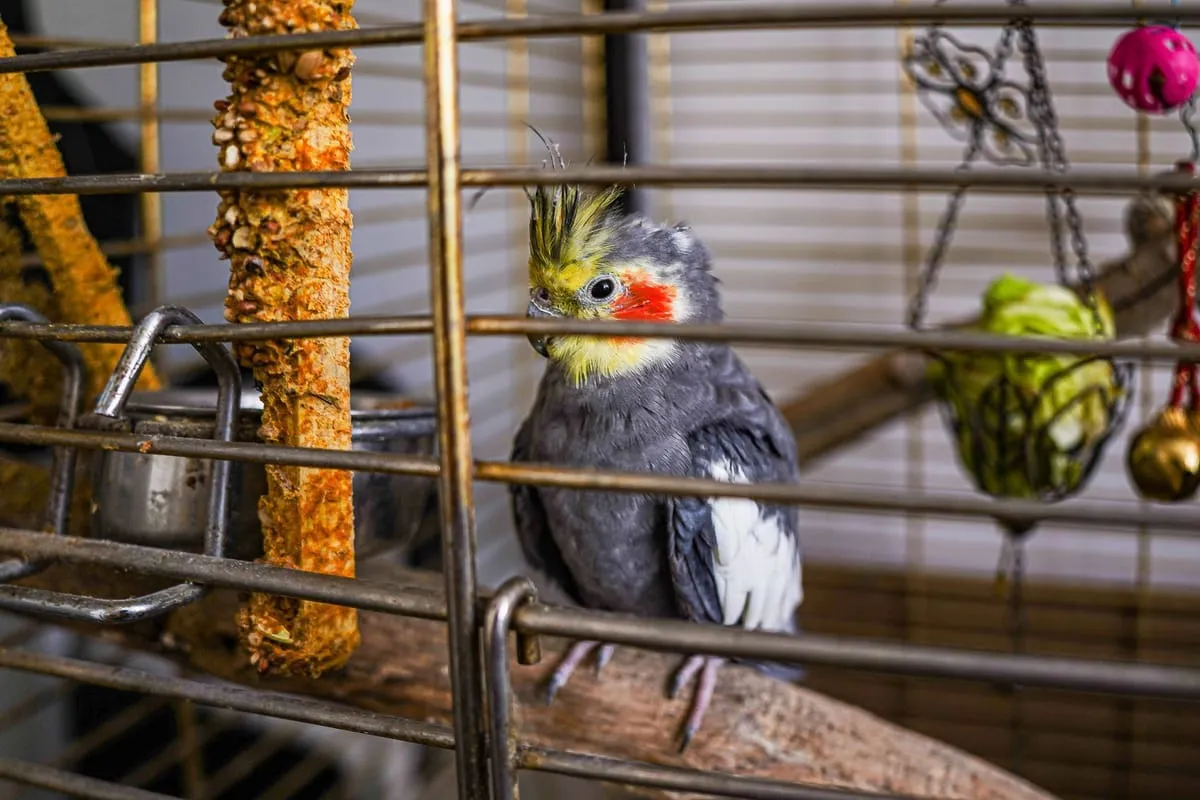
Budgies, cockatiels and many parrot species bob their heads as part of courtship display and general excitement, often at a mirror, a favourite toy, another bird, or a person they are bonded to. It tends to come with bright, engaged body language, feathers fluffed briefly then sleeked, an alert stance, and frequently singing, chattering, or regurgitating a small amount of food as an offering, which is a genuine sign of affection even though it looks alarming the first time you see it land on your hand. This version is energetic and looks purposeful, and the bird is otherwise completely normal in between bouts, eating, playing, and behaving as it always does.
The begging version: chicks and recently weaned birds
Young birds bob their heads at people for a completely different reason: they are asking to be fed.
The movement mimics what a parent bird does while regurgitating food into a chick’s mouth, so a hand-fed baby or a bird that has only recently weaned onto solid food will often bob enthusiastically at whoever it associates with mealtimes, sometimes accompanied by a soft begging call. This is entirely normal and typically fades as the bird finishes weaning and settles into eating independently, though it is common for some individuals to keep a softer version of the habit as an affectionate greeting into adulthood.
When it is not display or begging
A few things separate the concerning version from the harmless ones. Sick head bobbing is often slower and looks more effortful than the sharp, energetic bob of courtship, and it comes bundled with other signs: a fluffed, hunched resting posture, reduced or absent appetite, general lethargy, or a clicking or fluid sound around the movement that can point toward a crop or digestive issue. A head that bobs or tremors in an uncontrolled way, especially alongside falling off the perch, losing balance, or a head held tilted at rest, can point to a neurological problem rather than a behavioural one, and is genuinely different in character from purposeful display bobbing once you have seen both. If your bird is showing any of the other broader sick-bird signals alongside the bobbing, our guide to the signs your bird is sick covers the fuller picture worth checking before you decide whether this can wait.
What to do about it
For courtship bobbing that has tipped into a bird that is overstimulated, biting more, or laying eggs it should not be, the broader hormonal management advice in why does my parrot scream covers reducing the triggers, since both behaviours often ramp up together during the same seasonal window. For a begging chick, simply continuing a consistent weaning routine is enough, the behaviour resolves on its own as the bird matures. For anything that looks like illness rather than display, do not wait it out, an avian vet visit is the right call, and trying to guess between a crop problem, a neurological issue, or something else at home risks losing time a genuinely sick bird does not have.
Head bobbing is one of those behaviours that means almost everything or almost nothing depending on the bird doing it. Learn what your own bird’s normal courtship or begging bob looks like on a good day, and the version that does not fit that pattern will stand out far more easily when it actually matters.
Common questions
- Is head bobbing normal in budgies and cockatiels?
- Yes, very. Both species bob their heads as part of everyday courtship and excitement, budgies especially will bob at a mirror, a toy, or a favourite person, and it is one of the more reliable signs of a content, socially engaged bird. On its own, with a bird that is eating, active and otherwise behaving normally, it needs no action at all.
- How do I tell courtship bobbing from a sick bird?
- Courtship bobbing is energetic, comes with bright eyes, fluffed-then-sleeked feathers and often singing or chattering, and the bird looks otherwise completely normal in between bouts. A sick bird's bobbing tends to look slower and more effortful, comes with a fluffed-up resting posture, a fluid or clicking sound, reduced appetite, or general lethargy. If you are not sure which you are looking at, the bird's overall condition between bobs is the more reliable signal than the movement itself.
- Why does my baby bird bob its head at me?
- This is begging behaviour, and it is completely normal in a hand-fed chick or a recently weaned young bird. It mimics the movement a parent bird makes while regurgitating food to a chick, and a young bird will often do it at a person it associates with feeding. It usually fades as the bird finishes weaning onto solid food, though some individuals keep a milder version of the habit into adulthood.
- Can head bobbing be a sign of a neurological problem?
- Rarely, yes. A bobbing or bobble-like head tremor that looks uncontrolled rather than a deliberate display, especially alongside loss of balance, falling off the perch, or a head tilted at rest, can point to a neurological issue and is different from the rhythmic, purposeful bobbing of courtship or begging. That combination warrants a same-day avian vet visit rather than a wait-and-see approach.