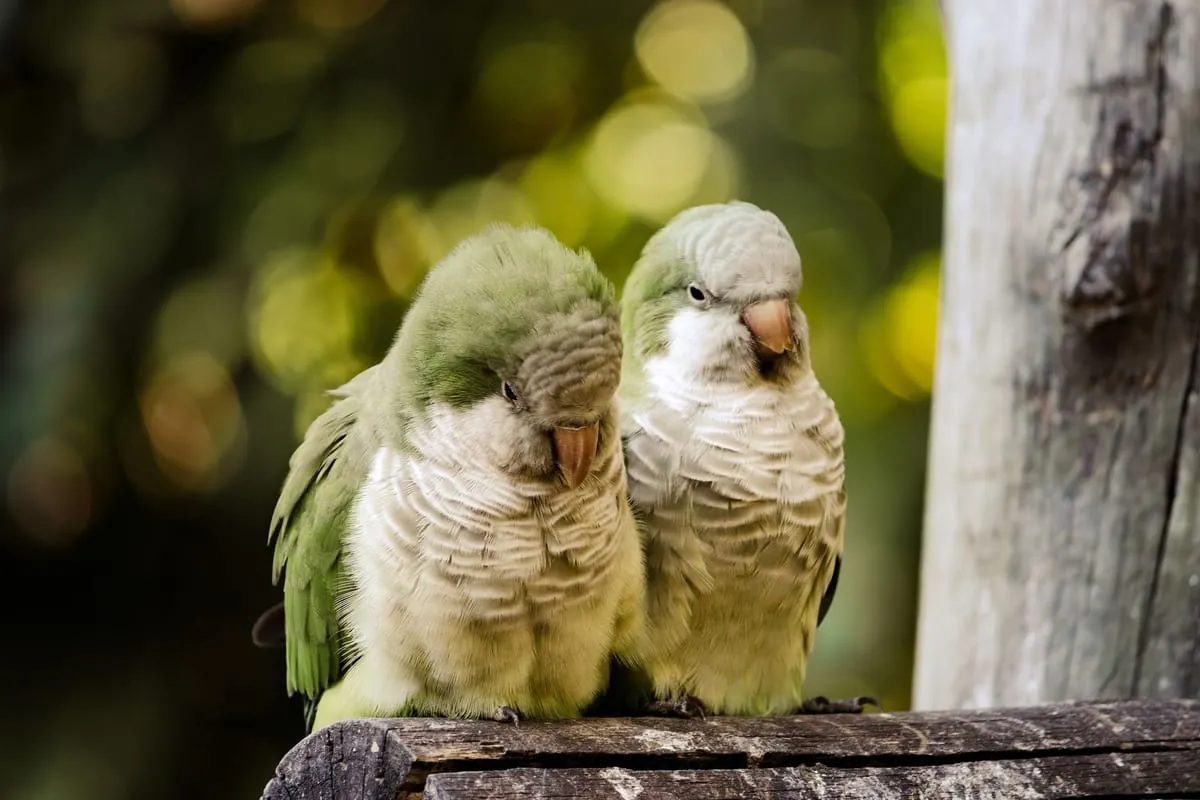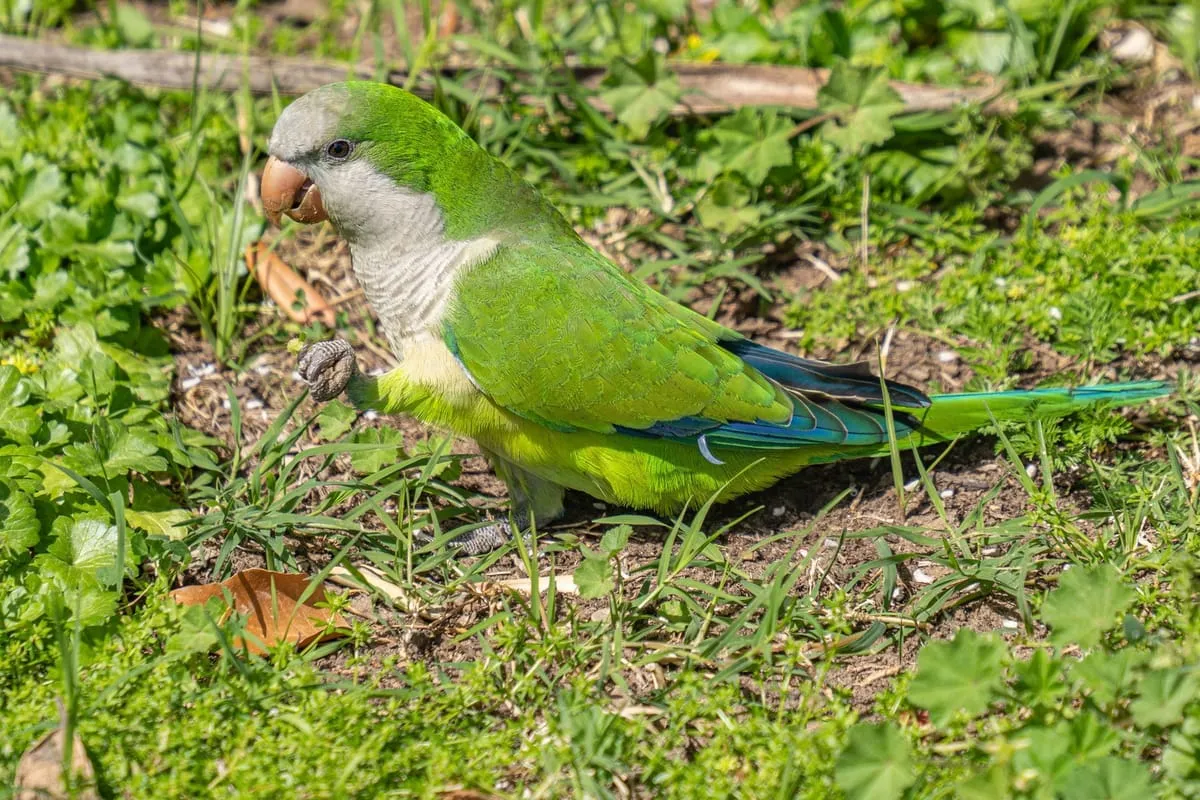
A quaker parrot shaking its whole body when excited, known as quaking, is a normal breed trait and not a medical problem. It is the behavior the species is actually named for, a quick full-body shiver that shows up when a quaker is thrilled, greeting someone, or anticipating something good.
New owners often panic the first time they see it, especially if it happens right as the bird is clearly worked up about something, because a shaking bird understandably looks like it could be unwell. Once you have seen genuine excited quaking a few times, though, it becomes easy to tell apart from the much rarer things that actually need a vet.
What quaking actually looks like
Excited quaking is fast and short, usually lasting a few seconds at a time, and it happens around an obvious trigger: you coming home, a favorite person picking up the treat jar, another bird nearby doing something interesting, or just general over-the-top happiness. The bird’s eyes stay bright, the feathers may fluff slightly, and the posture stays upright and alert the whole time. As soon as the exciting moment settles, the shaking stops and the bird goes back to normal behavior with no after-effects.
This is different from a tremor tied to illness, which tends to be more continuous, is not clearly linked to an exciting moment, and often comes with the bird looking dull, fluffed up at rest, or reluctant to move. Context is most of the answer here: a quaker that quakes when you walk in the door and is otherwise bright, eating, and active is almost certainly just excited.
Why quakers do this more than other parrots
Quaking shows up in other parrot species too, but it is so strongly associated with quaker parrots, also called monk parakeets, that it gave the breed its common name. Our quaker parrot care guide covers the breed’s personality in more depth, but the short version is that quakers are an unusually expressive, high-energy species, and quaking is just one of several big, obvious body language signals they use, alongside puffing up their feathers and a near-constant stream of chatter and mimicry.
Telling quaking apart from a seizure
This is the distinction that actually matters, and the two look quite different once you know what to watch for.
Excited quaking is brief, tied to an obvious happy trigger, and the bird stays balanced on the perch with clear, alert eyes throughout. A true seizure looks nothing like that: the bird typically loses its balance or falls from the perch, the wings flap uncontrollably rather than in a normal startled way, and afterward the bird often seems dazed, glassy-eyed or unresponsive for a stretch before recovering. A seizure is also not tied to a good moment, it can happen at rest with no obvious trigger at all.
What about trembling from fear or cold
Quaking is not the only reason a quaker’s body shakes, so it is worth knowing the other two common causes as well. Fear trembling tends to come with flattened feathers, a hunched, crouched posture, and the bird trying to back away or hide, quite different body language from the loose, upright excitement of quaking. Cold trembling is slower and more sustained, and it usually resolves once the bird is moved away from a draft or the room is warmed up, rather than passing in a few seconds the way excited quaking does.
Once you can place a shake into one of these categories by looking at what triggered it and how the rest of the bird’s body is behaving, quaking stops being something to worry about and becomes just one more piece of normal, very expressive quaker parrot behavior.
Related questions
Common questions
- Quaker parrot quaking, is it normal?
- Yes. Quaking is where the species gets its common name from, a full-body shiver quaker parrots do when they are excited, greeting you, anticipating a treat, or working themselves up before a burst of noise or play. It usually lasts a few seconds, the bird's posture and eyes stay normal throughout, and it stops on its own once the excitement passes.
- Is my quaker parrot having a seizure?
- Almost certainly not if the shaking is brief, happens around an exciting moment like you walking in or a treat appearing, and your bird is bright-eyed and steady on the perch afterward. A seizure looks different, it involves the bird losing its balance or falling, uncontrolled wing flapping, and a dazed or unresponsive period afterward, and it is not tied to an obviously exciting trigger the way quaking is.
- What is the difference between quaking and trembling from fear or cold?
- Excited quaking is quick, tied to a clear happy trigger, and the bird's body language otherwise stays loose and alert. Fear trembling tends to come with flattened feathers, a crouched body and an attempt to retreat or hide, while cold trembling is slower and more continuous, and usually eases once the room warms up or the bird is moved away from a draft.
- When should I get a quaker parrot's shaking checked by a vet?
- See an avian vet if the shaking involves a head tilt, rhythmic jerking that does not stop with the exciting trigger, loss of balance or a fall from the perch, or if it is followed by a dazed, glassy-eyed or unresponsive stretch. Those point to a neurological issue or a true seizure rather than ordinary quaking, and they need proper assessment rather than waiting it out.