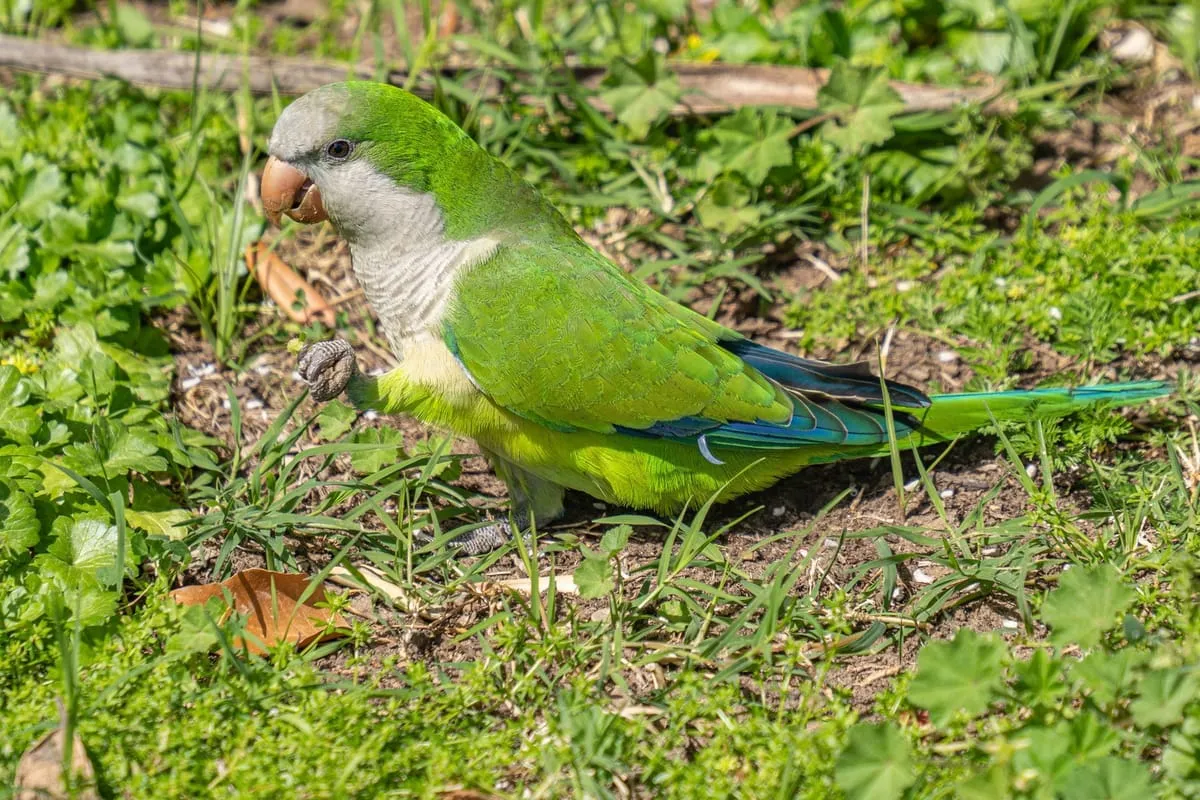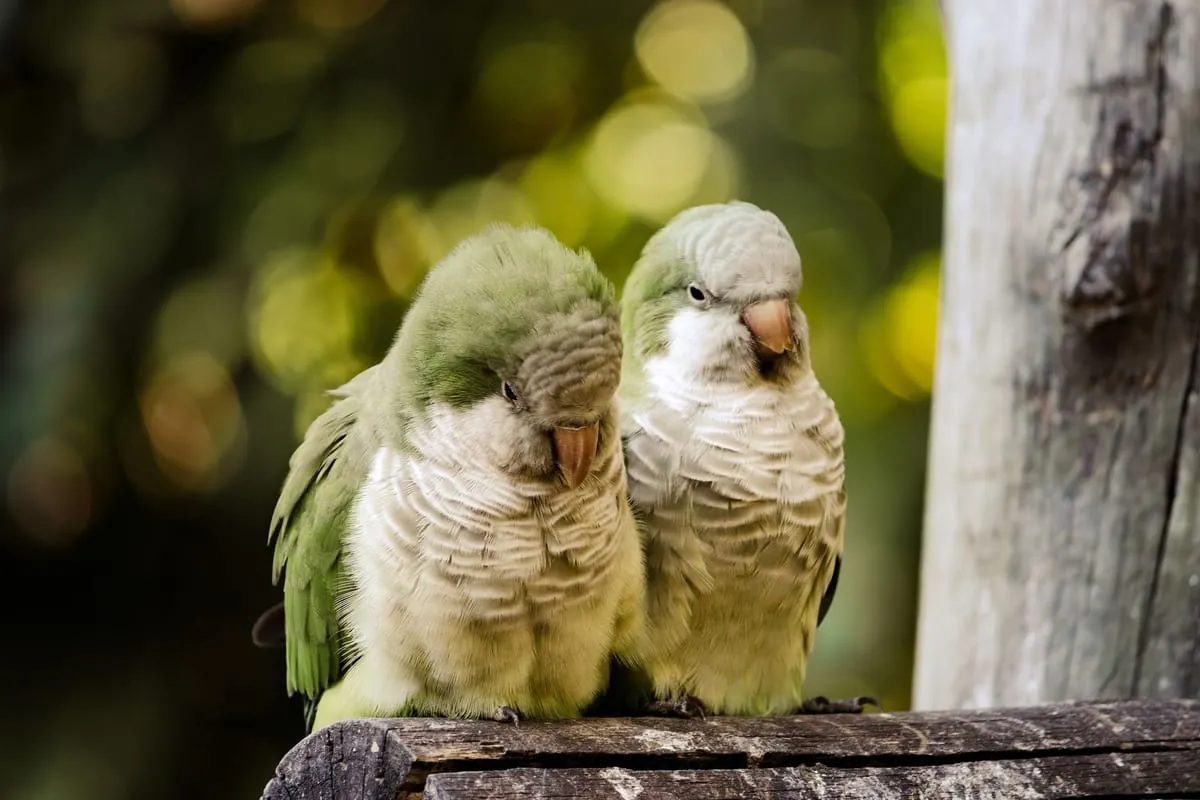
The Quaker parrot, also called the monk parakeet, is a small-to-medium parrot that punches well above its size: clever, bold, and among the clearest talkers you will find in a bird this manageable. It is also, unusually for a common pet bird, one you need to check the legality of before you fall for it, since where you live can take the decision out of your hands entirely. Get past that hurdle and you have a genuinely rewarding, strong-willed companion, provided you understand what it actually asks of you.
Check before you commit, not after
This is the one section every other bird guide on this site skips, because it does not usually apply. Quaker parrots are restricted or banned outright in roughly a dozen US states, including California, Georgia, Hawaii, Pennsylvania, and several others, along with tighter conditions in a handful more. The reason has nothing to do with the bird being dangerous to keep: escaped Quakers are the only parrot that builds large communal stick nests, and feral colonies have caused real damage by nesting on utility poles and substations. Some states ban ownership outright, others allow it with a permit, wing clipping, or leg banding.
A bold, talkative personality
Where they are legal, Quakers are known for a big personality in a mid-sized bird. They are intelligent, confident, and often fearless with people and other pets, the kind of bird that will happily boss around animals several times its size. They are also genuinely excellent talkers, frequently rated among the clearest-speaking parrots kept as pets, picking up words and phrases readily and often building a real vocabulary with consistent interaction. That same boldness has a flip side: Quakers can become territorial and nippy, particularly around their cage or a favourite person, and they bond hard to one individual more often than some other parrot species, which is worth knowing if you want a bird the whole household can handle. Early, consistent, gentle handling makes a real difference to how manageable that strong will stays as the bird matures.
Housing and diet sized correctly
A Quaker is closer in size to a conure than to a budgie or cockatiel, and its cage needs to reflect that rather than being sized for a smaller bird. A spacious cage with horizontal bars for climbing, sized for a conure-to-quaker-size bird rather than a finch flight cage, gives it room to move, climb, and destroy toys the way it wants to. Daily time outside the cage in a bird-proofed room matters just as much as the cage itself.
Diet follows the same logic as any parrot: a formulated pellet as the base, sized for a medium bird rather than the large-pellet mixes made for macaws or the fine mixes made for budgies, such as a medium-pellet diet suited to a conure-sized bird, plus daily fresh vegetables, with the reasoning behind that balance covered fully in why an all-seed diet is bad for your bird. Check anything new against safe and toxic foods for birds before offering it, since a confident, food-motivated bird like a Quaker will try anything you hand it.
Quaker Mutilation Syndrome deserves its own warning
Most parrots can develop feather plucking under enough stress, boredom, or illness, which we cover generally in why is my bird plucking its feathers. Quakers are unusual in having a named condition of their own, Quaker Mutilation Syndrome, where the behaviour goes past plucking feathers and into biting and mutilating the skin underneath, typically on the chest, wing webs, or thighs. It is not fully understood, but it is strongly linked to stress, an under-stimulated environment, or a change the bird has not adjusted to.
Heavy daily enrichment, foraging opportunities, and genuine out-of-cage time are the best prevention, along the same lines as keeping a parrot from getting bored, but with a Quaker it is worth treating that enrichment as closer to essential than optional.
Noise, and who this bird actually suits
Quakers are not a quiet bird. They have a loud natural call, used less constantly than some species but capable of real volume when they want attention, in the same general territory as the calling behaviour covered in why does my parrot scream. Between the noise, the strong one-person bonding tendency, and the real enrichment needs behind Quaker Mutilation Syndrome, this is a bird suited to someone who wants a genuinely interactive, talkative companion and has the time and consistency to meet a demanding personality, not a background pet for a quiet household. If you are still weighing which bird fits your home, which pet bird is right for you covers how a Quaker compares to calmer options like a cockatiel or budgie, and our conure care guide is the closest match in size and temperament if you want a point of comparison.
Legal to own, correctly housed, fed, and kept busy, a Quaker parrot is one of the most engaging small-to-medium birds you can keep, smart, bonded, and genuinely chatty in a way few other species match. Skip the legality check or underestimate what it needs, and you end up with either a bird you cannot legally keep or one that is miserable in a cage sized for something half its size. Get both right, and it is a remarkable companion.
Common questions
- Are Quaker parrots legal to own?
- It depends entirely on where you live. Roughly a dozen US states, including California, Georgia, Hawaii, and Pennsylvania, restrict or ban Quaker parrot ownership, because escaped birds build large stick nests on utility infrastructure and can establish wild colonies, not because the bird is dangerous to keep. Check your state and local rules before you commit to one, since this is a check most other pet birds simply don't require.
- Are Quaker parrots good talkers?
- Yes, Quakers are consistently rated among the clearest talkers of any commonly kept parrot, often picking up words and short phrases readily and speaking with unusually good clarity for a medium-sized bird. Not every individual talks heavily, personality varies, but as a species they are one of the better bets if a chatty bird is part of why you want one.
- What is Quaker Mutilation Syndrome?
- It is a condition, specific to this species, where a Quaker goes beyond ordinary feather plucking and bites and mutilates the skin itself, usually on the chest, wing webs, or thighs. It is driven by stress, boredom, or an unmet need rather than being random, and because it causes real injury it needs an avian vet involved early rather than being treated as a habit to wait out.
- How big a cage does a Quaker parrot need?
- Bigger than a budgie or cockatiel cage, since Quakers are an active, medium-sized bird closer to a conure in size. A roomy cage with horizontal bar spacing they can climb, plus daily time outside it, suits them far better than a small flight cage sized for finches or budgies.