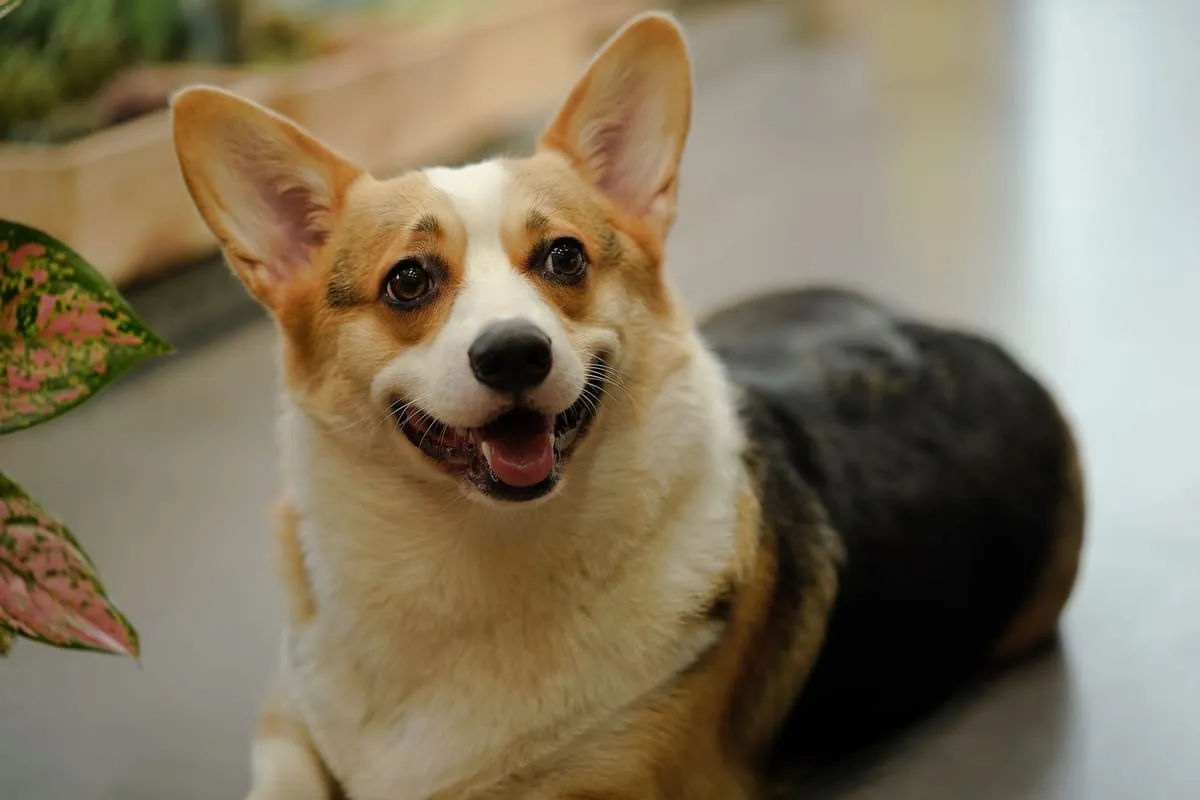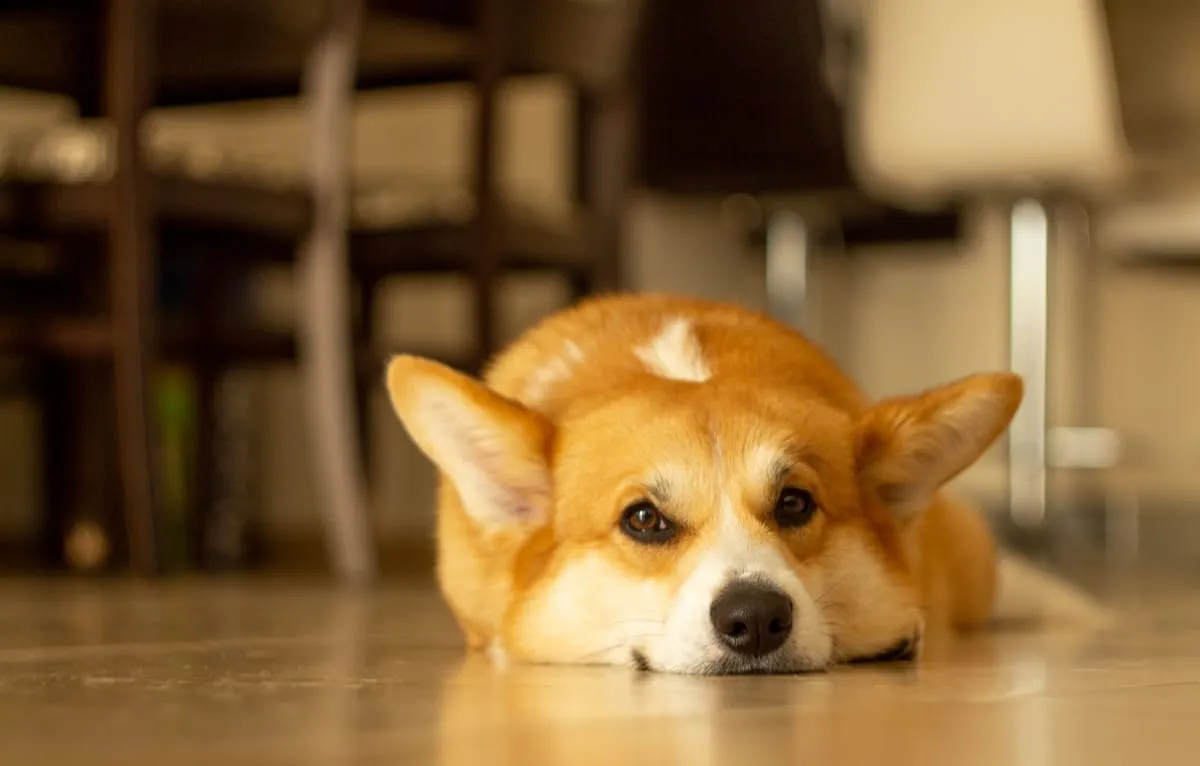
Corgis sploot, lying flat on the belly with their back legs stretched straight out behind them rather than tucked underneath, because their long body and famously short legs make that position easy, comfortable and effective for a full-body stretch. For most corgis it is simply a sign of a relaxed, happy dog, and the breed does it more often than most because its build makes the pose so natural.
If you have only ever owned a longer-legged breed, the first time you see it can look almost alarming, a dog that appears to have collapsed flat with its back legs splayed out like a frog. Once you know what is actually going on, it becomes one of the more endearing things about living with a corgi.
Why a corgi’s body makes splooting so easy
A corgi’s low, long frame, short legs and relatively flexible hips mean that extending the back legs straight out behind the body takes very little effort compared to a taller, longer-legged dog. Breeds built closer to the ground simply have an easier time reaching that stretched position and holding it, which is why splooting shows up far more in corgis, dachshunds and other short-legged breeds than it does in a Labrador or a greyhound.
The pose itself does a few jobs at once. It is a genuine stretch through the hips, thighs and lower back after a nap or a burst of play, it lets a warm dog spread its belly against a cool floor to bring its temperature down, and it keeps a dog low and relaxed while still able to watch what is going on around it. Put those together and you get a position a corgi returns to often, not because something is wrong, but because it is comfortable and useful.
When the frog-leg pose is just comfort, not a concern
Most of the time, a corgi splooting is telling you exactly what it looks like: this is comfortable, and I am relaxed. It tends to show up after exercise, when the weather is warm, or any time your dog has settled in for a proper rest rather than a light doze. None of that needs any intervention from you beyond maybe a photo, since it is one of the more photogenic things a corgi does.
Where it is worth paying closer attention is a change in pattern rather than the position itself. A healthy corgi can sploot its whole life without issue, so a sudden jump in how often your dog does it, or visible stiffness getting up out of the pose, points toward something worth mentioning to your vet rather than the sploot being the problem on its own. Hip dysplasia and arthritis are the main things vets watch for in a short-legged breed as it ages, and an honest look at how your dog moves day to day tells you far more than the sploot alone.
The honest limit
Splooting on its own, in a dog that gets up easily and moves normally the rest of the time, is not a health signal at all. It is comfort, a stretch, and in a lot of cases a dog that has simply found the easiest way its body knows how to relax. Enjoy it for what it is, and save the concern for an actual change in how your dog moves rather than the pose itself.
Related questions
Common questions
- Why does my corgi sploot so much?
- Splooting, lying flat on the belly with the back legs stretched straight out behind instead of tucked underneath, comes naturally to corgis because of their build. A long body set low on short legs makes it easy and comfortable to extend the hips and hind legs flat on the floor, and corgis tend to do it often simply because it feels good. It usually shows up after play, on a warm day, or any time your dog is relaxed and stretching out.
- Is splooting bad for a corgi's hips?
- No, not in a healthy dog. Splooting is a stretch, not a strain, and most corgis do it their whole lives with no hip problems at all. The one thing worth watching for is a sudden change rather than the position itself, a corgi that starts splooting far more than usual, or seems stiff getting up afterward, which is worth mentioning to your vet rather than ignoring.
- What is the corgi frog-leg pose, and is it the same as splooting?
- Frog-leg and sploot describe the same position, legs flat out behind the body rather than tucked underneath, just with different names. Both refer to the normal, relaxed stretch common in corgis and other long-bodied, short-legged breeds.
- Can older corgis sploot safely?
- Most older corgis can keep splooting comfortably their whole lives. The exception is a dog with diagnosed arthritis or hip dysplasia, where a vet may suggest watching how your dog gets in and out of the position. A sudden jump in how often an older dog sploots, or clear discomfort getting up from it, is worth a vet check rather than assuming it is just a quirky habit.