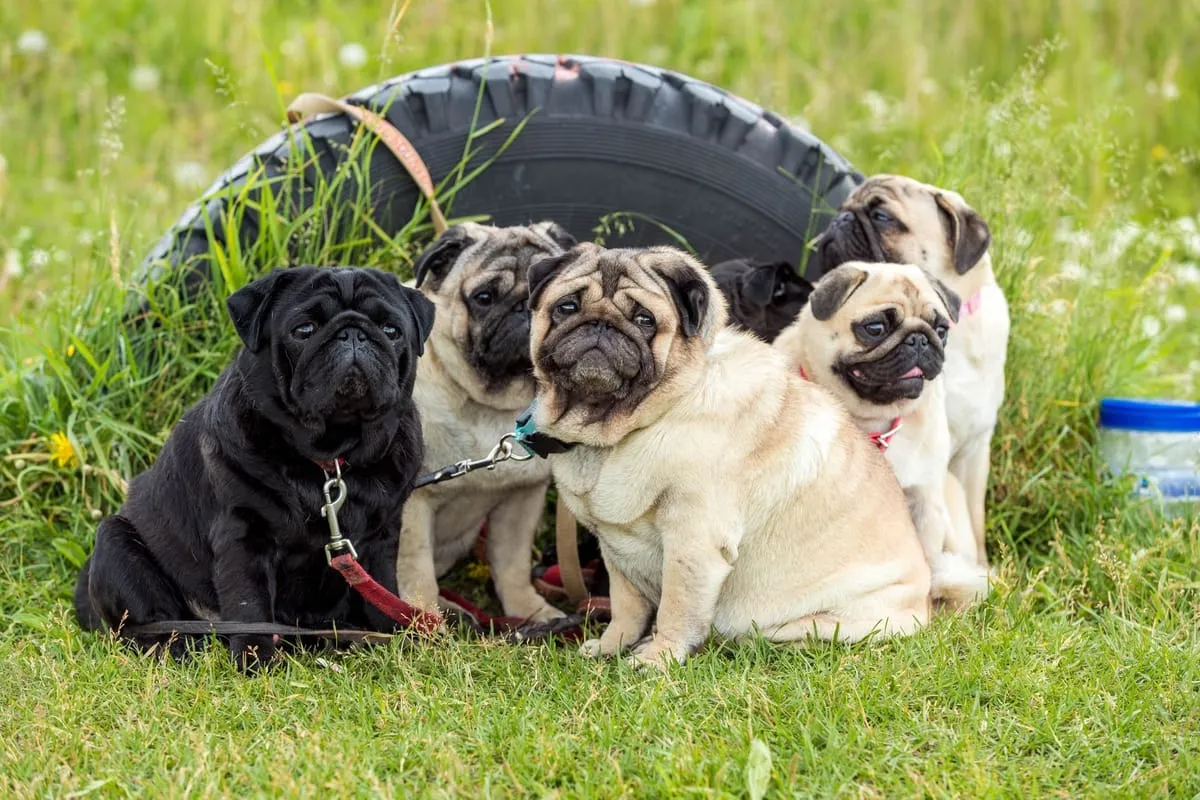
The Pug has one of the most recognisable faces in the dog world, and it is not an accident that people fall for it fast. The squashed muzzle, the deep wrinkles, the huge dark eyes that seem to track every move you make, it reads as comedy and devotion in equal measure. What gets missed in the charm offensive is that almost everything distinctive about that face comes from the same underlying structure, and that structure is the source of most of the breed’s real problems. This is the honest version, not to talk anyone out of a genuinely wonderful companion, but so nobody takes one on blind.
A breathing system built on a compromise
Pugs are brachycephalic, bred for a shortened, flattened skull, and that shape comes at the cost of airway space. The same flat-faced structure drives serious problems in French Bulldogs, and Pugs sit on the same spectrum, generally a little less extreme in muzzle length than a Frenchie, but still affected, and some individual Pugs are bred flatter and suffer worse than others.
A harness rather than a collar matters more here than for most dogs too, since any pressure on an already-compromised airway makes breathing harder still.
Eyes that sit more exposed than protected
This is the part of the Pug’s anatomy that gets far less attention than the breathing, and it deserves more. The breed’s shallow eye sockets leave the eyeball less protected than in a dog with a longer muzzle, which brings two real, breed-specific risks. Corneal scratches and ulcers happen more easily and more often, since more of the eye’s surface is exposed to knocks, dust and rough play. Far more serious, and specific to this kind of anatomy, is proptosis, where the eyeball partially or fully displaces out of the socket. It is rare, but it can be triggered by something as ordinary as a scuffle with another dog, a fall, or even a person restraining the dog too firmly around the neck and head. It is a genuine emergency requiring immediate vet care.
Day to day this just means treating any redness, squinting, or excessive tearing as worth a same-day vet check rather than assuming it will clear up, and being mindful of how the dog is handled and who it plays with.
The wrinkles need a real routine, not an occasional wipe
Those deep facial folds trap moisture, debris and bacteria against the skin, and a fold that never gets properly dried becomes a breeding ground for infection, known as skin fold dermatitis. It shows up as redness, an unpleasant smell, or soreness the dog reacts to when the area is touched.
The fix is unglamorous but effective: gently clean inside each fold a few times a week, more often in humid weather or if the dog swims or gets wet, then dry it thoroughly before moving on. A vet-approved cleansing wipe does this well and is gentle enough for regular use. Skip it and the folds tend to find their own way onto the vet’s schedule instead.
The weight problem almost every Pug owner will fight
Pugs are notoriously food-motivated, frequently more interested in the next meal than the next walk, and that appetite paired with a low tolerance for hard exercise is a near-perfect setup for creeping weight gain. It is one of the most consistent things Pug owners describe once the puppy stage passes.
Measured feeding rather than free access, and resisting the very effective begging, is the single most useful daily habit a Pug owner can build.
A rare but genuinely breed-specific brain disease
One condition is worth knowing about even though it is uncommon, because it belongs almost entirely to this breed: Pug Dog Encephalitis, an inflammatory brain disease with a strong genetic link in Pugs specifically, rarely seen in other breeds. It causes seizures, disorientation, and a decline in coordination, and it is serious. It is not something to lie awake worrying about, most Pugs never develop it, but any Pug showing seizures, sudden confusion, or a marked change in coordination or behaviour needs urgent veterinary assessment, both for this and for the other, more common causes of the same signs.
Who a Pug actually suits
A Pug suits someone drawn to a genuinely affectionate, people-focused companion who is realistic about the maintenance hiding behind the low exercise needs, wrinkle care, weight discipline, and constant heat awareness, and who can afford veterinary costs that often run higher than the breed’s small size suggests. They do well with adults, calmer households, and owners happy to plan walks and outings around temperature rather than the clock.
They are a poor fit for anyone expecting a robust, do-anything dog, anyone unwilling to manage a hot-weather routine seriously, or anyone hoping the small size means minimal daily effort. Choose a breeder who prioritises a functional, less extreme muzzle and health-tested parents over the flattest possible face, alongside the basics in choosing the right dog for your life, and a Pug rewards the effort with a level of comic, devoted companionship that is genuinely hard to match.
Common questions
- Are Pugs high maintenance dogs?
- Not in the way a working breed is, they need modest exercise and no grooming skill beyond regular brushing, but they carry a genuine daily maintenance load elsewhere, wrinkle cleaning to prevent skin infections, careful weight control, and constant awareness of heat. Low exercise needs and low maintenance are not the same thing with this breed.
- Why do a Pug's eyes look like they bulge?
- Their eye sockets are shallower than a typical dog's, so the eyeball sits more exposed than protected. This is normal for the breed but it raises real risk, a hard knock, rough play, or even excessive restraint around the neck can cause the eye to partially or fully pop out of the socket, a genuine emergency called proptosis. It also makes ordinary corneal scratches more common.
- How do you clean a Pug's wrinkles?
- Gently, and regularly, ideally a few times a week or daily in humid weather. Wipe inside each fold with a vet-approved cleansing wipe or a damp cloth, then dry thoroughly, trapped moisture is what turns a healthy fold into an infected one. Skipping this because the dog dislikes it is how skin fold dermatitis develops.
- Are Pugs prone to obesity?
- Very. They are food-motivated, often not naturally inclined to move much, and carry low exercise tolerance because of their airway, a combination that makes weight creep easy and hard to reverse. Extra weight is especially serious in this breed because it makes breathing measurably harder, so keeping a Pug lean is a welfare issue, not a cosmetic one.