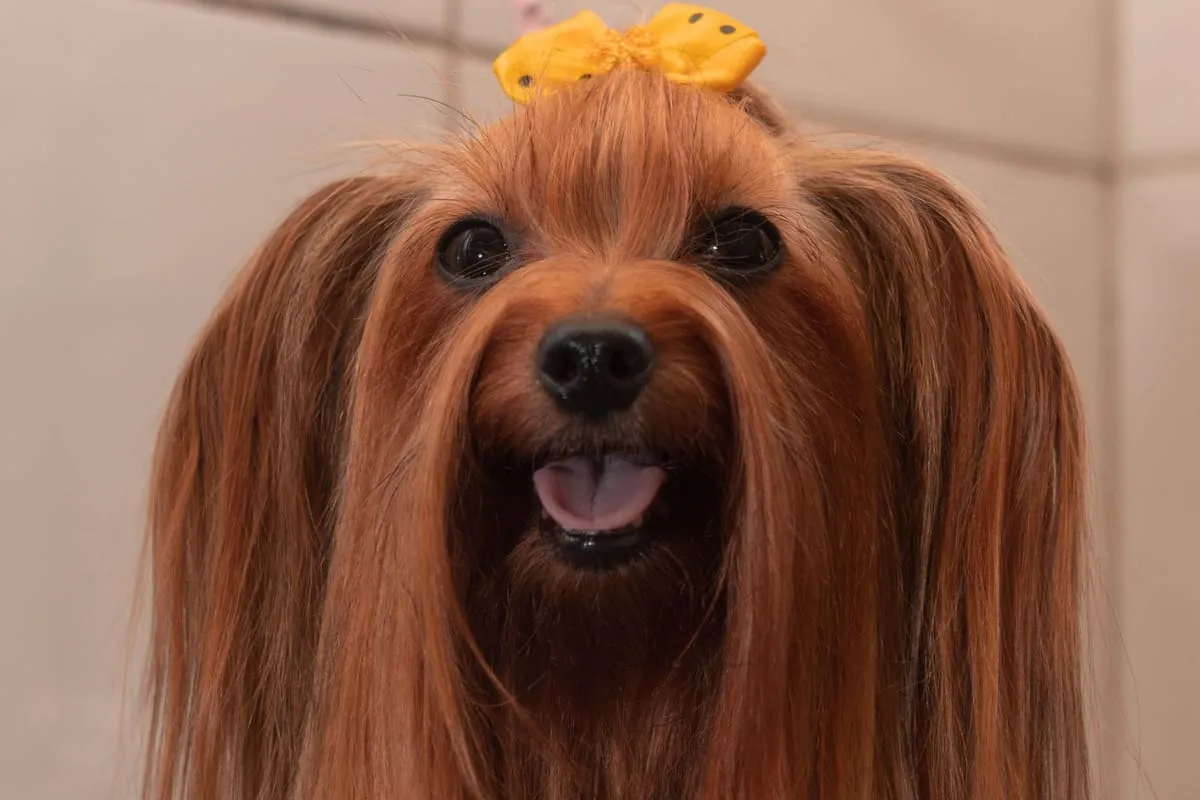
The Yorkshire Terrier is one of the most recognisable small dogs there is, and almost all of that recognition comes from a floor-length, silky coat that looks more like human hair than dog fur. That coat is genuinely the least important thing about the breed to get wrong, and the most common thing new owners underestimate. Underneath it is a proper terrier: bold, busy, and bred for a job, not bred to sit still and look pretty. Here is the honest picture of what living with one is actually like.
The coat is a daily commitment, not a look
A Yorkshire Terrier’s coat is fine, straight and silky, and unlike most dog coats it keeps growing rather than shedding out on a cycle. Left to grow to its full show-length, it needs brushing every single day to stay ahead of tangles, since a coat this fine mats close to the skin fast and a missed day or two is often enough to undo a week of careful upkeep.
Most pet owners never keep the coat at that length for exactly this reason, and instead have it clipped into a short, easy-care “puppy cut” that cuts the grooming load to a few sessions a week between professional trims every four to six weeks. Either way, the tool matters as much as the routine: a stiff slicker brush or one built for a curly coat like a Poodle’s pulls and snaps hair this fine instead of gliding through it. A proper oval pin brush with widely spaced pins, the tool professional groomers reach for on silky coats, does the job without the discomfort a mismatched brush causes.
A proper terrier temperament in a tiny body
It is easy to look at a Yorkie’s size and expect a quiet lapdog, and that expectation is where a lot of owners get surprised. The breed was developed in northern England to hunt rats in mills and mines, and that working terrier temperament, bold, alert, and quick to react to anything small and fast-moving, is still very much intact.
That translates into a dog that is often confident well beyond its size, quick to bark at anything unfamiliar, and genuinely game for far more mental stimulation than its lapdog reputation suggests. Socialising a puppy properly matters just as much here as for any breed, and arguably more, since a small dog’s pushiness or barking gets excused far more easily than a large dog’s would, which lets bad habits set in unchecked. A Yorkie that is trained, boundaried, and given an outlet for that terrier energy is a genuinely delightful, characterful companion. One that is carried everywhere and never corrected tends to become the yappy, reactive small dog the stereotype describes, and that outcome is almost always about upbringing, not the breed itself.
Health risks tied to size, and one tied to the coat
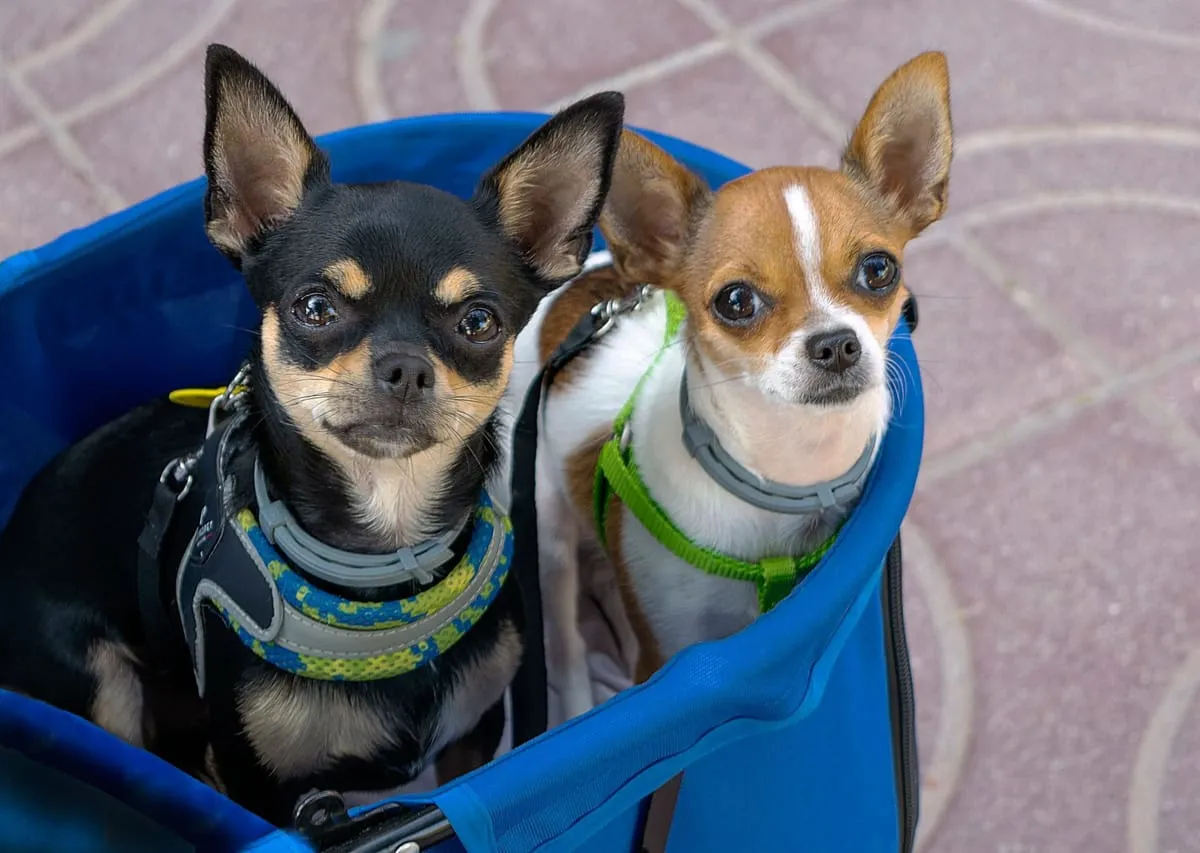
Like most toy breeds, a Yorkshire Terrier’s main health risks trace back to being built so small. Patellar luxation, a kneecap that slips out of its groove, shows up across small breeds generally, sometimes needing surgical correction if it is severe. Their small jaws crowd the teeth, which raises the risk of plaque, gum disease and early tooth loss if a cleaning routine is not kept up from puppyhood, a problem shared with other toy breeds like the Chihuahua. Daily brushing with a dog-safe enzymatic toothpaste is the single most useful habit against it.
Weighed against those risks, Yorkies are frequently long-lived for a dog of any size, with plenty reaching their mid-teens in good health. Keeping one lean matters more than usual here too, since carrying extra weight puts a proportionally bigger load on small joints and worsens tracheal symptoms if they are already present.
Who a Yorkshire Terrier actually suits
A Yorkshire Terrier suits someone drawn to a genuinely bold, characterful small dog and honest about the grooming commitment a full coat demands, or willing to keep it clipped short if daily brushing is not realistic. They do particularly well with adults and calm households that can manage the terrier instincts around small animals and give real socialisation time rather than treating the size as a reason to skip it.
They are a poor fit for anyone expecting a low-maintenance dog purely because of the size, since between the coat and the training needs there is real ongoing work either way, or for households with very young children or large, boisterous dogs where an accidental injury to a dog this small is a real risk. Get the grooming routine, the socialisation, and the dental care right, alongside the basics covered in choosing the right dog for your life, and a Yorkshire Terrier gives back a huge, loyal personality that has never once noticed how small it actually is.
Common questions
- Are Yorkshire Terriers good family dogs?
- They can be, but they suit calm households more reliably than boisterous ones. A Yorkie's small, fine-boned body does not tolerate rough handling, and its terrier instincts mean it is not naturally the gentle, tolerant lapdog its size suggests. They do well with adults and older, gentle children, and less well where a toddler might fall on or startle a dog this small.
- How often does a Yorkshire Terrier need grooming?
- Far more often than most owners expect going in. A full-length silky coat needs brushing daily to stay mat-free, since it grows continuously and does not shed the loose hair out the way a normal coat does. Many owners keep the coat trimmed short instead, which cuts the workload to a few sessions a week plus a regular professional clip.
- Do Yorkshire Terriers have a lot of health problems?
- Their main risks are the same size-linked issues that turn up across small breeds, patellar luxation, a kneecap that slips out of place, and dental crowding from a small jaw that makes plaque and tooth loss more likely without a real cleaning routine. Some also have a delicate windpipe, called tracheal collapse, that reacts badly to pressure on the neck. None of these are guaranteed, but a Yorkie kept lean and looked after well can live well into its teens.
- Are Yorkshire Terriers actually good with other pets?
- It depends on the individual and how they were raised, but the breed was originally bred to hunt rats, and that terrier prey drive has not fully disappeared. Many Yorkies live happily alongside cats and other dogs they grow up with, but a strong reaction to small, fast-moving animals, including other people's small dogs, is common enough to plan for rather than assume away.