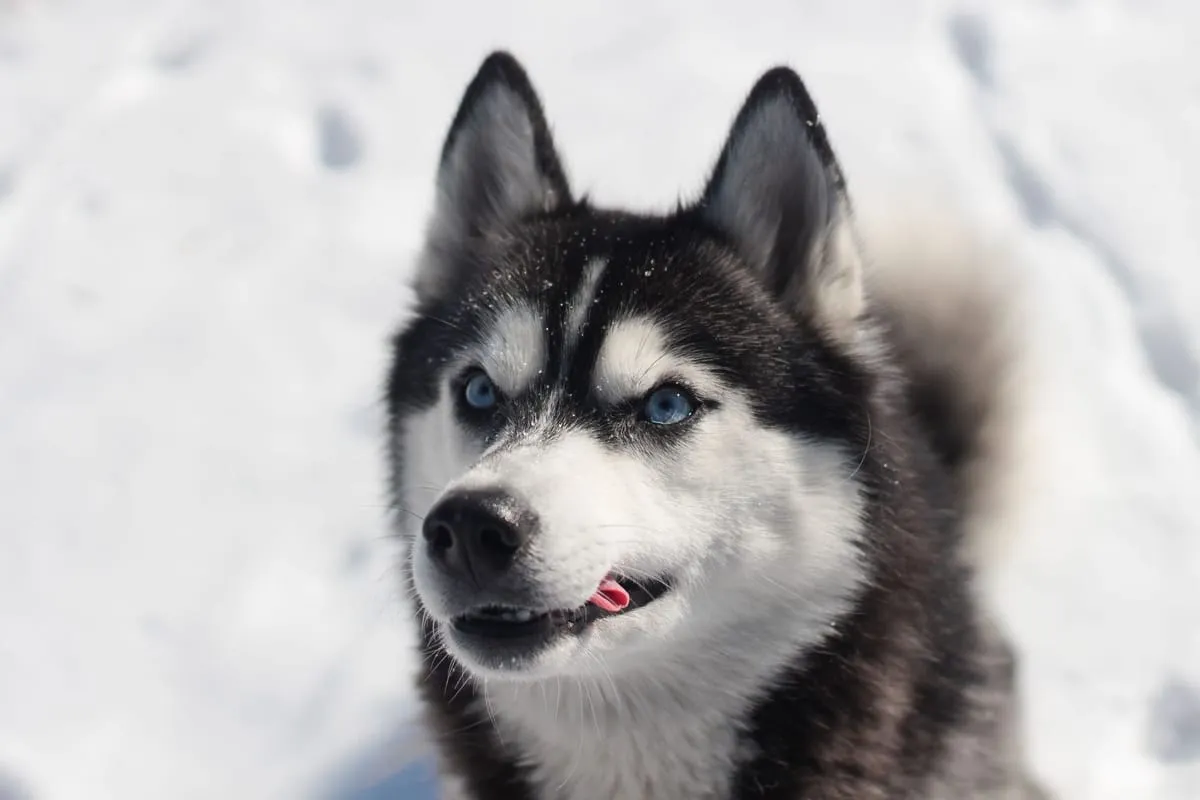
The Siberian Husky is one of the most recognisable dogs there is, striking eyes, a thick coat, wolf-like looks that turn heads on every walk. That appearance is a big part of why people want one, and it is also the reason so many end up in rescue. A Husky was bred to run, for hours, across long distances, thinking for itself the whole way, and that heritage shapes a dog that is genuinely demanding in ways its good looks do not warn you about. Here is what actually living with one involves.
Built to run, and it shows
Huskies were developed by the Chukchi people of north-eastern Siberia as sled dogs, bred to pull light loads over long distances at a steady pace in brutal cold, and that working history is still the single biggest thing to understand about the breed. This is not a dog that is satisfied with a lead walk round the block.
A Husky typically needs well over an hour of real, vigorous exercise a day, running, hiking, or structured activities like skijoring or bikejoring that give the breed something closer to its original job. Without it, that energy comes out as digging, howling, and relentless escape attempts, not because the dog is badly behaved but because a working dog with nothing to do finds its own outlet, usually one the owner does not like.
An independent mind, not a disobedient one
Sled dogs were bred to make their own decisions on the trail, sometimes overriding a musher’s command if the ice ahead looked wrong, and that independent streak did not disappear when the breed moved into family homes.
A Husky is intelligent and trainable, but it is not naturally eager to please the way a Labrador or a Border Collie is, and it gets bored fast with repetitive obedience drills. Teaching a reliable recall with this breed takes real, consistent work and a realistic ceiling on how much you will ever be able to trust it off lead near anything interesting. The breed is also famously vocal, more prone to howling and a distinctive range of talkative “woo” sounds than to straightforward barking, which neighbours in close housing should factor in honestly before committing.
Huskies are typically friendly with people, including strangers, which makes them poor guard dogs despite the intimidating wolf-like looks, and they are usually sociable with other dogs. The same is not reliably true of cats or small pets, since the prey drive that makes recall difficult also makes many Huskies unsafe around smaller animals without careful, gradual introductions and ongoing supervision.
The coat and the climate question
The double coat is doing real work, not just decoration, and misunderstanding it leads to two common owner mistakes.
The coat blows out heavily twice a year, a period owners nickname “coat blow”, when a huge volume of undercoat comes loose over a few weeks. A deshedding tool used regularly through that period, alongside the routine brushing covered in grooming your dog at home, makes a real difference to how much fur ends up on the furniture rather than in the bin.
Health issues worth knowing about
Huskies are generally a robust, working-bred breed without the extreme structural problems some purebred dogs carry, but a handful of issues turn up often enough to plan for.
Hip dysplasia appears across the breed as it does in many active, medium-to-large dogs, and a reputable breeder should be able to show hip scores for a puppy’s parents. Several inherited eye conditions are more breed-specific, including juvenile cataracts and progressive retinal atrophy, both of which a good breeder screens for before breeding a dog at all. Hypothyroidism shows up periodically in adults, and a less common but genuinely breed-linked issue is zinc-responsive dermatosis, a skin condition tied to how Huskies process zinc that needs a vet’s diagnosis rather than a guess at allergies or diet.
Who a Husky actually suits
A Husky suits an active owner or family with the time, energy, and genuinely secure outdoor space to give this breed the running, mental engagement, and containment it needs, and who goes in with realistic expectations about recall and vocal habits rather than hoping the individual dog will be the exception. They do well with experienced owners who enjoy structured activity together, and in climates where summer heat can be actively managed.
They are a poor match for a first-time owner, an apartment without serious daily exercise access, a home without a secure garden, or anyone expecting a dog that walks calmly off lead. Get the exercise, containment, and coat care right, and follow the same honest self-assessment laid out in choosing the right dog for your life, and a Husky rewards an owner with a striking, sociable, genuinely fun dog to be active with. Get those pieces wrong, and it is one of the breeds most likely to end up back in rescue through no fault of its own.
Common questions
- Are Siberian Huskies good for first-time dog owners?
- Generally not. Huskies combine a serious daily exercise need with an independent, bred-to-think-for-itself temperament that makes recall and general obedience genuinely harder than with a breed selected for eagerness to please. A first-time owner without real experience in structured training and secure containment often ends up overwhelmed, and the dog usually pays the price through rehoming. They suit owners who already know what they are taking on.
- Why do Huskies escape so often?
- It comes from what they were bred to do. Sled dogs were selected to run long distances and think independently on the trail, not to stay put, and that instinct shows up at home as digging under fences, jumping or climbing over them, and slipping leads. A Husky needs a genuinely secure, tall fence that is dug in at the base, and cannot be trusted reliably off lead in an unenclosed area because a strong prey drive will often override any recall.
- Do Huskies need to be shaved in summer to stay cool?
- No, and shaving one is actually counterproductive. The double coat insulates against heat as well as cold, trapping a layer of air next to the skin that keeps body heat out in summer the same way it keeps it in during winter. Shaving removes that protection, leaves skin exposed to sunburn, and does not grow back reliably in the same texture. Regular brushing to remove loose undercoat is the right way to help a Husky through summer, not clipping.
- What health problems are Huskies prone to?
- The main ones are hip dysplasia, a handful of inherited eye conditions including juvenile cataracts and progressive retinal atrophy that a reputable breeder should screen for, and hypothyroidism. A less common but breed-linked issue is zinc-responsive dermatosis, a skin condition tied to how the breed absorbs zinc, which needs a vet diagnosis rather than a guess at a dietary cause. None of these are certainties, and a well-bred, well-kept Husky is often a robust, long-lived dog.