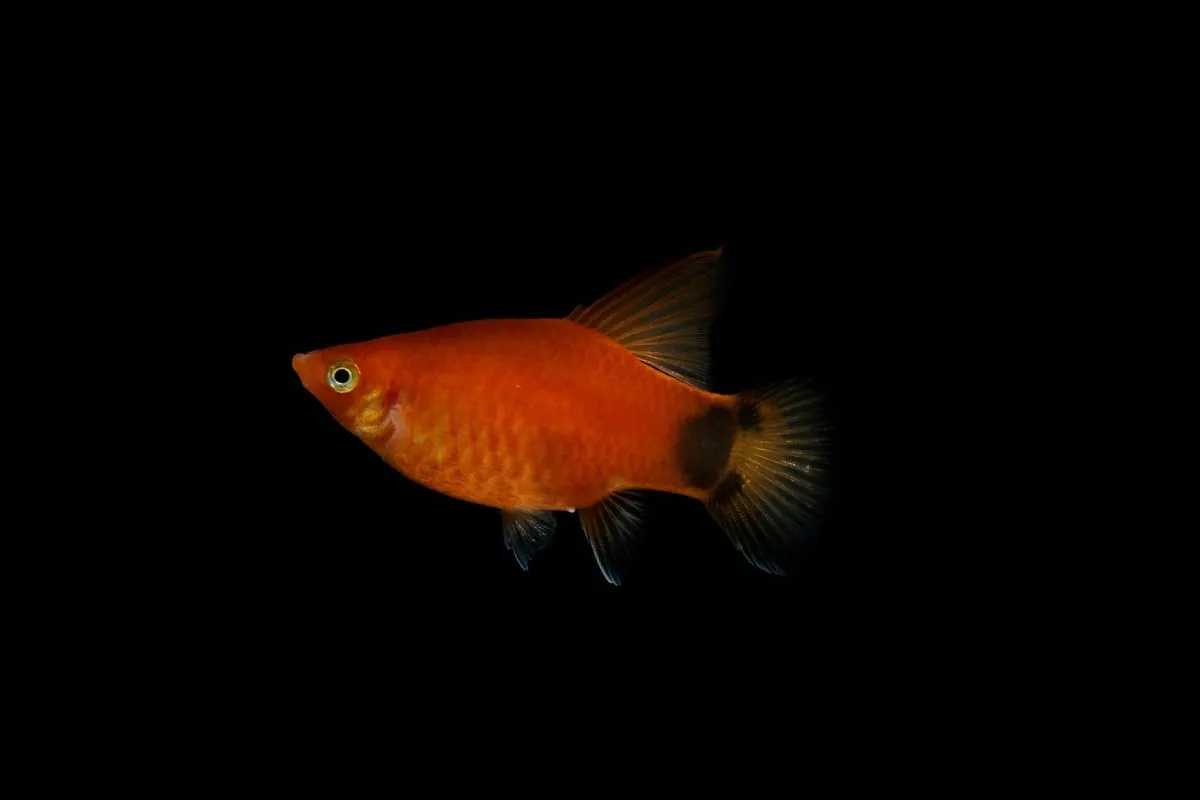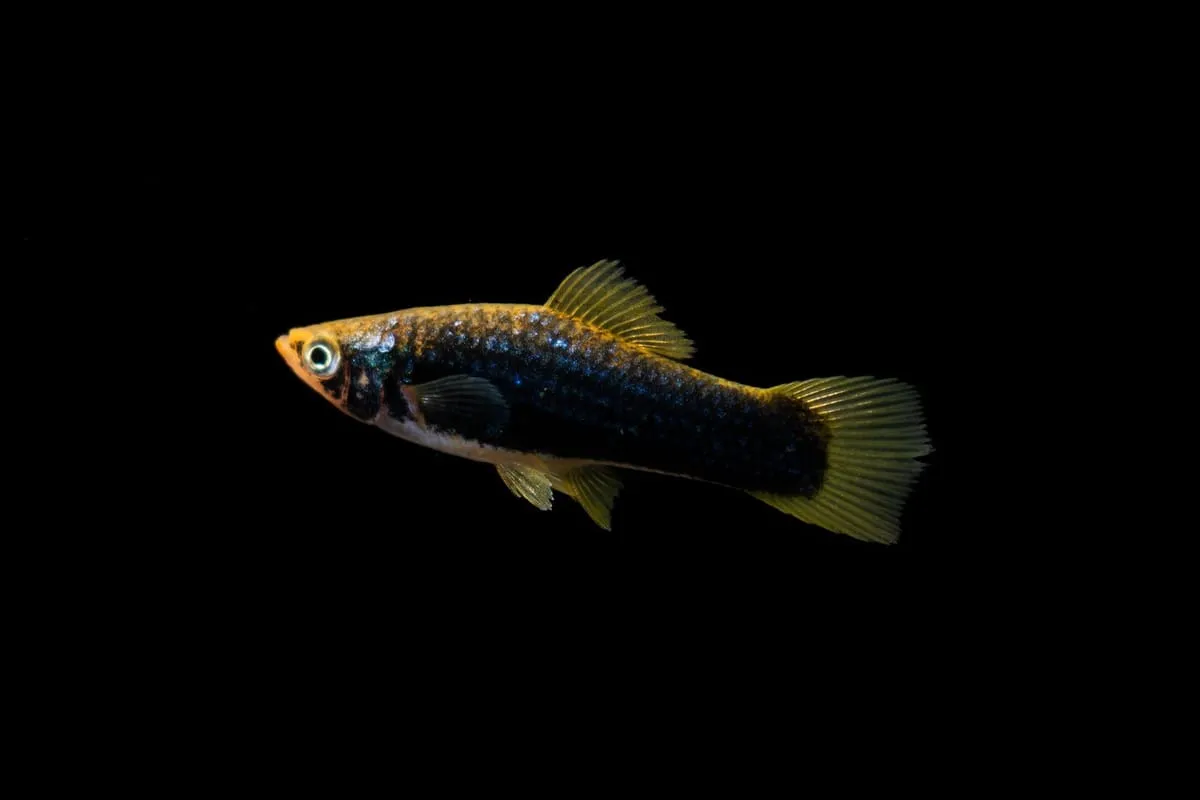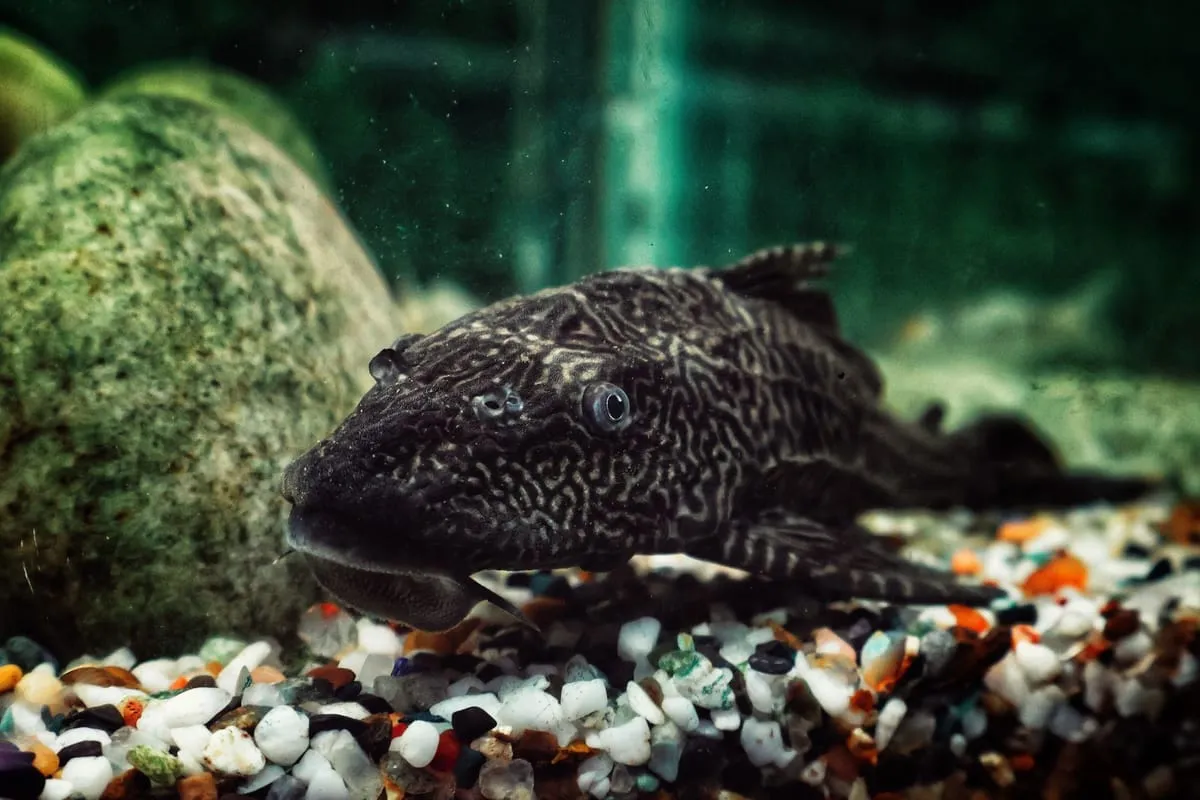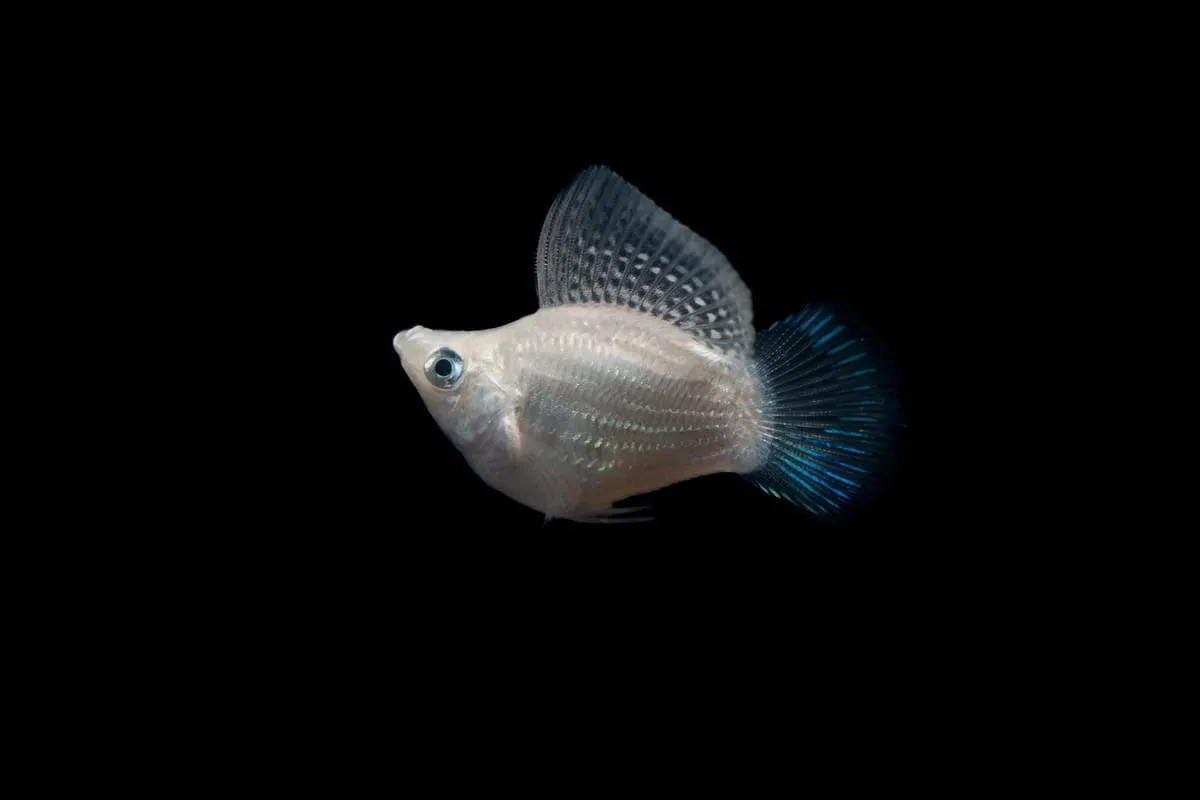
Mollies sit on the same beginner-fish shelf as guppies, often in the same tank at the shop, and get recommended with the same “easy livebearer” label. Some of that is fair, mollies are hardy, peaceful, and simple to feed. What the label skips over is that mollies are a genuinely different fish underneath: they want harder, slightly alkaline or even lightly brackish water rather than plain soft freshwater, they need more vegetable matter in the diet than a flake-only guppy setup provides, and they grow a good deal larger. Treating a molly exactly like a guppy is the single most common reason a molly tank goes wrong.
Water: harder and more alkaline than most tropical fish
Most popular community fish, tetras and guppies included, come from soft, slightly acidic water in the wild. Mollies are the opposite. Wild mollies live in water that runs hard and alkaline, and some populations tolerate genuinely brackish, part-seawater conditions. That background makes mollies one of the few common aquarium fish that do noticeably better with harder water and a pinch of aquarium salt than with the soft, unmineralised water that suits most of the rest of a typical community tank.
Temperature stability matters as much as hardness. A heater holding a steady tropical range, checked the same way covered in why fish keep dying, prevents the single most common molly complaint: a fish that shakes or shimmies in place instead of swimming normally.
The shimmies: a molly-specific warning sign
The shimmies is a side-to-side shaking motion while the fish stays roughly in one spot, rather than swimming forward normally, and it is reported in mollies far more than in most other community fish.
It almost always points to a temperature that has dropped, swung up and down, or never been warm enough in the first place, so check the heater and a separate thermometer before anything else. Water quality problems, high ammonia or nitrite, or a hardness and pH that have drifted too far from what the fish is used to, can produce the same shaking. A molly doing this needs a water-quality check, not a wait-and-see approach, since the shimmies can progress to a fish that stops eating and declines if the underlying water problem is not corrected quickly.
Diet: more vegetable matter than a guppy needs
Mollies are more herbivorous than most popular tropical fish, and a diet that is mostly protein-heavy flake, the kind that suits a guppy or a tetra well enough, tends to leave mollies prone to a bloated, listless look over time.
A molly diet built around a good base flake with real additions of vegetable-based food, blanched courgette, cucumber, or spinach, or a spirulina-based flake, matches what mollies actually dig at algae and plant matter for in the wild. Mollies left to graze on algae growing in an established tank are doing exactly what the diet should be encouraging anyway, so a tank with some algae on the glass or decor is not automatically a tank that needs scrubbing bare.
They breed just as readily as guppies, with the same plan needed
Mollies are livebearers exactly like guppies, carrying fertilised eggs internally and releasing live, swimming fry rather than laying eggs. The mechanics, and the plan for an unwanted population explosion, are the same as covered in detail in guppy care: a single-sex group, almost always females, or fully separate tanks for males and females, is the only reliable way to avoid an ongoing string of broods.
If you do want to raise fry, or simply get surprised by a batch, a breeder box to separate pregnant females and newborn fry from adults that will otherwise eat them, alongside a dedicated fry food sized for their tiny mouths, covers the first couple of weeks until fry are large enough to join a community tank safely.
Size and tank space
A juvenile molly sold at an inch or so in the shop is not the adult you are stocking for. Common mollies typically reach three to four inches, and sailfin mollies can push past that, noticeably larger than a guppy’s typical two inches. Size a tank for the adult fish you will have in a few months, with extra allowance if you expect breeding, rather than for the small fish currently in the bag.
Who mollies suit
Mollies suit a keeper who wants an easy, peaceful livebearer but can offer harder water than the soft-water setup that suits most community tetras, and who is willing to add real vegetable matter to the diet rather than flake alone. They are a good second tropical fish for someone who has already run a cycled tank successfully, less because they are harder to keep than a guppy and more because their water chemistry preferences pull in the opposite direction from most of the rest of a typical community stock list. Plan for their adult size, watch for the shimmies as an early water-quality tell, and a molly tank runs about as easily as its reputation promises.
Common questions
- Do mollies need salt in their tank?
- Not strictly, mollies breed and live fine in plain freshwater, but they tolerate and often thrive with a small amount of aquarium salt or a touch of brackish water added, unlike most community tropical fish. A pinch of salt is also a common first response to the shimmies, alongside a proper temperature check, rather than a permanent requirement for healthy fish.
- Why are my mollies shaking in place instead of swimming normally?
- That shimmying or shaking-in-place motion, sometimes called the shimmies, usually means the water is too cold or has swung in temperature recently. Check the heater is holding a steady tropical temperature first, then test ammonia, nitrite and nitrate, since poor water quality can cause the same symptom.
- Can mollies live with guppies?
- Generally yes, both are peaceful livebearers with similar water needs, though mollies grow larger and can be the slightly more boisterous tankmate at feeding time. Give guppies enough space and planting to retreat into, and watch a new mix for a week or two before assuming it has settled.
- How big a tank does a group of mollies need?
- More than most new keepers expect. A full-grown common or sailfin molly can reach three to five inches, noticeably bigger than a guppy, so a small group needs a tank sized for that adult length, not the inch-long juveniles sold in the shop, with extra room again if you expect fry.