The tell is at the edge. A fin that is ragged, shortening, or has a pale, white, or reddened rim where clean fin used to be is fin rot, a bacterial infection that eats away fin tissue from the outside in. It is one of the most common problems in home aquariums, and also one of the most commonly mistreated, because the instinct is to reach for medication first when the fish underneath the fin is usually trying to tell you something about the water.
What fin rot actually looks like
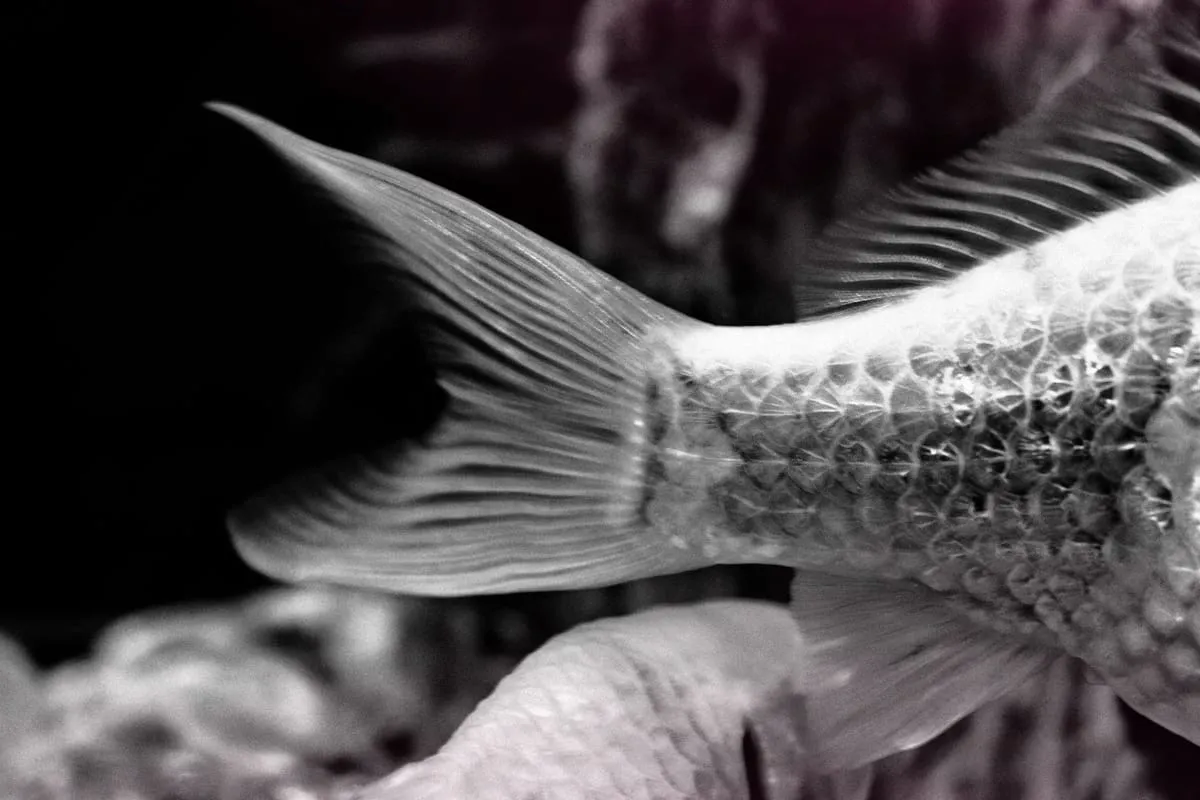
Ragged or frayed edges are the first thing most owners notice, but the detail that actually confirms fin rot is what is happening at that edge as it happens. A fin that is simply torn, from a nip, a decoration, or a rough net, has a clean or slightly uneven tear and stays that shape, it does not keep receding day by day. Fin rot keeps going: the damaged edge often turns white, grey, or brown as the dying tissue dies back further, sometimes with a red, inflamed line at the base of the fin where the infection is actively working. Left alone, it creeps steadily back toward the fish’s body, and in advanced cases it reaches the fin base itself, which is the point fin rot stops being a fin problem and starts being a body problem.
What actually causes it
Fin rot is very rarely bad luck. The bacteria that cause it, several common opportunistic species, are present at low levels in most established tanks and normally cause no problem at all. What lets them take hold is stress and poor water quality, and by far the most common specific trigger is ammonia or nitrite in the water, the same invisible problem covered in our guide to why your fish tank is cloudy, since a tank that is not fully cycled yet is exactly the environment where a fin infection gets a foothold. Overcrowding, a skipped water change schedule, a sudden temperature swing, or a stressed fish that is not eating well all lower the same defences.
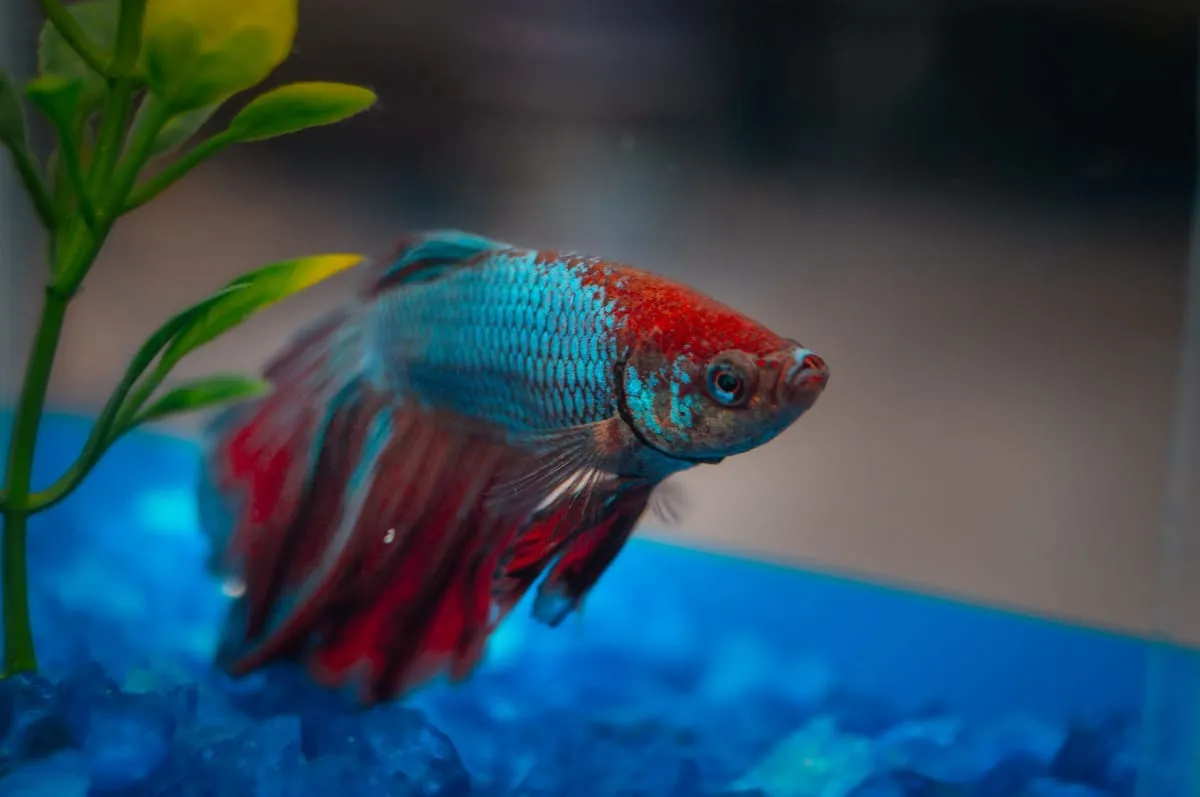
The other common route in is physical damage that gets infected afterward. Fin-nipping tankmates, sharp decorations, or a rough net create the initial wound, and if the water is anything less than clean, ordinary bacteria move in and turn a torn fin into a rotting one. If nipping is a recurring problem in a community tank, our guide to why fish fight covers the tankmate combinations and territory issues that usually explain it. Long-finned fish, bettas especially, are hit harder than most, both because trailing fins are easier to damage and because bettas are so often kept in small, poorly filtered setups that make the water problem worse.
How to actually fix it
Fix the water before you medicate, not after. Test ammonia, nitrite, nitrate, and pH with a proper kit like the Freshwater Master Test Kit rather than guessing, and do a substantial water change, 25 to 50 percent, if anything is off. Medicating a fish while it sits in the water that caused the problem in the first place is treating the symptom while leaving the cause running.
Once the water is sorted, an antibacterial treatment such as Fin & Body Cure clears the infection itself, since a case that has already reached the redness-at-the-base stage needs more than clean water alone to stop. Follow the full course rather than stopping once the redness fades, remove carbon from the filter first since it strips the medication back out of the water, and dose the whole tank if more than one fish is affected. A conditioner like Stress Coat is worth adding on top, since its aloe content helps rebuild the protective slime coat around a damaged fin while it heals, though it treats the fish’s recovery, not the infection itself.
Isolating a badly affected fish in a small hospital tank makes treatment easier to dose accurately and stops fin-nipping tankmates from reopening the wound while it heals. If stress looks like part of the picture, our guide to the signs your fish is stressed is worth a read alongside treatment, since a fish under ongoing stress heals more slowly and is more likely to relapse once treatment stops.
Keeping it from coming back
The habits that prevent fin rot are the same ones that prevent most fish disease: regular water testing and changes on a proper schedule, a tank that is not overstocked for its size and filtration, and a quarantine period for new fish before they join the main tank. If fin nipping keeps causing the initial damage, rehoming the aggressor or rethinking the tankmate mix fixes the root cause far more reliably than repeatedly treating the fin damage it leaves behind.
Fin rot looks alarming, especially on a betta whose whole appeal is a long, flowing fin, but it is one of the more treatable fish diseases going as long as the water gets fixed alongside the medication, not instead of it. Catch the ragged edge early, sort the water first, medicate if it has already progressed, and most fish regrow a full fin within a couple of months.
Common questions
- Can fin rot heal on its own?
- A very mild case, a slightly frayed edge on one fin with nothing spreading, sometimes stops on its own once the water problem behind it is fixed, since a clean tank gives fins room to regrow. Anything past that, a receding edge, redness at the base, or more than one fin affected, needs an actual antibacterial treatment on top of the water fix. Waiting to see if it clears by itself is how a mild case turns into a fish that loses its whole tail.
- Is fin rot contagious to other fish?
- The bacteria behind fin rot are opportunistic and already present in most tanks at low levels, so it is less a case of one fish infecting another and more a case of the same bad water conditions putting every fish in the tank at risk. That said, a badly affected fish is worth moving to a hospital tank anyway, both to treat it properly and to stop fin-nipping tankmates from making the damage worse.
- Why does my betta keep getting fin rot?
- Bettas get it more than most fish because their long fins are genuinely more vulnerable to bacterial damage, and because they are so often kept in small, under-filtered bowls with no heater, exactly the unstable water conditions that trigger fin rot in the first place. A properly cycled, heated tank of at least 5 gallons with a gentle filter fixes the underlying cause far more reliably than repeated rounds of medication in a bowl that keeps causing it.
- How long does it take for fin rot to heal?
- Once the water is right and treatment is underway, you should see the redness and progression stop within a few days, with new clear fin growth visible at the edges within one to two weeks. Full regrowth of badly damaged fins can take a couple of months. A fin that grows back slightly shorter or a different shape than before is normal and not a sign that anything is still wrong.