A fish floating nose-down at the surface, drifting sideways, or stuck on the bottom trying and failing to swim upright looks like it belongs to a much stranger illness than it usually does. Most of the time this is swim bladder disorder, a problem with the internal organ that controls buoyancy, and it is one of the more fixable things that can go wrong in a tank. Here is how to recognise it, what is actually causing it, and what helps.
What the swim bladder does, and what goes wrong
The swim bladder is a gas-filled internal organ that lets a fish hover at any depth without constantly swimming to stay there, adjusting its own buoyancy the way a diver adjusts a buoyancy vest.
When it is not working properly, a fish loses that fine control. Instead of holding a normal, level position, it floats to the top and cannot stay down, sinks to the bottom and struggles to rise, or tips onto its side or hangs upside down while still very much alive and trying to right itself. It is a symptom, not a disease on its own, so fixing it means finding what is putting pressure on or interfering with that organ rather than treating the buoyancy problem directly.
The signs to look for
Buoyancy trouble is usually obvious once you know what you are looking at, but it is worth separating from a fish simply resting.
Watch for a fish that floats at the surface and cannot swim back down under its own effort, one that sinks and rests on the bottom looking otherwise alert, or one that swims tilted, sideways, or upside down rather than level. A swollen or visibly bloated belly often goes along with it. The tell that separates this from a fish just resting near the surface or glass is effort: a fish with swim bladder disorder is usually trying to correct its position and failing, not choosing to sit still.
Why it happens
Overfeeding and constipation cause the large majority of cases, and it is worth reading that as good news, because it means the fix is usually within your control.
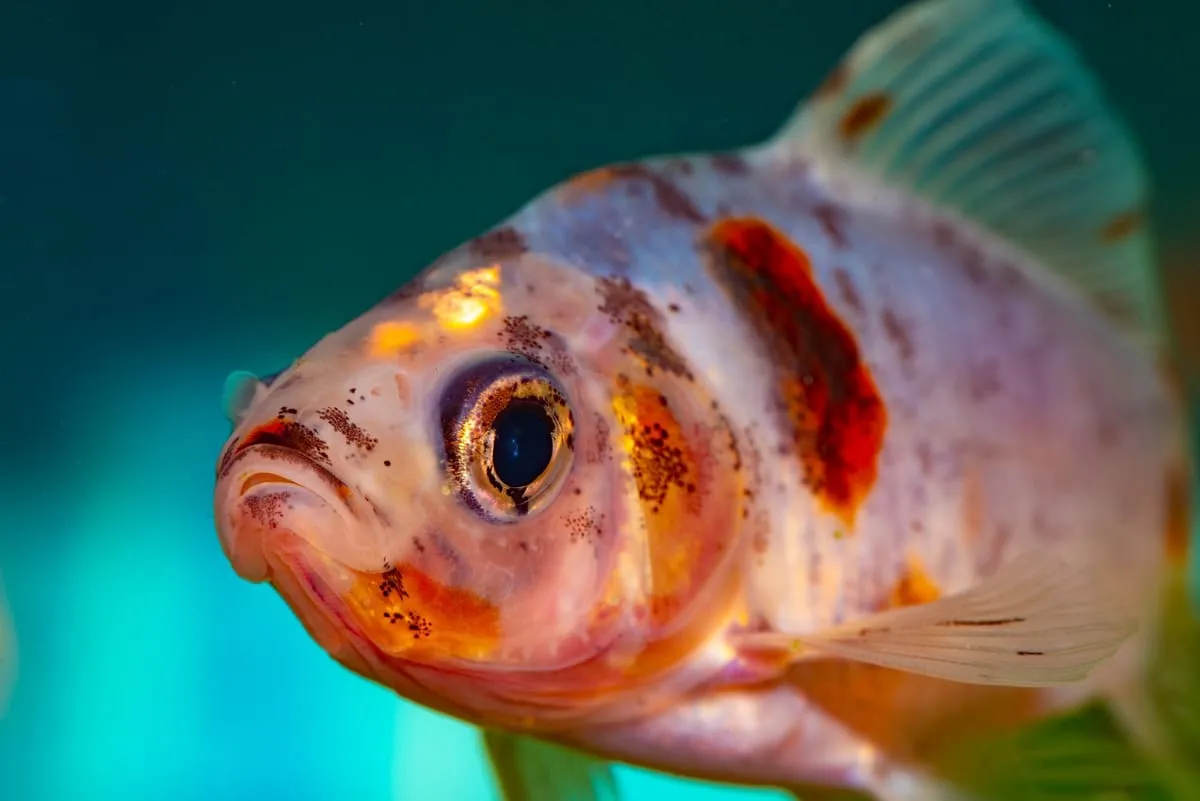
A fish that eats too much, eats too fast, or is fed a diet heavy in dry flakes that expand once swallowed can end up with a gut distended enough to compress the swim bladder sitting right next to it, exactly the mechanism covered from the feeding side in why does my fish keep begging for food. Air gulped in at the surface during fast, greedy feeding adds to the problem the same way. Fancy goldfish varieties, orandas, fantails, ranchu and similar rounded, compressed-body types, are especially prone to this because their body shape already crowds the swim bladder more than a slim-bodied fish’s does, which is part of the trade-off of breeding for that rounded look. Beyond feeding, a swim bladder problem can also follow a bacterial infection, a parasite, a physical injury, or in older fish, a tumour or organ degeneration that has nothing to do with diet at all.
What actually helps
Start by fasting the fish for two to three days. This sounds drastic but it is standard first-line advice, since an empty gut takes pressure off the swim bladder and gives a mild case room to resolve on its own.
After the fast, offer a single skinned, boiled pea instead of the normal food. It is a mild, natural laxative that clears a blocked or impacted gut in a way flakes and pellets do not, and it is the single most commonly recommended fix among experienced keepers for exactly this problem. Once the fish is eating normally again, switch to smaller, less frequent meals, and soak dry pellets in tank water for a minute or two before feeding so they cannot expand once swallowed.
Test the water regardless of the cause, since poor water quality stresses every fish in a tank and can make an existing swim bladder problem worse even when it is not the original trigger, the same first step covered in why is my fish not eating. A fish struggling to reach the surface for air on top of a buoyancy problem is also at higher risk in a tank running low on oxygen, so it is worth ruling out the causes in why is my fish gasping at the surface at the same time.
When it is not just overfeeding
A fish that cannot swim properly is also at real risk from the tank itself: unable to reach food before faster tankmates take it, more exposed to being pecked at or bullied, and more likely to end up pinned against a filter intake or decor. If recovery is going to take a few days, a shallower hospital container with gentle flow and nothing sharp to bump into keeps the fish safer while it heals than leaving it to struggle in the main tank.
The fast version
Swim bladder disorder is almost always about pressure on that internal organ, most often from overfeeding or constipation, and most often fixable. Fast the fish for two to three days, follow with a skinned pea, consider a brief Epsom salt bath, and switch to smaller, pre-soaked meals afterward. Test the water at the same time, since poor water quality makes everything worse. Give it a week of that combination before assuming something more serious is going on, and most feeding-related cases turn around well within that window.
Common questions
- What is swim bladder disorder in fish?
- It is a problem with the internal, gas-filled organ a fish uses to control buoyancy, so instead of holding a normal, level position in the water the fish floats, sinks, or tips onto its side. It is usually a symptom of something else going on, most often overfeeding or constipation, rather than a disease in its own right.
- Is swim bladder disorder painful or fatal?
- On its own it is rarely painful, but it is genuinely dangerous. A fish that cannot swim upright struggles to reach food, gets outcompeted by tankmates, and sits under more stress than it looks, and severe or prolonged cases can be fatal if the underlying cause is not fixed.
- Can swim bladder disorder be cured?
- Often, yes, especially the common feeding-related kind, which frequently improves within a few days of fasting and a change in food. Cases caused by an internal infection, a tumour, or genuine organ damage are harder to reverse and need a vet who works with fish.
- Do goldfish get swim bladder disorder more than other fish?
- Yes, noticeably more. Fancy goldfish varieties with rounded, compressed bodies, orandas, fantails, ranchu and similar, are especially prone to it, because their body shape already puts more pressure on the swim bladder than a slender-bodied fish carries. Bettas are the other species owners ask about most.