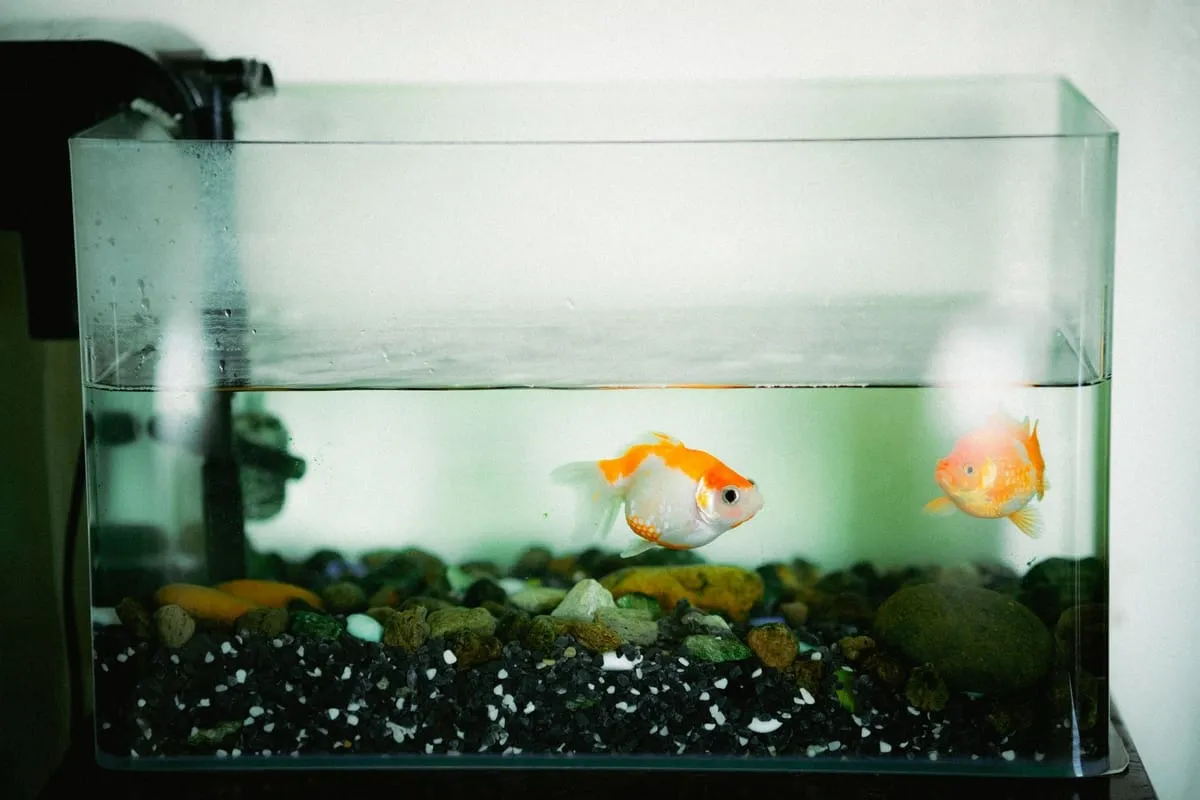
To start a freshwater tank you need: a tank, a filter rated for its volume, a heater and thermometer for tropical fish, a light, substrate, decor or plants for cover, a dechlorinator, a liquid test kit, a bucket and siphon kept only for the aquarium, and a net. Buy the fish last, weeks after everything else is running.
That last sentence is the whole difference between fishkeeping that works and fishkeeping that does not. A tank looks finished the day the water goes clear, and it is not, because the part that keeps fish alive is a bacteria colony that has not grown yet. So this list is ordered by what you set up first, and the fish come at the end of it.
Start with the tank, and buy bigger than you think
The most common beginner mistake is buying too small, on the reasonable-sounding theory that a small tank is an easier tank.
It is the other way round. A large volume of water is far more forgiving than a small one, because everything that goes wrong in an aquarium, a temperature swing, an ammonia spike, an overfeed, is diluted by the water around it. In a small tank there is nothing to dilute it, so problems arrive fast and hit hard. A bigger tank is also easier to stock sensibly and gives fish room to get away from each other, which removes a surprising share of behaviour problems. Buy the largest tank your space, floor and budget will genuinely take, and stock it lightly rather than buying a small tank and cramming it. Our guide to how big a tank your fish need works through the sizing question species by species.
Filtration, heat and light
These three are the life support, and the filter is the one that actually keeps fish alive.
The filter does two jobs: it moves water, and it houses the bacteria colony that converts fish waste into something less harmful. Buy one rated for your tank volume or a little above, and resist the urge to clean it thoroughly, because the gunk in the media is the colony you are trying to grow. A heater is needed for tropical fish, which is most of what shops sell, and it should be matched to the volume. A reliable adjustable heater that holds a set temperature is worth more than a cheaper one you have to keep adjusting, and it should always be paired with a separate thermometer rather than trusting the dial. Warm water also holds less oxygen, so a temperature creeping up unnoticed is behind a good number of the problems that look mysterious at the time.
A light matters for seeing the fish and for keeping live plants, and it wants to be on a timer rather than left on all day, because long light hours are the main driver of an algae problem. An air pump is optional in a well-filtered tank and genuinely useful in a warm one or a heavily stocked one.
Substrate, cover and the things fish need to feel safe
Once the hardware is in, the tank needs an inside.
Substrate is gravel or sand, rinsed thoroughly before it goes in, and the choice is mostly about what you plan to keep: sand suits bottom-dwelling fish that sift it, gravel suits most community setups and holds plant roots. Cover matters more than decoration. A fish with nowhere to hide is a stressed fish, and stress is behind a large share of illness in new tanks. Silk plants give instant cover with no upkeep, live plants do the same and help with water quality as they grow, and a cave or hollow ornament gives the shy species somewhere to retreat. A floating log suits a betta, which rests near the surface rather than on the bottom.
Live plants are worth considering from the start. They compete with algae, they take up some of the waste the filter is working on, and they make fish visibly more relaxed. If you go that way, a trace element fertiliser and root tabs cover what plants need beyond light.
The three things beginners skip
If there is one section of this guide to act on, it is this one. All three items are inexpensive and all three are routinely left out of a first shop.
The first is a dechlorinator. Tap water is treated to be safe for people, and the chlorine or chloramine in it is toxic to fish and to the bacteria in your filter. Every drop of water going into the tank, including every water change forever after, needs treating first. A concentrated dechlorinator is the standard for a reason, and it goes a long way.
The second is a liquid test kit. A freshwater master test kit shows you ammonia, nitrite, nitrate and pH, which are invisible and are what actually kill fish in a new tank. Test strips are not accurate enough to track a cycle and will tell you a tank is fine while it is not. This is not an optional accessory, it is the instrument you run the tank by.
The third is a bucket and a siphon kept only for the aquarium, never for anything else. A bucket that has held household cleaner retains enough residue to wipe out a tank even after rinsing, so label it and keep it apart. A gravel siphon that connects to the tap makes water changes a five-minute job rather than a chore you postpone, and postponed water changes are how tanks decline.
Then wait, because the tank is not ready
This is the part no shop display shows, and it is the whole reason first tanks fail.
Set everything up, fill with dechlorinated water, run the filter and heater, and then cycle the tank before any fish arrive. Cycling means growing the bacteria colony that converts ammonia to nitrite and nitrite to nitrate, and it takes weeks rather than days from a bare start. A bottled bacteria starter genuinely helps by seeding a usable colony early, and mature filter media begged from a friend’s established tank helps more, but neither removes the need to test. The full process, including the safer fishless method and the fallback for when fish are already in the tank, is in our guide to cycling a new fish tank.
While you wait, buy the food. A good tropical flake covers most community fish, sinking wafers reach the bottom feeders that flakes never do, and buying small quantities matters because fish food loses quality once opened. A conditioner with a slime coat aid is worth having for the day the fish actually go in.
What can wait, and what to never skip
Plenty of aquarium kit is genuinely optional at the start. A UV steriliser, a second filter, automatic feeders, carbon dioxide systems for planted tanks and elaborate lighting are all things to consider later, once you know what you are keeping and why. Medications are worth buying only when you need them, since most have a shelf life and a specific use.
What should never be skipped is the test kit, the dechlorinator, a filter rated for the tank, a heater with a thermometer if the fish are tropical, and the patience to cycle. Get those right and the hobby is straightforward. Get them wrong and you will spend the first six months replacing fish and wondering why, which is exactly the pattern behind fish that keep dying in an otherwise clean-looking tank. Once the tank is running, water changes and testing is the routine that keeps it that way.
Common questions
- What equipment do I need to start a fish tank?
- A tank as large as your space and budget allow, a filter rated for that volume, a heater and a thermometer for tropical fish, a light, substrate, some decor or plants for cover, a dechlorinator, a liquid test kit, a bucket and siphon kept only for the tank, and a net. That is the full list for a freshwater setup. Fish are the last purchase, not the first.
- Is a starter kit a good way to begin?
- Sometimes, and the deciding factor is the tank size rather than the contents. Many kits are built around very small tanks, and a small volume swings in temperature and water quality far faster than a larger one, which makes it harder to keep stable rather than easier. If a kit is built around a reasonable volume with a filter rated for it, it can be decent value. If it is a two-gallon bowl with a light, it is a harder job dressed up as an easy one.
- Do I need a heater for a fish tank?
- For tropical fish, yes, along with a thermometer to check it is doing what it claims. Most aquarium fish sold in shops are tropical and need a stable warm temperature, and a room that feels warm to you still swings several degrees between day and night. Coldwater species are the exception, though even those do better without sharp swings.
- How long after setting up a tank can I add fish?
- Weeks, not days, unless you are seeding the filter from an established tank. A new tank has no bacteria colony to process fish waste, so ammonia and nitrite build up and poison the fish. Run the tank, feed the filter an ammonia source, test daily, and add fish only once ammonia and nitrite both clear to zero. This is the single most common reason a first tank fails.
- What do beginners most often forget to buy?
- A liquid test kit, a dechlorinator, and a bucket and siphon kept only for the aquarium. Test strips are not accurate enough to track a cycle, untreated tap water is toxic to fish because of the chlorine in it, and a bucket that has held household cleaner can kill a tank even after rinsing. None of the three is expensive and all three are the difference between keeping fish and replacing them.