A snake pressing its face into the corner of the glass and dragging its nose along the seam, over and over, looks like curiosity the first few times you see it. Watch it happen every day in the same spot and it stops looking like exploring and starts looking like something the snake cannot stop doing. That instinct is correct. Persistent nose rubbing, sometimes called rostral rubbing, is one of the more common signs that a snake’s enclosure is not meeting what it actually needs, and left alone it can do real physical damage.
What is actually happening
A snake does not rub the glass out of boredom the way a bored dog chews furniture. It rubs because it is trying to get somewhere, or because the enclosure itself is making it feel exposed.
Most rostral rubbing comes down to one of two things. The snake is searching for a way out, testing every seam and gap the way it would probe for an exit in the wild, usually because the enclosure feels wrong in some way rather than because escape is a considered plan. Or the snake is reacting to feeling exposed, an all-glass enclosure with clear walls on every side gives a snake nowhere to feel unseen, and a species that would naturally spend most of its time tucked under cover or in a burrow can find that constant visibility genuinely stressful. Both causes point the same direction: the fix is in the setup, not in the snake.
The setup problems behind it
A handful of specific issues drive most of the rubbing keepers see, and they are worth checking in order.
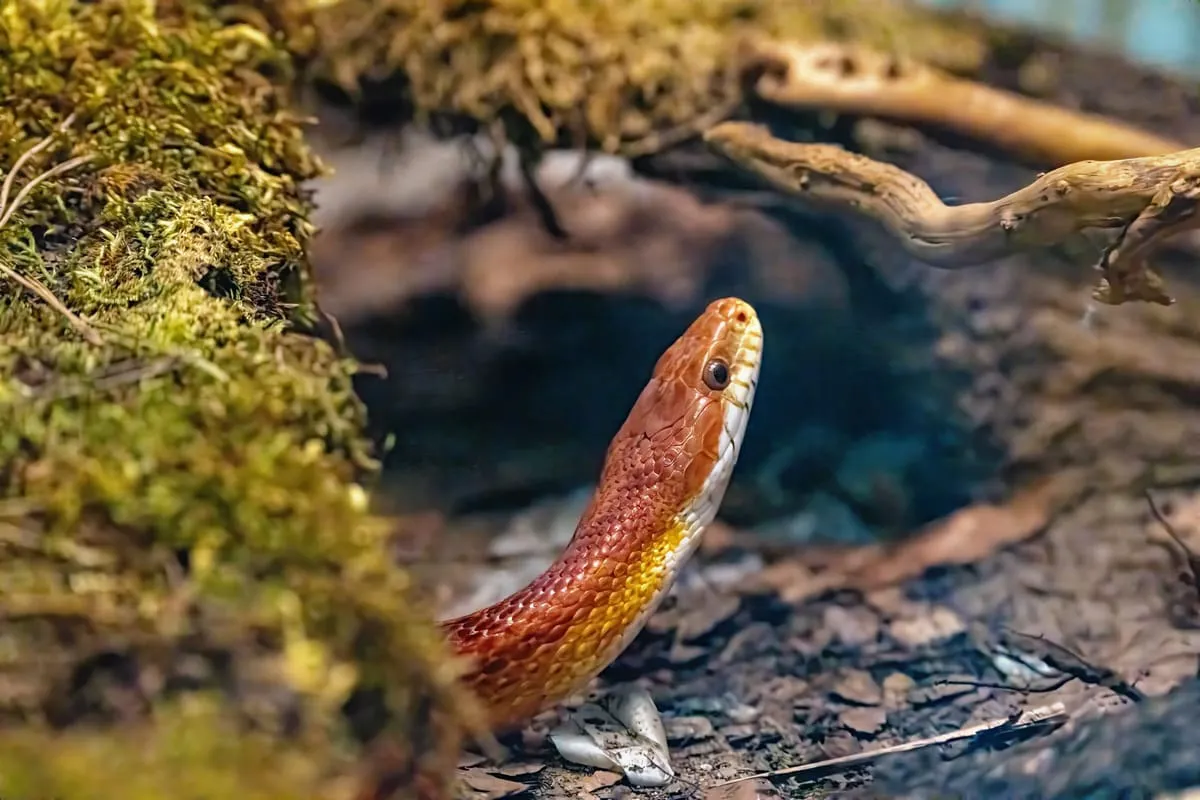
An all-glass enclosure with visibility on every side is the single most common trigger, particularly for naturally secretive species like corn snakes and ball pythons that spend much of their time hidden in the wild. Covering three sides with background paper or foam board, leaving only the front viewing panel clear, removes most of that exposure and is often enough on its own to stop the behaviour within a few days. Not enough secure hiding space is the next most common cause: a snake needs at least one snug hide it can fully disappear into at both the warm and cool ends, tight enough to feel pressure on its body, not an open cave it still feels exposed inside. A poorly fitting lid or a gap the snake can feel air moving through will also draw constant investigation, since a snake reads a draught as a potential way out. And an enclosure that is too small for the animal, or conversely a bare, open enclosure that is too large without enough cover broken up inside it, can both push a snake toward the edges looking for something the space does not offer.
Checking the fundamentals underneath it
Because rubbing is a stress response, it is worth checking the same fundamentals that sit under most reptile behaviour problems before assuming the enclosure’s layout is the whole story.
Confirm the temperature gradient is correct for the species, with an accurate thermometer at both the warm and cool ends rather than trusting the equipment’s own dial, since equipment left unregulated commonly runs hotter or colder than it should. A thermostat on any heat source is basic safety rather than an optional extra, and a snake that is too hot or too cold will often show restlessness alongside the rubbing. Check how much disturbance the enclosure gets too: a tank sited somewhere with constant foot traffic, loud noise, or other pets pressing against the glass gives a snake little chance to settle, and moving it somewhere calmer sometimes solves rubbing that redecorating the inside does not.
Giving it a few days to settle
Once the background is covered, hides are secure at both ends, and the temperatures check out, most snakes stop rubbing within several days as the enclosure starts to feel like somewhere to hide rather than somewhere to escape from. A snake that keeps rubbing hard despite all of that, especially if it is also refusing food or seems generally unsettled, is worth a closer look at the whole setup rather than assuming it will simply stop on its own. For the wider picture of what your reptile’s body language is telling you beyond this one behaviour, see what your reptile’s behaviour is telling you, and for species-specific setup details, the corn snake and ball python care guides cover what each one needs from its enclosure in full.
Common questions
- Is it normal for a snake to rub its nose on the glass sometimes?
- A brief investigation of the glass, especially in a new enclosure or after a change, is normal. Repeated, ongoing rubbing in the same spot, especially along the top edges or corners, is different and is almost always the snake either trying to get out or reacting to an enclosure that does not feel secure.
- What is the difference between this and normal exploring?
- Normal exploring is brief, moves around the whole enclosure, and tapers off once the snake has checked its space. Repeated rubbing at the same point, particularly the lid or a corner, that continues day after day is a stress or escape behaviour rather than curiosity, and is worth treating as a signal to fix rather than ignore.
- Can rubbing its nose actually hurt my snake?
- Yes. Repeated rubbing wears through the delicate scales on the snout, called the rostral scale, leaving it raw, scabbed, or bleeding. A damaged rostral area is also an easy entry point for bacterial infection, so this is a welfare issue and not just an odd habit to shrug off.
- When should I take my snake to a vet for this?
- See an exotics vet if the snout looks raw, swollen, scabbed, or is bleeding, if you see any discharge or crusting, or if the snake is rubbing despite the enclosure fixes below and shows no sign of settling. A damaged snout that is not healing, or that looks infected, needs treatment beyond what husbandry changes alone can fix.