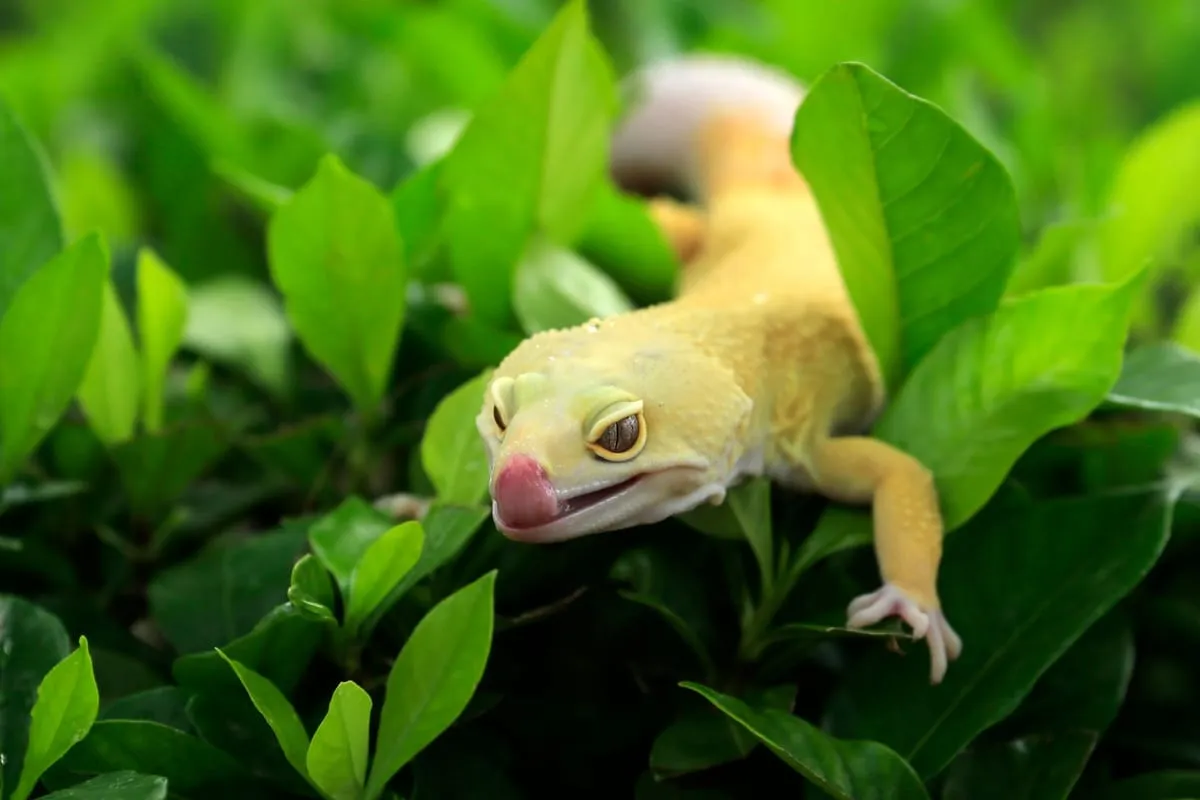
A gecko with a shorter tail than it had yesterday, and a still-wriggling piece of tail nearby, is one of the more alarming things a new keeper can walk in on. It looks like a serious injury. In almost every case it is something else entirely: a deliberate, built-in defence the species evolved specifically for this moment, and one the gecko is generally fine after. It is also one of the more common surprises covered in our leopard gecko care guide for anyone newer to the species.
What just happened
Leopard geckos, like many lizard species, can perform caudal autotomy, deliberately releasing part of their own tail along a built-in fracture plane in the tail vertebrae. The muscles around the break point contract immediately to close off blood vessels, which is why a dropped tail usually stops bleeding within a few minutes on its own. The detached piece keeps wriggling for a short while after separation, a leftover nerve response that is startling to watch but not a sign of anything wrong with the gecko itself, and in the wild it exists to distract a predator for just long enough to let the rest of the gecko escape.
The first hour or two
Move the gecko to a bare or paper-towel-lined section of the enclosure if it is normally on a loose substrate, since a healing stump is more vulnerable to impaction or infection if the gecko ingests substrate while it is subdued or not eating normally over the next few days. Leave the wound alone. It does not need a human antiseptic, ointment, or dressing, and most of those products do more harm than good on reptile skin. A clean, dry environment and minimal handling while it closes over is the right approach.
What grows back, and what does not
A regrown tail is cartilage, not the original bony vertebrae, and it is visibly different once it has finished growing in: usually shorter and a bit stubbier or bulbous in shape, with colouring and pattern that rarely matches the rest of the body as closely as the original tail did. None of that affects how the gecko moves, eats, or lives day to day. The one genuine cost worth taking seriously is nutritional. A leopard gecko’s tail is where it stores a large share of its body fat, so a freshly dropped tail is a real setback to its reserves, not just a cosmetic change, and a gecko recovering from one benefits from consistent, well-dusted feedings while the new tail builds back up.
Preventing the next one
The single biggest cause is handling by the tail, so the rule is simple: always support a leopard gecko from underneath the body, never by picking it up or restraining it by any part of the tail, however gently it seems. Our guide to handling your reptile without stressing it covers the broader technique. A secure, enclosed hide reduces the background stress that makes a gecko more reactive to being approached in the first place, and if a tail drop happened during a scuffle with another gecko, the two should not be sharing an enclosure going forward, since leopard geckos are not a social species and cohabitation is a common hidden cause of repeated injuries. Feeding tongs also help, since feeding by hand teaches a gecko to associate fingers near its body with food, which can turn an ordinary feeding moment into a grab.
A tail drop looks far worse than it usually is. Treat the first few hours calmly, keep the enclosure clean while it heals, and the lesson worth keeping is less about the tail itself and more about whatever startled the gecko into dropping it in the first place.
Common questions
- Is it an emergency if my leopard gecko drops its tail?
- Usually not. The muscles at the break point contract on their own to seal the wound, and most geckos stop bleeding within a few minutes without any help. It becomes a vet matter if bleeding does not slow after ten to fifteen minutes, if the wound looks torn rather than cleanly separated, or if the gecko seems weak, unresponsive, or stops eating over the following days.
- Will my leopard gecko's tail grow back?
- Yes, but it regrows as a cartilage structure rather than the original bone, and it almost always comes back shorter, a different shape, often stubbier or bulbous, and with duller or mismatched colouring and pattern compared to the original. Regrowth usually takes a few months to reach a reasonable size.
- Can I pick my leopard gecko up again after it drops its tail?
- Yes, once the stump has closed over and the gecko is back to normal activity and eating, which is usually within a week or two, handling it the usual way around the body is fine. The lesson to carry forward is in how you handle it, never by grabbing or restraining the tail itself, since that is the single most common trigger for a repeat drop.
- Does losing its tail hurt the gecko long term, or shorten its life?
- Tail autotomy is a built-in survival mechanism, not an injury the species is poorly adapted to, so a gecko that drops and regrows a tail once lives a completely normal life afterwards. The tail is also where a healthy gecko stores a meaningful amount of its fat reserves, so losing it is a genuine short-term setback worth supporting through diet, not something to treat as purely cosmetic.