The bag says a quarter of a cup a day. It does not say a quarter of a cup for what size of animal, whether that is before or after the handful of veg you also gave, or what to do about the treats. Most rabbits and guinea pigs end up fed by guesswork, a scoop that looks about right, topped up whenever the bowl looks empty, and guesswork is exactly how these animals end up overweight with the gut and dental problems that come with it. Getting the amounts right is not complicated once you have real numbers to start from and a way to check whether they are working.
Hay first, and it is not measured at all
Before any of the numbers below, hay is the one part of the diet that stays completely unmeasured. It should be available all day, every day, in a quantity large enough that your pet is never without it, refreshed daily as it gets soiled, trampled, or picked through. If you take nothing else from this, why hay is the most important food covers exactly why unlimited hay is non-negotiable for both gut health and teeth. Everything that follows here is about the much smaller amounts of everything else.
Pellets: a real number to start from
Pellets are where free-feeding does the most damage, because unlike hay they are calorie-dense and a rabbit or guinea pig with a full bowl available all day will simply eat more than it needs.
A workable starting point is around an eighth of a cup of a good plain pellet per kilogram (2.2lb) of body weight, given once or split across two feeds, for both adult rabbits and adult guinea pigs. A typical 2kg rabbit, for instance, gets roughly a quarter of a cup a day, not the half-full bowl a lot of pet-shop guidance suggests. Measure it out with an actual measuring cup or kitchen scale rather than eyeballing a scoop, since a scoop that looks the same from day to day can vary by a surprising amount.
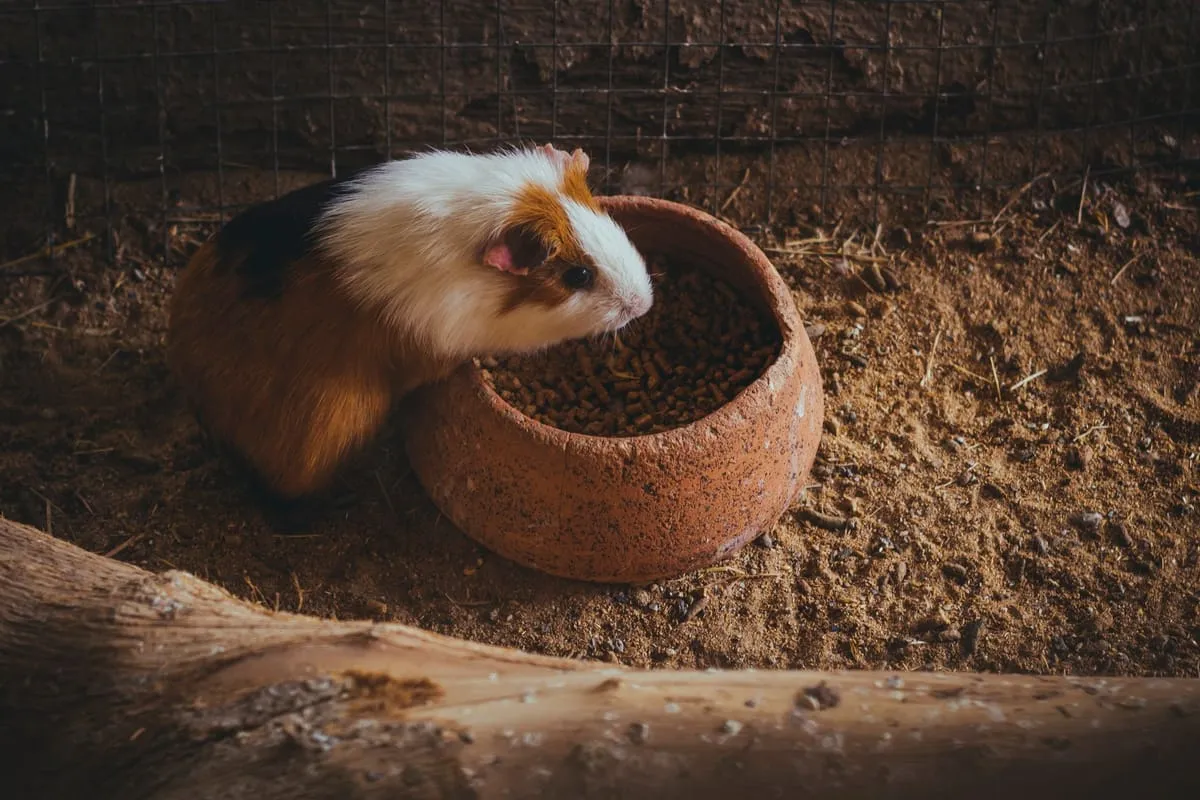
Guinea pigs need their own vitamin-C-fortified pellet rather than a rabbit pellet, since they cannot make vitamin C themselves and a rabbit pellet does not supply it.
Fresh veg: a cup, not a pile
Fresh greens add moisture and variety, and they matter, but a pile of veg on top of full hay and full pellets is still too much food overall.
A sensible daily amount for an adult is around a cup of leafy greens per 2kg (4.4lb) of body weight, split across two or three different vegetables rather than a single large portion of one. The variety matters more than the volume, since different greens bring different nutrients and rotating them is gentler on the gut than repeating the same one every day. Introduce anything new slowly, a small taste alongside familiar food rather than a full portion straight away, because a sudden large amount of an unfamiliar vegetable is the more common cause of loose stool, not the vegetable itself being wrong. The full rundown of what is safe and what to avoid is in safe and unsafe vegetables for rabbits and guinea pigs.
Checking your numbers against the animal
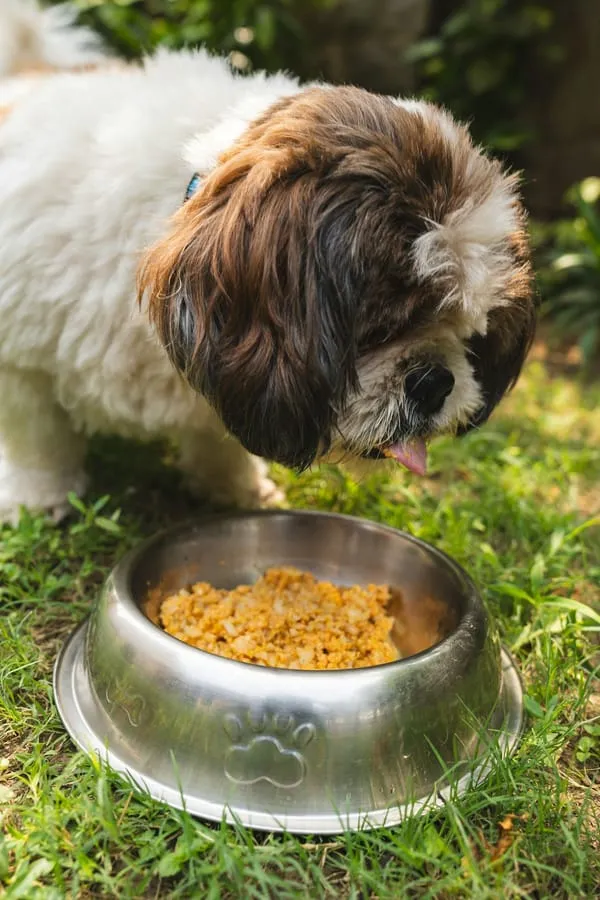
Any formula is a starting guess, and the real check is the animal in front of you, the same principle that applies to feeding a dog.
Run your hands along the spine and hips every week or so. You should be able to feel them without digging, with a thin, even covering rather than sharp bone poking through or the bone disappearing under padding. An animal that is getting harder to feel a waist on needs the pellets and treats trimmed back before it becomes a real weight problem, and one where the spine feels sharp needs a bit more. This weekly hands-on check catches drift long before it is obvious by eye, and it is a better guide than sticking rigidly to any number on a bag or in this article.
Life stages and when to ask a vet instead
The numbers above suit a healthy adult rabbit or guinea pig on a stable diet. A few situations need a different approach entirely.
Growing babies and juveniles are usually kept on unlimited pellets alongside unlimited hay until they finish growing, since restricting food during that period can cause lasting harm, and they transition down to a measured adult portion once mature. Pregnant and nursing animals need more food to support the extra demand, and older animals sometimes need less, or occasionally more if they are struggling to maintain weight. Any animal that is already under or overweight, recovering from illness, or simply not eating normally needs a vet’s input rather than a general portion guide, since a rabbit or guinea pig that stops eating is a genuine emergency and the cause needs diagnosing, not just adjusting around.
For the everyday healthy adult, though, the routine is simple once you have real numbers: unlimited hay as the base, a measured eighth of a cup or so of plain pellets per kilogram of body weight, a cup of varied fresh greens per two kilograms, and a weekly hands-on check to see whether those numbers are actually right for the animal you have. That habit does more to prevent the obesity, dental disease, and gut problems covered in the health signs small pets hide than any single number ever will.
Common questions
- How much hay should a rabbit or guinea pig get?
- Hay is the one part of the diet that is never measured, it should be unlimited and available all day, every day, replaced daily as it gets soiled or picked over. See why hay matters so much in the first place for the full reasoning.
- How many pellets should I feed daily?
- As a rough starting point, adult rabbits do well on about an eighth of a cup of plain pellets per kilogram (2.2lb) of body weight each day, and adult guinea pigs on a similar small measured amount, roughly an eighth of a cup daily for an average-sized pig. Treat this as a starting guess and adjust based on your pet's weight and body condition over the following weeks, the same way you would for a dog.
- How much fresh veg is safe each day?
- Around a cup of suitable leafy greens per 2kg (4.4lb) of body weight daily is a sensible amount for an adult, split across a couple of different vegetables rather than a big pile of one thing. Introduce anything new gradually and in small amounts, since a sudden large quantity of unfamiliar veg is what usually causes digestive upset, not the veg itself.
- Do growing, pregnant, or senior rabbits and guinea pigs need different amounts?
- Yes. Growing babies and juveniles are usually given unlimited pellets alongside unlimited hay until they finish growing, since restricting food during growth can cause lasting harm. Pregnant, nursing, underweight, or unwell animals often need more or a specifically adjusted diet, and that is a conversation for a vet who sees exotics rather than a general rule.