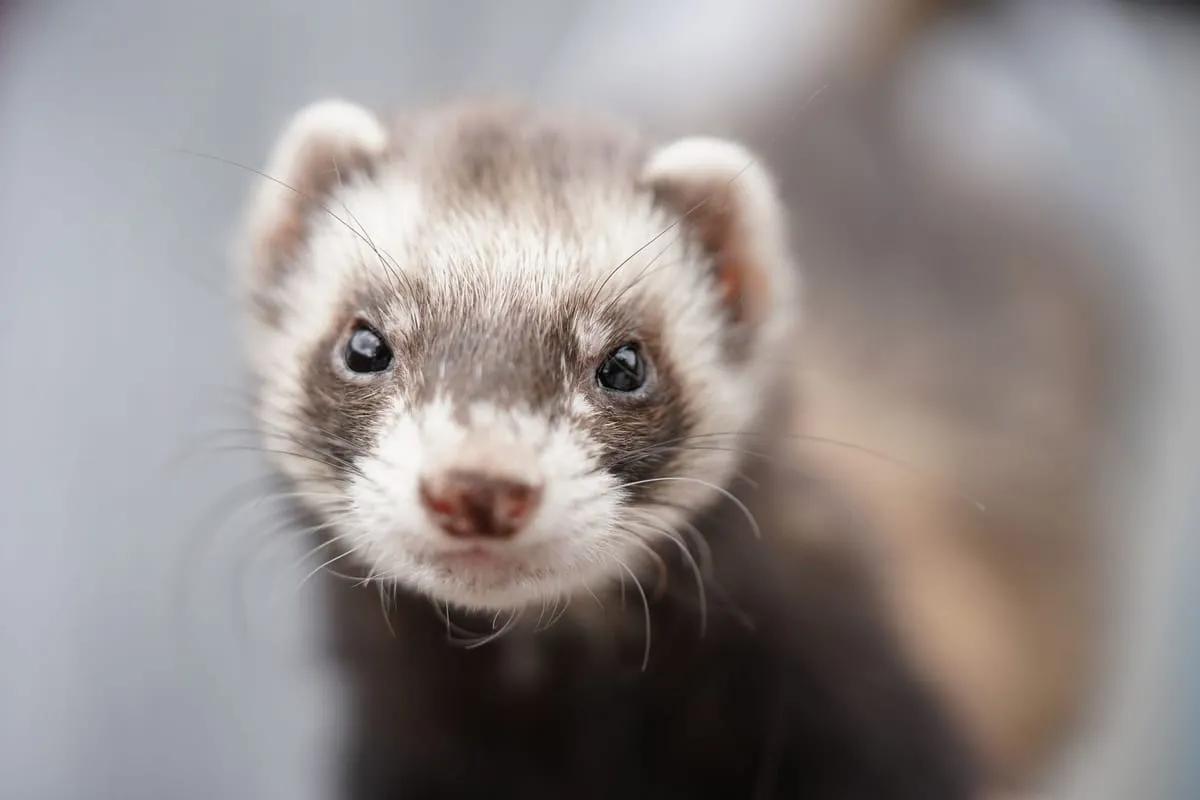
Every ferret has a musky smell. That is not a design flaw or a hygiene failure, it comes from oil glands all over the skin, the same glands a cat or dog has, just more active in a ferret. The question worth answering is not how to make a ferret smell like nothing, that is not realistic, it is how to tell the normal baseline apart from a smell that has genuinely gotten worse, and what is actually driving it when it has.
The smell you cannot wash away
Almost every pet ferret sold today has already had its scent glands removed before you ever met it, the pair near the base of the tail that produce the sharp defensive spray skunks are known for. Descenting deals with that spray. It does nothing for the everyday musk coming from sebaceous oil glands across the skin, which is a separate system entirely and present in every ferret, descented or not.
That baseline musk is simply part of owning a ferret. It gets slightly stronger in intact, un-desexed males in breeding condition, which is one of several reasons most pet ferrets are neutered young, but even a neutered ferret has more natural odour than a cat or a rabbit. If that smell is the main thing putting you off, it is worth knowing before you get one rather than after.
Why it gets worse than the baseline
A handful of everyday things push the smell well past normal musk, and most of them are fixable without touching the ferret’s biology at all.
A litter pan or bedding that has gone a day or two too long between cleans is the single most common cause, and it is often mistaken for the ferret itself smelling bad. Ferrets are fast, enthusiastic eaters and equally fast at producing waste, so a cage that was fine on Monday can be genuinely unpleasant by Thursday. A cheap diet padded with grain or plant protein that a ferret’s short gut cannot process well shows up the same way, as smellier, messier stools rather than a change in the ferret’s own scent.
Over-bathing is the trap owners fall into trying to fix all of this, and it tends to backfire. Strip the natural oils with a bath and the skin responds by producing more to replace them, so a ferret washed weekly can end up smelling stronger within a day or two of a bath, not weaker. Once every three to four weeks, with a shampoo actually formulated for ferret skin rather than a dog or cat product, is closer to the mark.
When it is not about cleaning at all
A sudden, noticeable jump in musk that is not explained by a missed cleaning day, especially alongside hair thinning that starts at the tip of the tail and creeps up the body, is worth taking seriously rather than solving with more baths. That combination is one of the recognisable signs of adrenal disease, a hormonal condition common in middle-aged and older ferrets where the adrenal glands overproduce sex hormones. In spayed females it often comes with a swollen vulva as well.
This is also where it is worth ruling out a straightforward skin infection or ear wax buildup, both of which can add their own smell on top of normal musk and are a vet visit rather than a home fix. Neither is an emergency on its own, but neither improves by waiting either.
The realistic routine
Clean the litter pan daily and do a fuller bedding change weekly, which handles most of what owners actually mean when they say their ferret smells bad. Feed a genuine high-protein ferret or kitten-grade food rather than the cheapest bag on the shelf, since digestion drives a real share of cage odour. Bathe sparingly, every three to four weeks is plenty for most ferrets, and reach for a spray deodorizer on the cage between cleans rather than another bath on the ferret. None of that erases the natural musk, and it is not supposed to. It is supposed to keep that musk at its honest baseline instead of compounding it with a dirty cage or stripped, oil-rebounding skin.
If you are still working out whether a ferret is the right pet for your household in the first place, the smell question is one piece of a bigger picture covered in the ferret care guide, and the broader pattern of what small pets’ bodies quietly tell you is worth knowing regardless of species, covered in the health signs small pets hide.
Common questions
- How often should I bathe my ferret?
- No more than once every three to four weeks, and many ferrets do fine with even less. Bathing strips the natural oils from the skin, and ferret skin responds by producing more oil to replace what was lost, so a ferret bathed every week often ends up smelling stronger than one left alone, not weaker.
- Does neutering make a ferret smell less?
- Yes, meaningfully, which is why the vast majority of pet ferrets sold in the US and UK are already desexed before sale. An intact male in breeding condition develops a much sharper musky odour than a neutered one, driven by hormones rather than anything you are doing wrong with cleaning or bathing.
- Can diet affect how my ferret smells?
- Yes. Ferrets are obligate carnivores and need a high-meat-protein diet close to what they would eat in the wild. A cheap food padded with grain and plant filler is harder for a ferret to digest properly, and that shows up as smellier stools and dirtier bedding, which reads as the ferret smelling worse even though the ferret itself has not changed.
- What is ferret adrenal disease and why does it matter here?
- It is a common hormonal condition in middle-aged and older pet ferrets where the adrenal glands produce too much sex hormone. One of the recognisable signs is a sudden increase in musky odour, usually alongside symmetrical hair loss starting at the tail and a swollen vulva in spayed females. It needs a vet to diagnose and manage, and the smell change is often one of the earliest things an owner notices before the hair loss becomes obvious.