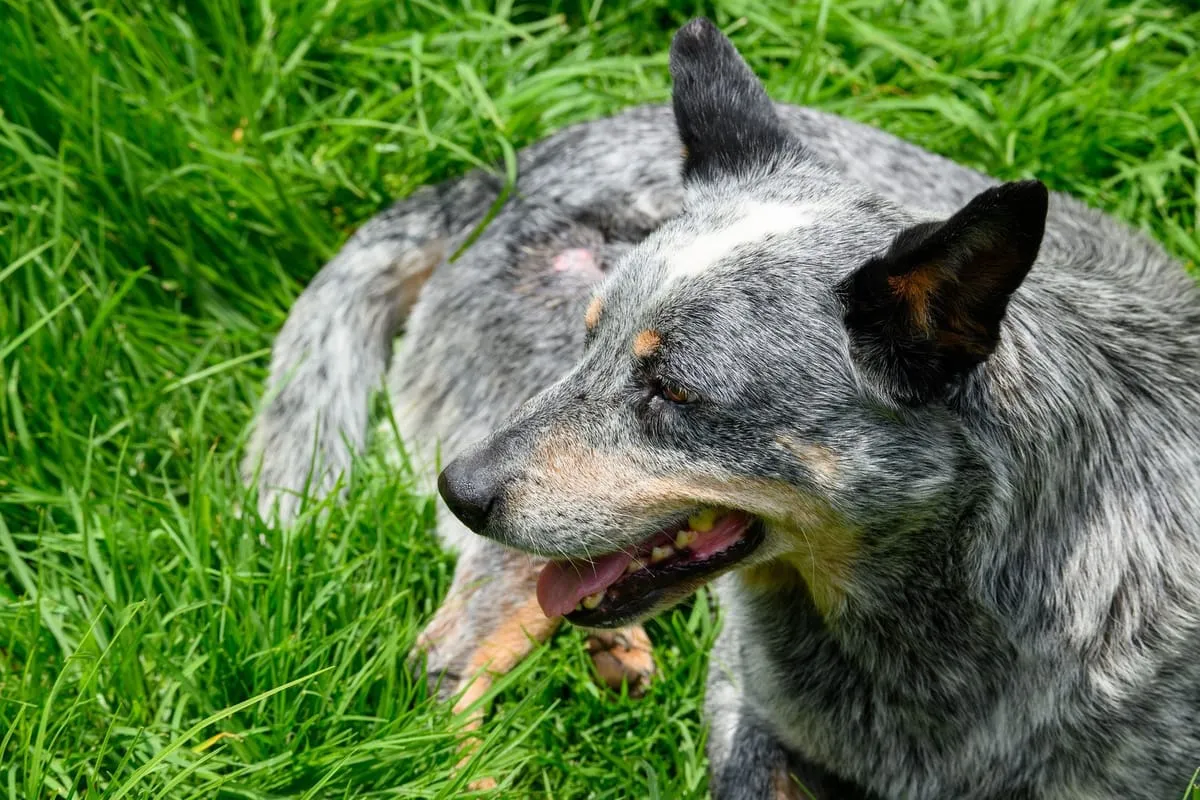
Blue heelers nip at ankles because moving livestock by nipping at the heel is precisely what the Australian Cattle Dog was bred to do, and the instinct does not know the difference between a cow and a running child. Without a real job or a legitimate outlet for that drive, it tends to come out on whatever moves fastest nearby, which in most homes is a pair of ankles.
It catches a lot of first-time heeler owners off guard, because the nip usually shows up during play or excitement rather than anything that looks like aggression, which makes it confusing to react to correctly. Once you understand where it comes from, the fix stops being about punishing a dog for misbehaving and starts being about giving a working breed something proper to do with what it was built for.
A herding instinct with nowhere else to go
The Australian Cattle Dog’s whole job, for well over a hundred years, was moving stubborn cattle across open ground using a short, controlled nip to the back heel, low and fast enough to turn the animal without getting kicked. Breeders selected hard for that exact behaviour generation after generation, which is why “heeler” became the dog’s working name before Cattle Dog became its registered one. None of that instinct disappears just because a heeler ends up in a suburban backyard instead of a stock yard.
Why does my cattle dog nip at my heels specifically, rather than just barking or jumping the way other breeds do? Because heeling, not barking or jumping, is the exact tool the breed was shaped around. A quick nip aimed low and from behind is the herding move itself, not a general sign of excitement that happens to come out as teeth. Kids sprinting across the yard, a jogging owner, another pet darting past, all of these present as a moving target a heeler’s brain is wired to manage, and managing it means nipping at the heel.
Teaching the “game stops” rule
The single most effective habit is consistency the instant teeth touch skin. Stop moving, stop the game, and give your dog a short, calm time-out the moment a nip lands, every time, with no exceptions for a cute puppy or an especially excited moment. Dogs learn remarkably fast that biting skin makes the fun stop immediately, and a heeler, bred for generations to read subtle signals and respond to them, tends to pick this rule up faster than most breeds once it is applied consistently.
This works far better paired with prevention than used alone. If you know play with children tends to trigger nipping, supervise that play directly and step in calmly before the nip happens rather than only reacting after. A puppy heeler benefits from the same foundational bite-inhibition work covered in how to stop a puppy biting, just applied with the extra awareness that herding breeds have a genuine behavioural reason for the nip, not only a teething or exploring one.
Giving the instinct somewhere legitimate to go
Interrupting the behaviour only gets you halfway. A heeler that has its chase-and-nip drive redirected onto something appropriate tends to stop needing an outlet in ankles altogether. A Jolly Egg Herding Dog Toy rolls and bounces unpredictably in a way that genuinely mimics the erratic movement of livestock, which gives a heeler something real to chase, nip and herd instead of a person. Rolling or kicking it across the yard for ten or fifteen minutes before a walk, or before kids start playing, takes the edge off the drive before it has a chance to land on an ankle.
Daily physical exercise matters here too, but mental work matters just as much for this breed. Scent work, training sessions that use the dog’s brain, a proper job like fetch with rules attached, all of it drains the same drive that otherwise comes out as nipping. A tired-out-in-the-body-but-bored heeler often nips more, not less, because the body is spent but the mind is still looking for something to manage.
The honest limit
Ankle nipping in a blue heeler is, in almost every case, instinct looking for a job rather than a dog with a temperament problem. Consistent “game stops” rules, genuine daily outlets for the chase-and-herd drive, and supervision around anything fast-moving will take most heelers from a nippy phase to a dog that saves the behaviour for an actual ball or toy. Give the breed what it was built to do, on your terms, and the ankles mostly stop being the target.
Related questions
Common questions
- Why does my blue heeler nip at my ankles?
- Blue heelers, properly called Australian Cattle Dogs, were bred for well over a century to move cattle by nipping at their heels, and the instinct did not stay behind on the farm when the breed became a popular family dog. A moving target, your ankles, a child running past, a jogger, can trigger that same herding response, especially in a dog that is excited, understimulated, or has not yet learned where the line is.
- Why does my cattle dog nip at my heels specifically, rather than just bark or jump?
- Heeling is the specific technique the breed was selected for, a quick nip to the back of a cow's leg that turns or moves the animal without the dog getting kicked. That same movement, aimed low and from behind, is wired in deeply enough that it shows up around children, other pets, and owners even when there is no cattle anywhere near the yard.
- How do I stop my heeler biting ankles?
- Stop the game the instant teeth touch skin, every single time, so your dog learns that nipping ends the fun rather than continuing it. Alongside that consistent interruption, give the herding instinct a legitimate outlet, a toy that rolls unpredictably for your dog to chase and nip instead, plus the daily exercise and mental work the breed needs so it is not manufacturing its own job out of your family.
- Is ankle nipping a sign of aggression in a blue heeler?
- Almost never, on its own. Herding nips are typically quick, low, aimed at moving ankles or heels, and happen during excitement rather than conflict. Genuine aggression usually comes with stiff body language, growling, or nipping aimed higher and harder, and if you see that pattern instead of the classic ankle nip, it is worth a session with a qualified trainer rather than assuming it will train out on its own.