Chameleons turn up in pet shops looking like the most exciting reptile in the building, and it is easy to assume that anything sold so casually must be a reasonable first pet. It is not, and that gap between reputation and reality is exactly why so many chameleons end up struggling in the first year. None of what they need is exotic or secret, it is well documented, but there is more of it than a first-timer usually expects, and getting the water source wrong alone is enough to slowly dehydrate an animal that looks perfectly fine to an inexperienced eye. If you already keep a leopard gecko or a crested gecko well and want to step up, a chameleon is a sensible next species. As a genuine first reptile, it rarely is.
Why the beginner reputation does not hold up
It is worth being honest about this before anything else, because it changes what you should actually buy.
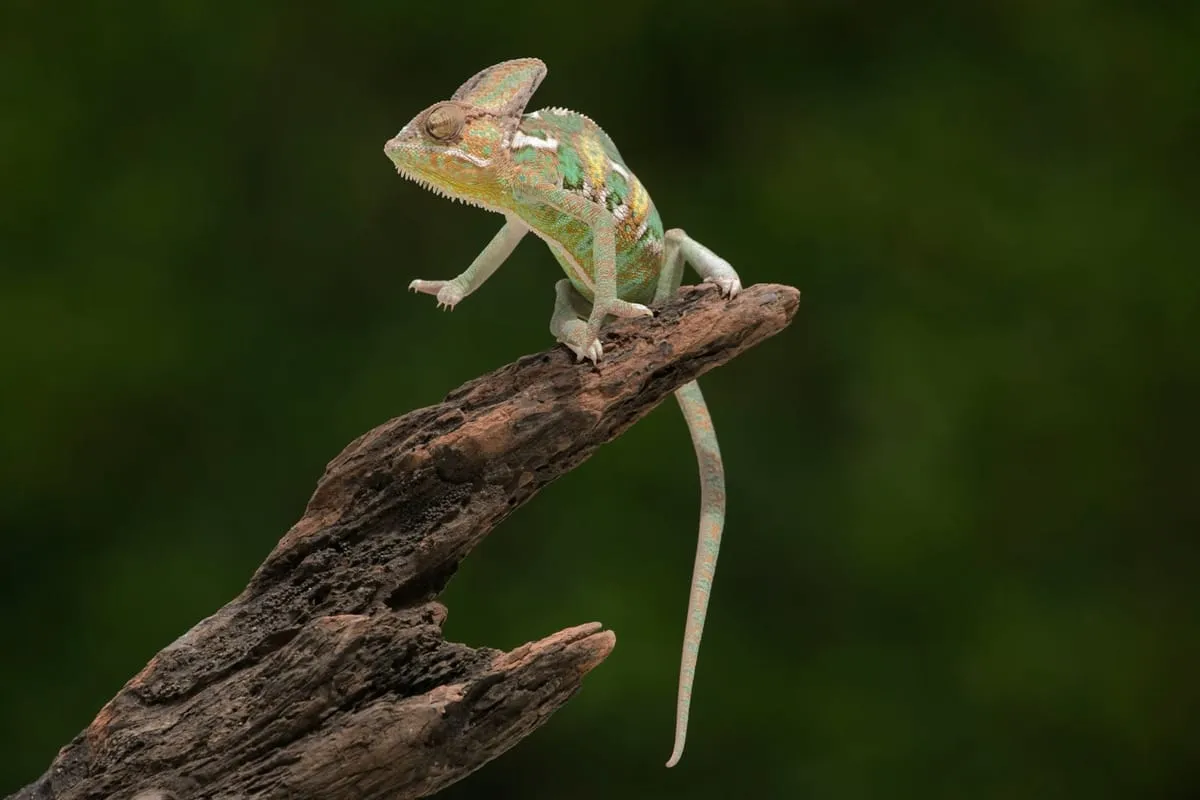
Veiled chameleons and panther chameleons, the two species sold most often, are hardy in the sense that they tolerate a wide temperature range and are not fussy eaters once established. That is where the easy part ends. They need a tall, mesh enclosure rather than a glass tank, since chameleons kept in poorly ventilated glass are prone to respiratory infection. They will not drink from a bowl at all, so a dripper or misting system is not optional. They are solitary and can be genuinely stressed by the mere sight of another chameleon, including their own reflection. And they show their health mostly through subtle colour and posture changes rather than obvious symptoms, which takes a bit of practice to read. None of this is unmanageable, my own first chameleon spent its first few months teaching me exactly how much I did not know about getting an enclosure right, but it is a genuinely different, higher-effort animal than the reptiles that actually deserve the beginner label.
The enclosure and water, the two things that catch people out
Get these two right and most of the rest of chameleon care falls into place.
A chameleon needs height more than floor space, since it lives and moves almost entirely off the ground, and a tall, fully mesh or well-screened enclosure matters for airflow in a way it simply does not for a ground-dwelling species. Fill it with sturdy branches at different heights and, ideally, real or high-quality artificial plants for cover and climbing texture, since a bare cage leaves a chameleon feeling exposed. Then comes water. A chameleon in the wild drinks droplets of dew and rain moving across leaves, and most never work out that still water sitting in a bowl is something to drink from at all. A dripper system that beads water slowly down the leaves, or a programmable misting system that soaks the enclosure on a schedule, is how a chameleon actually gets hydrated, and skipping this step is one of the most common, hardest-to-notice ways a chameleon quietly declines. Sunken eyes are the clearest visible sign of a dehydrated chameleon, and by the time you see it, the problem has been building for a while.
Feeding and supplements
Chameleons are insectivores, and the feeding routine looks a lot like other insect-eating reptiles with a couple of chameleon-specific details.
Crickets, roaches and other feeder insects, gut-loaded on a nutritious diet before they are offered, make up the bulk of the diet, dusted with calcium and a vitamin supplement the way any insect-eating reptile needs. Chameleons hunt by sight and tend to only strike at moving prey, so live insects are not optional the way they can be for some other species. A dripper running near feeding time also tends to help appetite, since a well-hydrated chameleon is a more active hunter.
Reading a chameleon’s condition
A chameleon rarely shows illness the obvious way a mammal does, so learning its normal look and behaviour matters more here than with most pets.
Colour is the headline signal, but it is not the simple camouflage story most people assume. Chameleons change colour mostly for mood, temperature regulation and communication with other chameleons, not to match their surroundings. Bright, active colouring during basking or display is normal. Dark, dull, or persistently muted colouring, especially paired with closed eyes during the day, hiding low in the enclosure, or a reluctance to move, is the pattern worth acting on. Learn what your own chameleon looks like on an ordinary good day, since that baseline is what tells you something has actually changed.
Who a chameleon actually suits
Being honest about this saves both the keeper and the animal a difficult first year.
A chameleon suits someone who wants a visually striking display animal to observe closely rather than handle regularly, since most chameleons tolerate only occasional, brief handling and some barely tolerate it at all. It suits a keeper willing to build and maintain a proper misting or dripper routine, invest in real UVB, and learn to read colour and posture as health signals. It does not suit anyone wanting a first reptile, anyone hoping for a pet that enjoys being held, or anyone trying to keep costs to a minimum, since the tall mesh enclosure, live plants and automated watering add up. Lifespan is worth weighing too: veiled and panther chameleons typically live somewhere in the region of five to eight years with good care, shorter than many other pet reptiles, which is its own kind of honest trade-off against the demanding setup.
Get the enclosure, water and UVB right before the animal arrives, keep it solitary, and a chameleon can be one of the most rewarding reptiles to watch in the hobby. Buy one on a whim from a pet shop display without that groundwork, and it is one of the reptiles most likely to quietly struggle in a home that never meant it any harm.
Common questions
- Are chameleons good for beginners?
- Not really, despite how often they are sold that way. A chameleon needs a tall, well-ventilated mesh enclosure rather than a glass tank, a dripper or misting system since they will not drink from a bowl, strong UVB, and a keeper willing to read subtle stress signs. None of that is impossible, but it is a lot to get right on a first reptile, and a leopard gecko or crested gecko is a genuinely easier starting point.
- Why won't my chameleon drink from a water bowl?
- In the wild, chameleons drink droplets of dew and rain off leaves, and most never learn to recognise still water in a dish as something to drink from. A dripper or a misting system that leaves moving water beaded on the leaves is not a nice extra, it is how a chameleon actually gets its water, and one is essential in every setup.
- Why does my chameleon keep changing colour?
- Colour change is mostly about mood, temperature and communication, not camouflage. Darker or duller colours often mean stress, cold, or a chameleon that wants to be left alone, while brighter colours can appear during basking or when displaying to another chameleon. Learning your own chameleon's normal palette is one of the most useful things you can do, since a colour that is dark and dull for a sustained period is a real signal something is wrong.
- Can I keep two chameleons together?
- No, not as a general rule. Chameleons are solitary and can become seriously stressed, or genuinely injured, when kept within sight of another chameleon, let alone in the same enclosure. Each one needs its own separate setup, which is worth factoring into the cost and space before taking on more than one.